
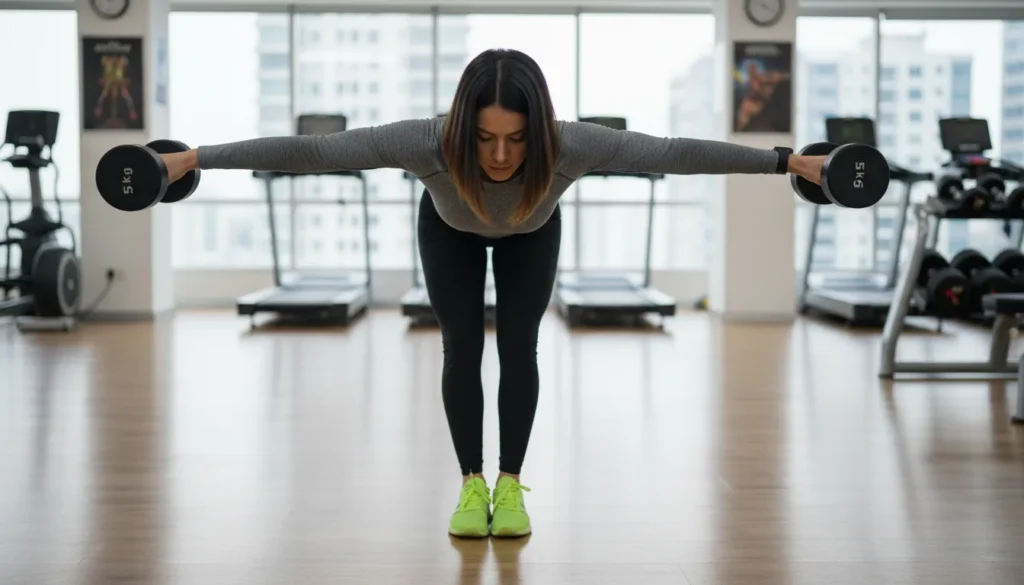
If you want stronger shoulders, better posture, and a well-balanced upper body, reverse flys with dumbbells deserve a permanent place in your workout routine.
While most lifters focus heavily on chest and front delts, the rear delts and upper back muscles often get neglected. This imbalance can lead to poor posture, shoulder pain, and stalled progress.
What Are Reverse Flys With Dumbbells?
Reverse flys with dumbbells (also called rear delt flys or bent-over reverse flys) are an isolation exercise that primarily targets the posterior deltoids (rear shoulders) and upper back muscles.
This movement involves hinging at the hips and lifting dumbbells outward in a wide arc, mimicking a “reverse hugging” motion.
Key Muscles Worked
- Primary Muscles:
- Rear deltoids
- Secondary Muscles:
- Rhomboids
- Trapezius
- Rotator cuff muscles
These muscles play a crucial role in shoulder stability and posture. Strengthening them helps balance pressing exercises like bench press and push-ups.
Benefits of Reverse Flys With Dumbbells
1. Improves Posture
Modern lifestyles (desk jobs, phone usage) cause rounded shoulders. Reverse flys strengthen the upper back, helping pull your shoulders back into proper alignment.
2. Builds Balanced Shoulders
Most workouts overemphasize front delts. Reverse flys target the often-neglected rear delts, creating symmetrical shoulder development.
3. Enhances Shoulder Stability
By strengthening stabilizer muscles, reverse flys help protect the shoulder joint from injury.
4. Increases Upper Back Strength
You’ll develop stronger rhomboids and traps, improving pulling strength and overall upper-body performance.
5. Reduces Injury Risk
Balanced musculature reduces stress on joints and improves movement mechanics—especially for athletes and lifters.
How To Do Reverse Flys With Dumbbells (Step-by-Step Guide)
Step 1: Setup
- Hold a dumbbell in each hand
- Stand with feet shoulder-width apart
- Slight bend in knees
Step 2: Hinge Forward
- Bend at your hips until your torso is nearly parallel to the floor
- Keep your back flat and core engaged
Step 3: Starting Position
- Let your arms hang straight down
- Keep a slight bend in your elbows
Step 4: Lift the Dumbbells
- Raise your arms out to the sides
- Lead with your elbows (not your hands)
- Stop when arms reach shoulder level
Step 5: Squeeze at the Top
- Squeeze your shoulder blades together
- Pause briefly for maximum contraction
Step 6: Lower Slowly
- Return to starting position under control
- Avoid dropping the weights
Recommended Reps & Sets
- Beginners: 2–3 sets of 10–12 reps
- Intermediate: 3–4 sets of 12–15 reps
- Advanced: 3–5 sets of 15–20 reps
Proper Form Tips for Maximum Results
Mastering form is critical with reverse flys because it’s easy to cheat.
Key Technique Cues
- Keep your spine neutral (no rounding)
- Use light to moderate weights
- Move slowly and with control
- Keep elbows slightly bent
- Focus on rear delts, not traps
Mind-Muscle Connection Tip
Think:
“Pull your arms apart and squeeze your shoulder blades.”
Common Mistakes to Avoid
1. Using Too Much Weight
This leads to momentum instead of muscle activation.
Fix: Lower the weight and focus on control.
2. Swinging the Dumbbells
Using your hips or lower back reduces effectiveness.
Fix: Keep your torso stable and core tight.
3. Rounding Your Back
This increases injury risk and reduces performance.
Fix: Maintain a flat back throughout the movement.
4. Turning It Into a Row
Pulling elbows backward instead of outward shifts focus away from rear delts.
Fix: Keep movement wide, not backward.
5. Shrugging Your Shoulders
This overuses the traps.
Fix: Keep shoulders down and relaxed.
Best Reverse Fly Variations
1. Seated Reverse Fly
- Performed while seated and bent forward
- Reduces momentum
- Great for beginners
2. Incline Bench Reverse Fly
- Lie chest-down on an incline bench
- Provides maximum isolation
- Reduces lower back strain
3. Standing Reverse Fly
- Requires more stability and control
- Engages core muscles
4. One-Arm Reverse Fly
- Improves muscle imbalances
- Enhances focus and control
5. Resistance Band Reverse Fly
- Great for home workouts
- Provides constant tension
Reverse Flys vs Other Rear Delt Exercises
| Exercise | Equipment | Difficulty | Isolation |
|---|---|---|---|
| Reverse Fly (Dumbbells) | Dumbbells | Beginner | High |
| Face Pulls | Cable/Band | Intermediate | Medium |
| Rear Delt Machine Fly | Machine | Beginner | Very High |
| Bent-Over Rows | Barbell/Dumbbell | Intermediate | Low |
Takeaway: Reverse flys are one of the best isolation exercises for rear delts.
Programming Reverse Flys Into Your Workout
When to Do Reverse Flys
- On upper body day
- During pull workouts
- As an accessory exercise after compound lifts
Sample Routine
Upper Body Workout Example:
- Bench Press – 4 sets
- Dumbbell Rows – 4 sets
- Shoulder Press – 3 sets
- Reverse Flys with Dumbbells – 3 sets
- Bicep Curls – 3 sets
Who Should Do Reverse Flys?
Reverse flys are suitable for:
- Beginners
- Bodybuilders
- Athletes
- Office workers with poor posture
- Anyone with shoulder imbalances
Safety Tips and Precautions
- Start with light weights
- Avoid jerky movements
- Stop if you feel shoulder pain
- Keep movements controlled
- Use a bench if you have lower back issues
If you have existing injuries, consult a fitness professional before performing the exercise.
Pro Tips to Maximize Gains
- Use tempo training (3 seconds down, 1 second up)
- Add pauses at the top
- Train rear delts 2–3 times per week
- Combine with face pulls and rows
- Focus on quality reps over heavy weight
Reverse Flys With Dumbbells for Home Workouts
One of the biggest advantages of this exercise is its simplicity.
All you need:
- A pair of dumbbells
- A small space
You can easily build a complete shoulder workout at home with reverse flys as a key component.
Frequently Asked Questions (FAQs)
Are reverse flys with dumbbells good for beginners?
Yes. They are simple, low-risk, and highly effective when performed with proper form.
What muscles do reverse flys target the most?
They primarily target the rear deltoids, along with the rhomboids and trapezius.
How heavy should dumbbells be for reverse flys?
Use light to moderate weights. The focus should be on control, not lifting heavy.
Can reverse flys fix bad posture?
Yes. Strengthening the upper back helps correct rounded shoulders and improve posture.
How often should I do reverse flys?
2–3 times per week is ideal for most people.
Why do I feel it in my traps instead of rear delts?
You may be shrugging your shoulders or using too much weight. Focus on controlled movement and proper form.
Are reverse flys better seated or standing?
Both are effective. Seated versions reduce momentum, while standing versions engage more stabilizers.
Can I do reverse flys without a bench?
Yes. The standing or seated bent-over version works perfectly without any equipment.
You can also follow “How to Do Front Raises With Dumbbells” for dumbbell workouts, and fitness tips to help you get better results.