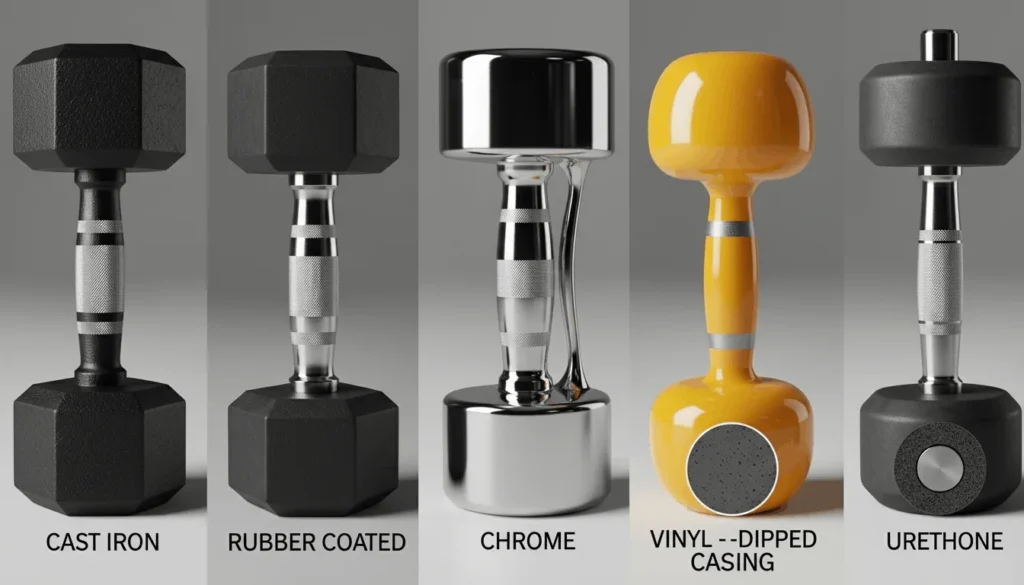
Dumbbells are one of the most essential pieces of fitness equipment, whether you’re training at home or in a commercial gym. But have you ever stopped to ask: what are dumbbells made of?
Understanding the materials behind dumbbells isn’t just curiosity—it directly impacts durability, comfort, safety, price, and performance. From classic cast iron to modern urethane-coated designs, each material offers unique advantages and trade-offs.
Why Dumbbell Material Matters
Before diving into the materials, it’s important to understand why this topic matters.
The material of a dumbbell affects:
- Durability: How long it lasts under heavy use
- Grip and comfort: Especially important for high-rep workouts
- Floor protection: Prevents damage to home gyms
- Noise levels: Critical in apartments or shared spaces
- Cost: Premium materials can be significantly more expensive
Choosing the right material can make your workouts safer, more efficient, and more enjoyable.
What Are Dumbbells Made Of? (Quick Overview)
Most dumbbells are made from a combination of the following core materials:
| Component | Common Materials |
|---|---|
| Core weight | Cast iron, steel |
| Outer coating | Rubber, neoprene, vinyl, urethane |
| Handle | Chrome-plated steel, knurled steel |
Let’s break each material down in detail.
Cast Iron Dumbbells
What Are Cast Iron Dumbbells?
Cast iron is the most traditional and widely used material in dumbbell manufacturing. Molten iron is poured into molds and shaped into weights.
Key Features
- Extremely durable
- Compact size for heavy weights
- Classic gym feel
- Often used in adjustable dumbbells
Pros
- Long-lasting and resistant to wear
- More affordable than premium materials
- Dense, meaning smaller size for heavier loads
Cons
- Can rust if not maintained
- Rough texture without coating
- No floor protection
Best For
- Strength training
- Powerlifting
- Budget-conscious users
Rubber-Coated Dumbbells
What Are Rubber Dumbbells Made Of?
Rubber dumbbells typically have a cast iron core covered with rubber. The rubber can be either natural or synthetic.
Types of Rubber Coating
1. Virgin Rubber
- High-quality, low odor
- More durable
2. Recycled Rubber
- Eco-friendly
- Slightly stronger odor
Key Features
- Shock absorption
- Floor protection
- Reduced noise
Pros
- Protects flooring
- Quieter during workouts
- Comfortable grip
Cons
- Can develop odor (especially cheaper versions)
- Slightly bulkier than iron
Best For
- Home gyms
- Functional fitness
- General strength training
Neoprene Dumbbells
What Are Neoprene Dumbbells?
Neoprene dumbbells are made from a cast iron core coated with neoprene, a soft synthetic rubber material.
Key Features
- Soft and smooth texture
- Often brightly colored
- Lightweight (usually 1–10 kg)
Pros
- Comfortable to hold
- Non-slip grip
- Beginner-friendly
Cons
- Limited weight range
- Less durable under heavy use
Best For
- Beginners
- Aerobics and light workouts
- Rehabilitation exercises
Vinyl-Coated Dumbbells
What Are Vinyl Dumbbells Made Of?
Vinyl dumbbells consist of a cement or cast iron core coated in vinyl.
Key Features
- Glossy finish
- Budget-friendly
- Often used in group classes
Pros
- Affordable
- Easy to clean
- Available in multiple colors
Cons
- Can crack over time
- Less durable than rubber or urethane
Best For
- Light workouts
- Group fitness classes
- Beginners
Urethane Dumbbells (Premium Option)
What Are Urethane Dumbbells?
Urethane dumbbells are made from a steel or cast iron core coated with urethane, a high-performance synthetic material.
Key Features
- Extremely durable
- Odorless
- Resistant to cracking and fading
Pros
- Long lifespan
- Minimal maintenance
- Professional gym quality
Cons
- Expensive
- Not necessary for beginners
Best For
- Commercial gyms
- Advanced lifters
- Long-term investment
Steel Dumbbells
What Are Steel Dumbbells Made Of?
Some dumbbells are made entirely from solid steel or stainless steel, especially high-end or compact designs.
Key Features
- Sleek and polished look
- High density
- Rust-resistant (if stainless)
Pros
- Extremely strong
- Compact size
- Premium feel
Cons
- Expensive
- Can damage floors without coating
Best For
- Minimalist home gyms
- High-end setups
- Heavy lifters
Adjustable Dumbbells (Mixed Materials)
What Are Adjustable Dumbbells Made Of?
Adjustable dumbbells combine multiple materials:
- Plates: Cast iron or steel
- Handles: Chrome-plated steel
- Locking system: Plastic, steel, or composite
Types
- Spin-lock dumbbells
- Dial-based adjustable systems
- Selectorized dumbbells
Pros
- Space-saving
- Cost-effective for multiple weights
Cons
- More moving parts
- Can be less durable (cheap models)
Best For
- Home gyms
- Limited space setups
How Are Dumbbells Made? (Manufacturing Process)
Understanding how dumbbells are made helps you appreciate their durability and quality.
Step-by-Step Process
1. Material Selection
Manufacturers choose materials like cast iron, steel, or cement.
2. Casting or Molding
- Molten metal is poured into molds
- Shapes are formed and cooled
3. Finishing
- Grinding and polishing
- Adding knurling to handles
4. Coating
- Rubber, neoprene, vinyl, or urethane applied
5. Assembly
- Handles attached (for adjustable or fixed dumbbells)
6. Quality Control
- Weight accuracy checks
- Durability testing
Comparison: Dumbbell Materials at a Glance
| Material | Durability | Comfort | Cost | Best Use |
|---|---|---|---|---|
| Cast Iron | High | Low | Low | Strength training |
| Rubber | High | Medium | Medium | Home gyms |
| Neoprene | Medium | High | Medium | Light workouts |
| Vinyl | Low-Medium | Medium | Low | Beginners |
| Urethane | Very High | High | High | Commercial gyms |
| Steel | Very High | Medium | High | Advanced users |
Which Dumbbell Material Is Best for You?
Choosing the right material depends on your goals, budget, and workout style.
For Beginners
- Neoprene or vinyl dumbbells
- Lightweight and comfortable
For Home Gym Users
- Rubber-coated dumbbells
- Balance between durability and floor protection
For Heavy Lifters
- Cast iron or steel dumbbells
- Compact and long-lasting
For Professional Use
- Urethane dumbbells
- Premium quality and longevity
Safety and Maintenance Tips
No matter what dumbbells are made of, proper care is essential.
Maintenance Tips
- Wipe down after use to prevent corrosion
- Store in a dry place
- Avoid dropping (especially vinyl or neoprene)
- Use mats for floor protection
Safety Tips
- Check for cracks or loose parts
- Ensure proper grip
- Use appropriate weight levels
Common Myths About Dumbbell Materials
Myth 1: Heavier Means Better Quality
Not necessarily—material and construction matter more.
Myth 2: Rubber Dumbbells Are Always Better
They’re great for home use, but not ideal for all training styles.
Myth 3: Cheap Dumbbells Are Fine Long-Term
Lower-quality materials wear out faster, costing more in the long run.
FAQs
What are dumbbells made of?
Most dumbbells are made from a cast iron or steel core with coatings like rubber, neoprene, vinyl, or urethane.
Are rubber dumbbells better than metal ones?
Rubber dumbbells are better for home use and floor protection, while metal dumbbells are better for heavy lifting and durability.
What is inside neoprene dumbbells?
Neoprene dumbbells typically contain a cast iron core covered with a soft neoprene coating.
Do dumbbells contain cement?
Some budget dumbbells use cement cores, especially vinyl-coated ones, but they are less durable than iron or steel.
What is the most durable dumbbell material?
Urethane-coated dumbbells are considered the most durable and long-lasting.
Why do rubber dumbbells smell?
The smell usually comes from low-quality or recycled rubber materials used in manufacturing.
Are steel dumbbells better than cast iron?
Steel dumbbells are more refined and rust-resistant, but both are highly durable.
What material is best for home gyms?
Rubber-coated dumbbells are ideal due to noise reduction and floor protection.
Do dumbbell materials affect workouts?
Yes, they impact grip, comfort, safety, and performance, especially during long sessions.
How long do dumbbells last?
High-quality dumbbells can last 10–20 years or more with proper care.