
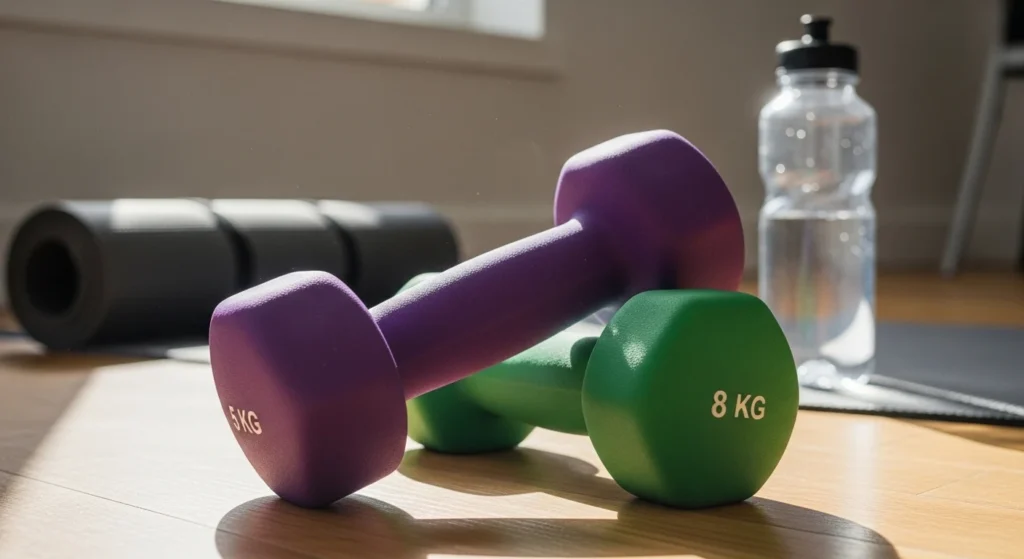
If you’re building a home gym or starting your fitness journey, you’ve probably come across brightly colored weights labeled “neoprene dumbbells.”
But the real question remains:
Are neoprene dumbbells good for strength training, or are they just for beginners?
The answer isn’t black and white. Neoprene dumbbells are excellent for specific training styles, but they’re not a one-size-fits-all solution.
What Are Neoprene Dumbbells?
Neoprene dumbbells are cast iron weights coated with neoprene, a synthetic rubber material designed to improve grip, comfort, and durability.
Key characteristics include:
- Soft, matte coating
- Non-slip grip
- Color-coded weight system
- Typically lighter weight range (1–15 lbs)
They’re widely used in:
- Home workouts
- Aerobics and group fitness classes
- Rehabilitation programs
Neoprene’s rubber-like texture is specifically designed to reduce slipping and improve handling, even during sweaty sessions.
Are Neoprene Dumbbells Good?
Yes, neoprene dumbbells are good if you:
- Are a beginner
- Prefer home workouts
- Focus on toning, endurance, or HIIT
- Need a comfortable, non-slip grip
No, they’re not ideal if you:
- Want to build serious muscle mass
- Train with heavy weights
- Need long-term progressive overload
Benefits of Neoprene Dumbbells
1. Excellent Grip and Control
One of the biggest advantages is the non-slip surface.
- Matte neoprene stays secure even with sweaty hands
- Better grip compared to vinyl-coated dumbbells
- Reduces risk of dropping weights
This makes them ideal for:
- High-rep workouts
- Circuit training
- Beginners learning form
2. Comfortable and User-Friendly
Neoprene dumbbells feel softer than metal or rubber weights.
- Gentle on hands
- Reduces hand fatigue
- Ideal for long workout sessions
This comfort factor is why they’re commonly used in Pilates, HIIT, and rehab training.
3. Floor Protection and Low Noise
Unlike bare metal dumbbells:
- They protect floors from scratches
- Produce less noise when dropped
- Absorb impact during use
Perfect for:
- Apartments
- Indoor workouts
- Shared living spaces
4. Beginner-Friendly Design
Neoprene dumbbells are:
- Lightweight
- Easy to handle
- Visually appealing (color-coded)
They’re widely recommended for:
- First-time lifters
- Home fitness setups
- Light strength training
5. Better Durability Than Vinyl
Compared to vinyl dumbbells:
- Neoprene is more resistant to cracking
- Holds up better with regular use
However, they’re still less durable than rubber or steel options.
Drawbacks of Neoprene Dumbbells
1. Limited Weight Range
Most neoprene dumbbells:
- Max out around 10–15 lbs
- Rarely exceed 20 lbs
This limits their usefulness for:
- Muscle hypertrophy
- Strength progression
2. Not Suitable for Heavy Training
Neoprene dumbbells are not designed for:
- Heavy compound lifts
- Progressive overload programs
- Advanced bodybuilding
For serious strength gains, heavier equipment is essential.
3. Moderate Durability
While durable for light use:
- Coating may wear or peel over time
- Not ideal for frequent dropping
- Can degrade under heavy use
4. Higher Cost Per Weight (Sometimes)
Compared to vinyl:
- Slightly more expensive per kilogram
- May not be ideal for budget buyers
Neoprene Dumbbells vs Other Types
Comparison Table
| Feature | Neoprene | Vinyl | Rubber | Cast Iron |
|---|---|---|---|---|
| Grip | Excellent | Slippery when wet | Good | Moderate |
| Comfort | High | Medium | Medium | Low |
| Durability | Medium | Low | High | Very High |
| Weight Range | Low | Low | High | Very High |
| Best Use | Home & beginners | Budget beginners | Intermediate | Advanced |
Key takeaway:
Neoprene dumbbells prioritize comfort and safety over raw strength capacity.
Who Should Use Neoprene Dumbbells?
Ideal Users
- Beginners starting strength training
- Women-focused fitness routines
- Home gym users
- Seniors or rehab patients
- People doing HIIT or cardio workouts
Not Ideal For
- Bodybuilders
- Powerlifters
- Advanced lifters
- Strength-focused athletes
Best Exercises for Neoprene Dumbbells
Neoprene dumbbells work best for light to moderate resistance training.
Upper Body
- Bicep curls
- Lateral raises
- Tricep kickbacks
Lower Body
- Lunges
- Goblet squats (light weight)
Full Body / Cardio
- Dumbbell thrusters
- HIIT circuits
- Aerobic routines
How to Choose Quality Neoprene Dumbbells
1. Check the Coating Quality
True neoprene should:
- Feel firm yet slightly soft
- Bounce back after pressure
- Show no glue seams
Low-quality coatings may use cheaper materials that degrade faster.
2. Look for a Solid Core
Choose:
- Cast iron core (more stable)
Avoid:
- Sand-filled or hollow designs
3. Consider Shape
- Hex shape prevents rolling
- Improves safety and storage
4. Choose the Right Weight
Beginner recommendations:
- 2–5 lbs for beginners
- 5–10 lbs for moderate fitness
Are Neoprene Dumbbells Worth It?
They’re worth it if you want:
- Comfort and safety
- A beginner-friendly option
- Quiet, home-based workouts
They’re not worth it if you want:
- Maximum strength gains
- Long-term progression
- Heavy lifting capabilities
Frequently Asked Questions (FAQs)
Are neoprene dumbbells good for beginners?
Yes, they’re one of the best options due to their comfort, safety, and ease of use.
Can you build muscle with neoprene dumbbells?
You can build some muscle, but limited weight makes them less effective long term.
Are neoprene dumbbells better than vinyl?
Yes, they offer better grip and durability, especially during sweaty workouts.
How long do neoprene dumbbells last?
With proper care, they last years, but may wear faster than rubber dumbbells.
Are neoprene dumbbells good for home workouts?
Yes. They’re quiet, safe, and floor-friendly.
Do neoprene dumbbells slip?
No, they are specifically designed to be non-slip—even with sweaty hands.
What weight should I start with?
Start with 2–5 lbs if you’re new, or 5–10 lbs if you have some experience.
Are neoprene dumbbells good for HIIT workouts?
Yes, they’re excellent for high-rep, low-weight exercises.
Can neoprene dumbbells break?
They can wear out over time, especially with frequent dropping.
Should I buy neoprene or rubber dumbbells?
Choose neoprene for comfort and light workouts, rubber for durability and heavy training.
If you want a detailed breakdown of safety, materials, and health concerns, read our full guide on Are Rubber Dumbbells Toxic? to understand whether they are safe for your home gym and workouts.