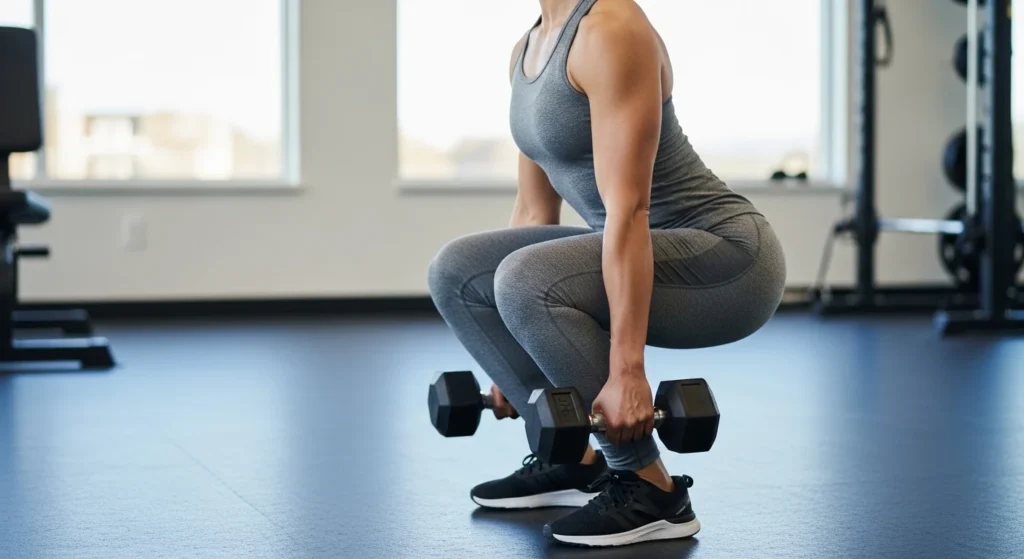
If you’re looking to build stronger legs, sculpt your glutes, and improve overall functional fitness, learning how to do squats with dumbbells is one of the smartest moves you can make.
Dumbbell squats are a powerful variation of the traditional squat that adds resistance, improves balance, and engages more stabilizing muscles. Whether you’re training at home or in the gym, they’re versatile, beginner-friendly, and incredibly effective.
When performed correctly, squats strengthen multiple muscle groups, improve posture, enhance mobility, and reduce injury risk.
What Are Dumbbell Squats?
Dumbbell squats are a compound lower-body exercise where you perform a squat while holding dumbbells.
Unlike bodyweight squats, this variation:
- Adds resistance for muscle growth
- Engages your upper body and core
- Improves coordination and balance
They are commonly used in:
- Strength training programs
- Fat-loss workouts
- Functional fitness routines
Muscles Worked in Dumbbell Squats
Dumbbell squats are a full-body movement, but they primarily target your lower body.
Primary Muscles
- Quadriceps (front thighs)
- Glutes (buttocks)
- Hamstrings (back thighs)
Secondary Muscles
- Core (abs and obliques)
- Lower back
- Calves
- Hip flexors
Squats require multiple muscle groups to work together, making them one of the most efficient exercises for total-body strength.
Benefits of Doing Squats With Dumbbells
1. Builds Lower Body Strength
Dumbbell squats target all major leg muscles, helping you:
- Lift heavier weights over time
- Improve athletic performance
- Increase power and endurance
2. Improves Balance and Stability
Because you’re holding weights independently, your body must stabilize itself more than with machines or barbells.
3. Burns More Calories
Squats are a high-energy compound exercise that:
- Boosts metabolism
- Helps with fat loss
- Engages multiple muscle groups simultaneously
4. Enhances Core Strength
Your core works hard to:
- Keep your torso upright
- Stabilize the weights
- Maintain proper posture
5. Improves Mobility and Flexibility
Squats increase mobility in:
- Hips
- Knees
- Ankles
This helps with daily movements like sitting, standing, and lifting.
6. Supports Functional Fitness
Squatting mimics real-life movements, making it essential for:
- Daily activities
- Injury prevention
- Long-term mobility
How to Do Squats With Dumbbells (Step-by-Step Guide)
This is the most common and beginner-friendly variation.
Step 1: Starting Position
- Stand with feet shoulder-width apart
- Hold a dumbbell in each hand at your sides
- Keep your chest up and core engaged
Step 2: Lower Your Body
- Push your hips back (like sitting in a chair)
- Bend your knees slowly
- Keep your back straight and neutral
Step 3: Depth
- Lower until your thighs are parallel to the ground (or as far as comfortable)
- Keep knees aligned with your toes
Step 4: Drive Up
- Push through your heels
- Return to standing position
- Squeeze your glutes at the top
Step 5: Breathing
- Inhale as you go down
- Exhale as you stand up
Recommended Reps
- Beginners: 10–12 reps × 2–3 sets
- Intermediate: 8–15 reps × 3–4 sets
Proper Form Checklist (Critical for Safety)
Use this quick checklist every time:
- Chest up
- Back neutral (no rounding)
- Knees tracking over toes
- Heels flat on the ground
- Core engaged
- Controlled movement (no bouncing)
Poor squat form can lead to injuries, especially in the knees and lower back, so technique always comes first.
Common Mistakes to Avoid
1. Letting Knees Collapse Inward
This increases injury risk and reduces effectiveness.
Fix: Push knees outward slightly.
2. Rounding Your Back
This puts stress on your spine.
Fix: Keep chest up and spine neutral.
3. Lifting Heels Off the Ground
This reduces stability and power.
Fix: Focus on pushing through your heels.
4. Going Too Heavy Too Soon
This leads to poor form.
Fix: Master bodyweight squats first, then add dumbbells.
5. Not Going Deep Enough
Partial squats limit muscle activation.
Fix: Aim for thighs parallel to the floor.
Best Dumbbell Squat Variations
Adding variations helps target different muscles and prevents workout plateaus.
1. Goblet Squat
- Hold one dumbbell at chest level
- Great for beginners
- Improves posture and depth
2. Sumo Dumbbell Squat
- Wide stance
- Targets inner thighs and glutes
3. Bulgarian Split Squat
- One leg elevated behind
- Improves balance and unilateral strength
4. Dumbbell Front Squat
- Dumbbells held at shoulders
- More core engagement
5. Dumbbell Pulse Squats
- Small up-and-down movements at the bottom
- Increases time under tension
Dumbbell Squat vs Barbell Squat
| Feature | Dumbbell Squat | Barbell Squat |
|---|---|---|
| Difficulty | Beginner-friendly | Advanced |
| Equipment | Minimal | Requires rack |
| Balance | Higher demand | Lower |
| Load capacity | Limited | Very high |
| Safety | Safer solo | Needs spotter |
Verdict: Dumbbell squats are ideal for beginners and home workouts, while barbells are better for heavy strength training.
How Heavy Should Your Dumbbells Be?
Choosing the right weight is crucial.
Beginners
- Men: 5–10 kg per dumbbell
- Women: 2–5 kg per dumbbell
Intermediate
- Increase gradually as form improves
Rule of Thumb
- Last 2 reps should feel challenging
- But form must remain perfect
Dumbbell Squat Workout Plan
Beginner Routine
- Dumbbell squats: 3 × 10
- Lunges: 3 × 10 (each leg)
- Glute bridges: 3 × 12
Intermediate Routine
- Goblet squats: 4 × 12
- Bulgarian split squats: 3 × 10
- Romanian deadlifts: 3 × 10
Advanced Routine
- Dumbbell front squats: 4 × 8
- Pulse squats: 3 × 15
- Jump squats: 3 × 12
Pro Tips for Better Results
- Warm up before squatting
- Use a mirror to check form
- Progress slowly with weight
- Focus on mind-muscle connection
- Maintain consistency
Are Dumbbell Squats Safe for Beginners?
Yes, dumbbell squats are one of the safest weighted exercises when done correctly.
They are:
- Easier to control than barbells
- Less stressful on the spine
- Ideal for learning proper squat mechanics
FAQs
Are dumbbell squats effective?
Yes, they build strength, burn calories, and improve overall fitness.
How many dumbbell squats should I do daily?
Start with 2–3 sets of 10–15 reps, 3–4 times per week.
Can dumbbell squats build muscle?
Absolutely. Progressive overload leads to muscle growth over time.
Should beginners start with dumbbells?
Beginners should first master bodyweight squats, then add dumbbells.
Do dumbbell squats help lose belly fat?
They help burn calories, which contributes to overall fat loss.
How deep should I squat?
Ideally until thighs are parallel to the ground or lower if mobility allows.
What’s better: goblet squat or side dumbbell squat?
Goblet squats are better for beginners; side squats allow heavier loads.
Can I do dumbbell squats every day?
It’s better to allow recovery—train legs 2–4 times per week.
Why do my knees hurt during squats?
Likely due to poor form or mobility issues—focus on alignment and control.
Are dumbbell squats enough for leg day?
Yes, especially when combined with other exercises like lunges and deadlifts.
Conclusion
Mastering how to do squats with dumbbells is a game-changer for your fitness journey. It’s one of the most efficient exercises to build strength, improve mobility, and enhance overall performance.
The key is simple:
- Focus on proper form
- Start light
- Progress gradually
- Stay consistent
Whether you’re a beginner working out at home or an experienced lifter looking to refine technique, dumbbell squats deserve a permanent place in your routine.
If you apply the techniques and tips in this guide, you’ll not only perform better—you’ll also reduce injury risk and maximize your results.