If you’ve ever wanted a foundational strength movement that builds muscle, improves posture, and reinforces safe lifting mechanics using just a pair of dumbbells, you’re in the right place.
The dumbbell deadlift is one of the most powerful and accessible strength exercises you can do with minimal equipment.
What Is a Dumbbell Deadlift?
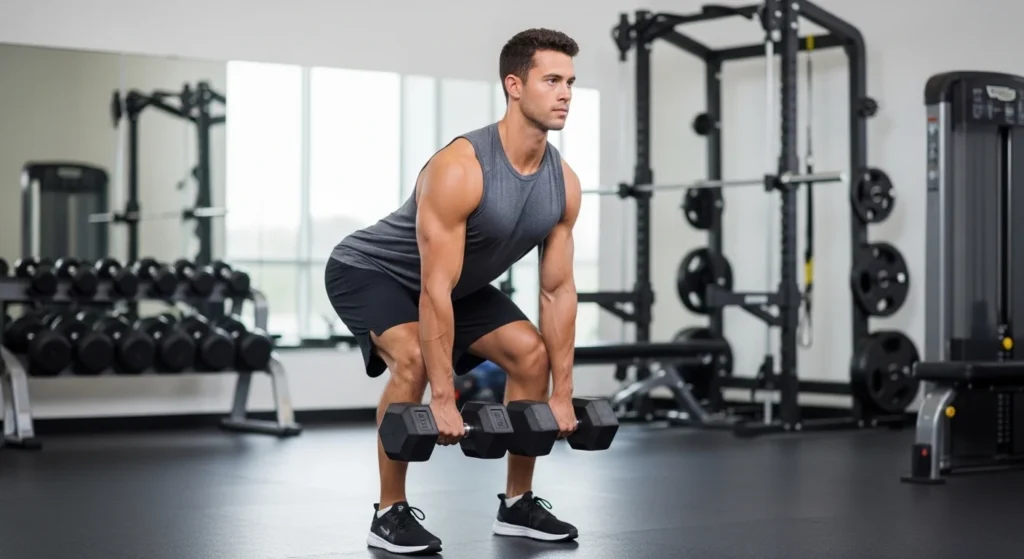
The dumbbell deadlift is a compound strength exercise where you hinge at the hips with a dumbbell in each hand, lower the weights toward the ground while keeping a neutral spine, and then stand back up by driving through your hips and legs. Unlike a squat — where the knees primarily bend — the deadlift focuses on a hip hinge movement pattern that strengthens your posterior chain (the muscles along the backside of your body).
At its core, the dumbbell deadlift mimics the mechanics of a traditional barbell deadlift but offers greater flexibility in hand and shoulder positioning and is often more accessible for beginners.
Benefits of Dumbbell Deadlifts
Here are the main reasons fitness enthusiasts, athletes, and strength trainers include dumbbell deadlifts in their routines:
1. Strengthens the Posterior Chain
The deadlift pattern targets your glutes and hamstrings — the powerhouse muscles for hip extension, athletic performance, and everyday movement like lifting and walking.
2. Reinforces Hip Hinge Mechanics
Mastering the hinge pattern not only improves your deadlifts but also enhances performance in other lifts like squats and kettlebell swings. Proper hip mechanics can reduce injury risk in and out of the gym.
3. Boosts Core Stability
Because the weights move independently in each hand, your core — including the abdominals and obliques — must work hard to maintain stability throughout the lift.
4. Improves Grip Strength
Holding dumbbells without straps forces your forearm flexors to work, building grip endurance that carries over into other lifts.
5. Accessible for All Fitness Levels
You can perform dumbbell deadlifts at home or in the gym with minimal equipment, and they can be scaled with light or heavy dumbbells depending on your ability.
6. Enhances Functional Strength
This movement teaches you how to lift objects from the ground safely — a movement pattern useful for daily life and athletic endeavors.
Muscles Worked (Primary and Secondary)
Dumbbell deadlifts are a full‑body exercise, but certain muscles play bigger roles in the movement.
Primary Muscles Activated
- Gluteus Maximus – Main hip extensor and primary mover during the lift.
- Hamstrings – Assist with hip extension and help stabilize the movement.
- Lower Back (Erector Spinae) – Keeps your spine neutral and supports the hinge.
Secondary and Stabilizing Muscles
- Quadriceps – Assist during the initial phase of standing up.
- Forearms and Grip Muscles – Work to hold dumbbells firmly.
- Core (Abs and Obliques) – Stabilize the torso.
- Upper Back (Traps, Lats, Rhomboids) – Engage isometrically to support posture during the lift.
When performed correctly, this exercise builds strength not just in the legs and hips, but throughout the entire body.
Step‑by‑Step Guide: How to Do a Dumbbell Deadlift
Follow this detailed process to ensure safety and effectiveness:
1. Starting Position
- Stand tall with your feet about hip‑width apart.
- Hold one dumbbell in each hand with your arms fully extended and palms facing your body (neutral grip).
2. Set Up the Hinge
- Brace your core by taking a deep breath and tightening your midsection.
- Keep your chest lifted, shoulders back, and gaze forward.
3. The Descent
- Push your hips backward while maintaining a neutral spine.
- Let the dumbbells travel close to the front of your legs, lowering them toward mid‑shin level.
- Your knees should bend slightly, but the focus is on hip movement, not a deep knee bend.
4. The Ascent
- Once you feel a comfortable stretch in your hamstrings and reach your range of motion, drive through your heels.
- Extend your hips forward — not just thrust them — to stand up tall.
- Keep the dumbbells close to your legs as you rise.
5. Top Position
- Stand upright with your chest tall and glutes engaged. Do not hyperextend your lower back.
- Lower the weights back down and repeat.
Maintain control throughout every repetition — slow on the descent and powerful on the ascent — to get the most benefit and reduce injury risk.
Common Dumbbell Deadlift Mistakes and How to Fix Them
Even experienced lifters sometimes struggle with form. Here are the most common errors and how to correct them:
Mistake 1: Rounded Back
If your spine rounds as you hinge, this dramatically increases stress on the lower back.
Fix: Brace your core and keep a neutral spine from start to finish; imagine holding a long straight line from your head to your tailbone.
Mistake 2: Weights Too Far From the Body
Allowing the dumbbells to drift forward places unnecessary leverage on the lower back.
Fix: Keep dumbbells within an inch or two of your legs throughout the movement.
Mistake 3: Turning the Movement Into a Squat
Bending the knees excessively shifts emphasis away from the hips and posterior chain.
Fix: Think hip hinge, not knee bend — slightly bend knees only as needed.
Mistake 4: Starting With Hips Too Low or Too High
Poor setup compromises leverage and effectiveness.
Fix: Position hips at a midpoint where you feel strong leverage between shoulders and hips.
Mistake 5: Relaxing Shoulders
Loose shoulders reduce upper body stability and risk rounding.
Fix: Keep shoulders engaged, pulled down and back.
Dumbbell Deadlift Variations for Strength and Growth
Variety helps you continue progressing and address weaknesses. Here are proven variations:
1. Sumo Dumbbell Deadlift
Wider stance with toes turned out slightly — emphasizes glute and hip activation.
2. Single‑Leg Dumbbell Deadlift
Unilateral balance challenge with deeper posterior chain focus.
3. Stiff‑Leg Dumbbell Deadlift
Minimal knee bend to maximize hamstring stretch and activation.
4. Offset Dumbbell Deadlift
Hold one dumbbell in one hand to challenge core stability.
5. Dumbbell Romanian Deadlift
A more controlled hip hinge, often done with lighter weights and deliberate pacing.
How to Program Dumbbell Deadlifts in Your Workout
Here’s how to include dumbbell deadlifts in a structured fitness routine depending on your goal:
For Strength
- Sets: 4–5
- Reps: 3–6
- Rest: 2–3 minutes
- Notes: Use heavier dumbbells that challenge you but maintain perfect form.
For Muscle Growth (Hypertrophy)
- Sets: 3–4
- Reps: 8–12
- Rest: 60–90 seconds
- Notes: Focus on tempo and control.
For Endurance or Conditioning
- Sets: 2–3
- Reps: 15–20
- Rest: 45–60 seconds
- Notes: Use lighter weight with perfect form.
Avoid performing deadlifts two days in a row — your posterior chain muscles need recovery time to adapt and grow stronger.
Safety Tips and Best Practices
To ensure you train smart and avoid injury:
- Warm up thoroughly before heavy sets with mobility, light activation exercises, or dynamic stretching.
- Choose a dumbbell weight that allows you to focus on technique first, progression later.
- Use appropriate footwear — flat soles or stable sneakers offer better balance.
- If you have lower back issues, start with lighter weights and focus on core engagement.
- Progress weight gradually — don’t sacrifice form for heavier loads.
Dumbbell Deadlift vs Barbell Deadlift
While both are excellent strength movements, they have distinct differences:
| Feature | Dumbbell Deadlift | Barbell Deadlift |
|---|---|---|
| Equipment Needed | Dumbbells | Barbell + Plates |
| Range of Motion | Often greater | Depends on plates/bar |
| Grip Position | Natural/Neutral | Fixed hand placement |
| Accessibility | Easy, home‑friendly | Requires barbell setup |
| Load Potential | Limited by dumbbells | Potentially very heavy |
| Learning Curve | Beginner‑friendly | More technical |
Dumbbell deadlifts are ideal for beginners or anyone looking to reinforce the hip hinge with safer, more controlled mechanics. Barbell deadlifts are often used for maximal strength training and competitive lifting.
FAQs
What muscles does a dumbbell deadlift work?
The dumbbell deadlift primarily targets glutes, hamstrings, and lower back while also engaging core, upper back, and grip muscles.
Is a dumbbell deadlift better than a barbell deadlift?
It depends on your goals. Dumbbell deadlifts are more accessible and safer for beginners, while barbell deadlifts allow heavier loads and are often used for maximal strength training.
How many reps should I do with dumbbell deadlifts?
For strength, aim for 3–6 reps; for muscle growth, 8–12; for endurance, 15–20, based on your experience and goals.
Can beginners do dumbbell deadlifts?
Yes. The dumbbell deadlift is an excellent starting point for learning hip hinge mechanics before progressing to heavier lifts.
Should deadlifts hurt my lower back?
Deadlifts shouldn’t hurt. If you feel discomfort, you may be rounding your spine or using too much weight. Prioritize form and brace your core.
Can I do dumbbell deadlifts at home?
Absolutely. All you need are a pair of dumbbells and enough space to hinge safely.
How often should I train dumbbell deadlifts?
Include them 1–3 times per week based on your total program, ensuring adequate recovery between sessions.
What is the difference between a Romanian and conventional dumbbell deadlift?
Romanian variations emphasize the hip hinge and hamstring stretch with less knee bend, while conventional styles may allow more knee movement.
Can dumbbell deadlifts improve posture?
Yes. Strengthening the posterior chain and upper back muscles helps support upright posture over time.