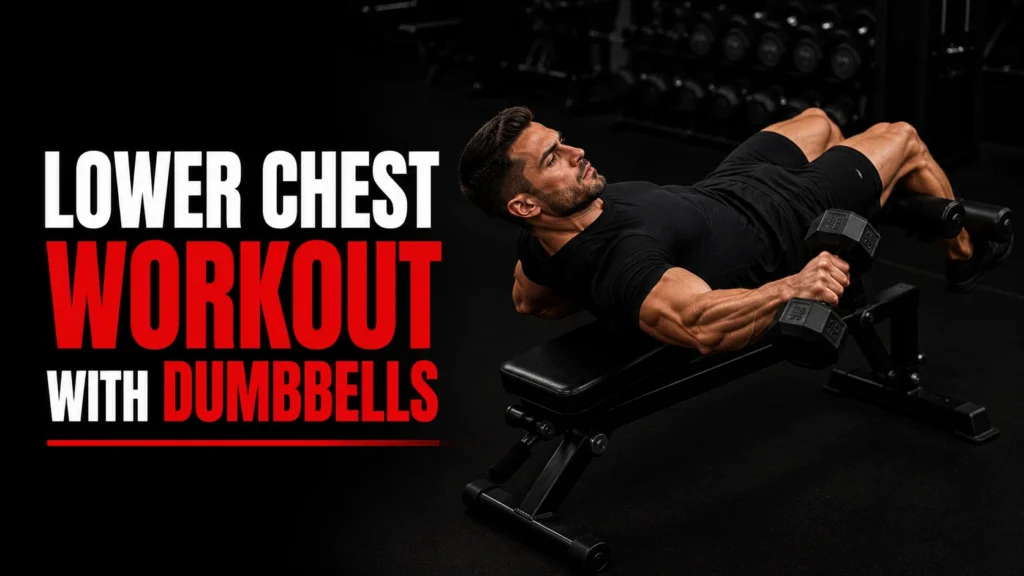
Most people who train their chest regularly have a quiet suspicion about their lower pecs. The upper chest looks decent, maybe even developed. But that thick, rounded line along the bottom of the chest stays stubbornly flat. If that sounds familiar, the problem usually comes down to one thing: not enough deliberate lower chest work, with the right angles, done consistently.
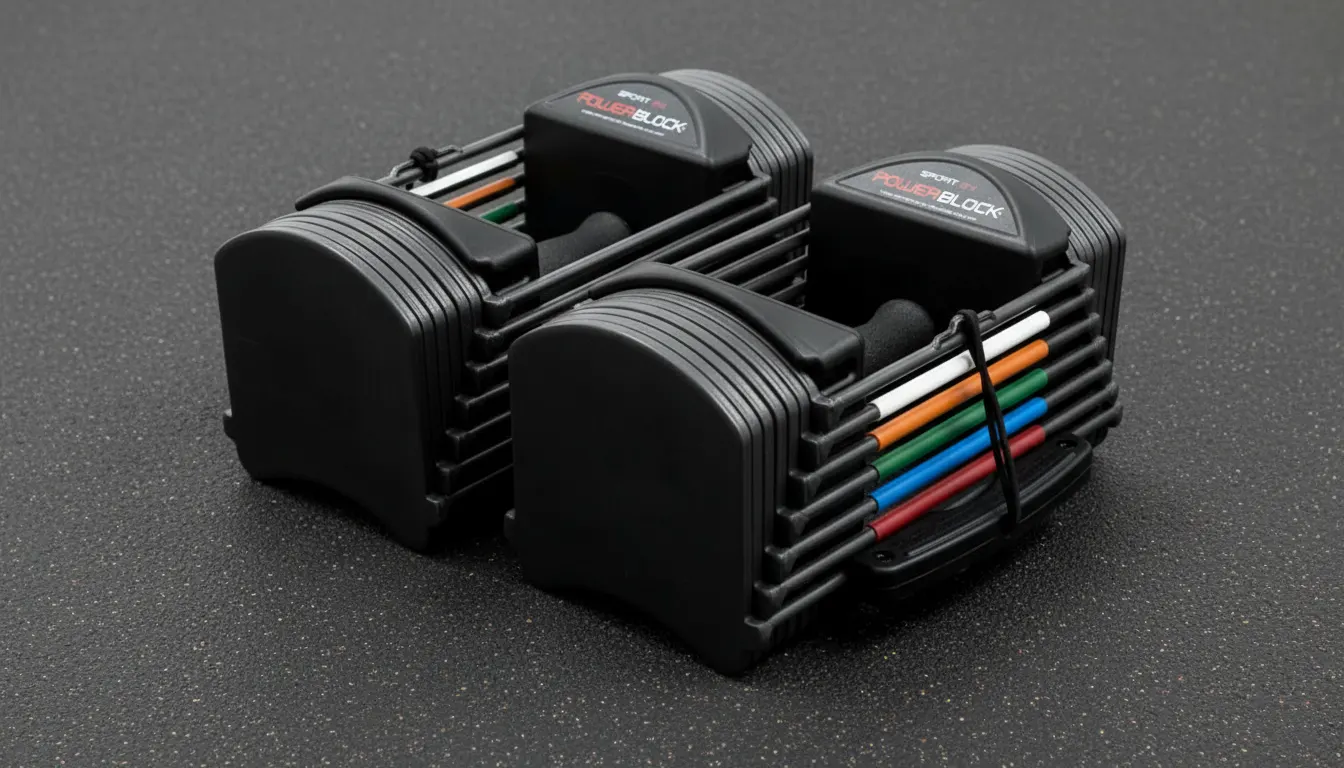
The good news is you do not need a cable machine, a Smith machine, or a commercial gym to fix it. A pair of dumbbells and a reliable floor are genuinely sufficient. This guide will show you exactly why lower chest training works the way it does, which exercises actually target that region, how to build a full routine around them at home, and how to keep making progress past the early gains.
Why the Lower Chest Is So Hard to Develop
The Anatomy Behind the Problem
The pectoralis major is a thick, fan-shaped muscle with fibers running in multiple directions depending on their origin point. Fibers from the lower sternum and costal cartilages run upward and laterally toward the humerus, while middle fibers pass more horizontally.
What this means practically: different fiber groups respond differently to pressing angle. A flat bench press recruits the mid-pec heavily. An incline press shifts emphasis to the clavicular (upper) head. To load the sternal head and costal fibers of the lower chest specifically, you need a pressing vector that travels upward and inward from a declined starting position — pushing the weight up and slightly toward the midline, rather than straight up toward the ceiling.
The pectoralis major originates from multiple points: the anterior sternum, the clavicular head, the sternal end of rib 6, the superior six costal cartilages, and from the aponeurosis of the external oblique. All fibers converge toward a flat tendon that inserts into the lateral lip of the bicipital groove of the humerus.
This fan-shaped architecture is exactly why angle matters so much. Pulling on the bottom of a fan from a slightly elevated position creates more tension on those lower fibers than pressing straight up from a flat surface.
Why Most People Neglect It
Flat bench press is comfortable and familiar. Incline press feels productive for upper chest aesthetics. Decline movements, on the other hand, feel awkward to set up, especially at home without a decline bench. Most people skip them by default and then wonder why the bottom third of their chest never fills out.
There is also a form issue. Even lifters who include decline work often press the dumbbells straight up toward their face instead of toward the lower sternum, effectively shifting the load away from the lower pec fibers they are trying to hit.
The Core Principles Before You Start Any Exercise
Pressing Direction Is Everything
When performing any lower chest movement, the dumbbells should travel toward the lower portion of your sternum — not straight up, not toward your chin. Imagine your chest is divided into zones and you want the weight path to converge at the bottom of that zone. This sounds minor, but it changes which fibers take the majority of the load.
Decline Angle: How Much Is Enough
A decline angle of around 15 to 30 degrees is generally recommended for lower chest work, with feet flat on the floor or elevated depending on your setup. More than that and you start recruiting lower back and hip flexors to stabilize the position, which reduces pec focus. For most home setups, a 15-degree decline is entirely sufficient.
Dumbbells Have a Real Advantage Here
Unlike a barbell, dumbbells allow the hands to touch at the top of a press and drop further down past the chest at the bottom, offering a greater range of motion and the ability to better isolate the lower chest fibers. This matters for hypertrophy: more range of motion under load generally means more muscle fiber recruitment and a more complete stretch at the bottom of each rep.
Mind-Muscle Connection for the Lower Pecs
This is one of those areas where thinking about the muscle being contracted actually produces measurably better results. Before each set, actively squeeze your lower chest and feel where the tension sits. During the movement, focus on driving through the lower pec rather than just moving weight from point A to point B.
7 Lower Chest Dumbbell Exercises You Can Do at Home
1. Decline Dumbbell Press (with a Bench or DIY Setup)
This is the most direct lower chest exercise available with dumbbells and the one worth putting first in your workout when your energy is highest.
Setup without a decline bench: Place a rolled-up yoga mat, a folded blanket, or a firm wedge under your lower back and glutes so your upper body angles slightly downward. The angle does not need to be dramatic — 15 degrees creates genuine lower pec activation.
How to perform it:
- Sit with the dumbbells on your thighs, then carefully lower yourself back so the weights rest at chest height
- Your elbows should be at roughly 90 degrees at the bottom of the movement
- Press the dumbbells upward and slightly toward each other, aiming toward the lower sternum rather than straight overhead
- Lower with control over about 2 to 3 seconds — the eccentric phase is where a significant amount of the muscle-building stimulus comes from
- Do not lock out at the top; keep a slight bend in the elbows to maintain chest tension
Sets and reps: 3 to 4 sets of 8 to 12 reps. Rest 90 seconds between sets.
Common mistake: Flaring the elbows out past 90 degrees, which transfers stress to the front deltoids and increases shoulder joint strain. Keep elbows at roughly 45 to 75 degrees from your torso.
2. Decline Floor Press
The decline floor press uses your own body to create the angle — lift your hips off the floor and hold a bridge position throughout the set, which places your upper body on a downward slope while activating the lower pectoral muscles as you press.
This is the most accessible lower chest exercise in this entire guide. If you have dumbbells and a floor, you can do it right now.
How to perform it:
- Sit on the floor behind two dumbbells with your knees bent
- Grab the dumbbells and roll back, holding them above your chest
- Lift your hips into a bridge position — glutes squeezed, neutral spine, feet flat on the floor
- Press the dumbbells upward while keeping your hips elevated the entire time
- Touch the dumbbells together at the top for an extra squeeze, then lower with control
Why the bridge matters: The hip elevation creates the decline angle. If your hips drop mid-set, you lose that angle and the lower pec emphasis along with it. Start with a lighter weight than you think you need until holding the bridge feels stable.
Sets and reps: 3 sets of 10 to 12 reps.
3. Decline Dumbbell Fly
While presses build mass in the lower chest, flies develop the stretched, contracted feel that gives the muscle its shape and separation. The decline fly specifically targets the inner and lower pec fibers during the adduction portion of the movement.
How to perform it:
- Use the same declined position as the decline press — either on a wedge or in a bridge on the floor
- Hold the dumbbells above your chest with a slight bend in the elbows (this bend stays fixed throughout the movement)
- Open your arms in a wide arc, lowering the dumbbells out to the sides until you feel a genuine stretch across the lower chest
- Bring the dumbbells back together overhead, squeezing the chest at the peak of contraction
- The movement should feel like you are hugging a large barrel, not pressing
Keep the weight honest here. Decline flies with too much weight turn into a partial press with a lot of shoulder involvement. Starting with lighter weights and building up slowly as your form becomes reliable is recommended — this is not an exercise to ego-load.
Sets and reps: 3 sets of 10 to 15 reps.
4. Dumbbell Incline Push-Up (Lower Chest Variation)
This one confuses people at first. An incline push-up — where your hands are elevated and your feet are on the floor — actually shifts emphasis to the lower chest, because the pressing angle sends your body upward and away from the elevated surface, replicating the mechanics of a decline press.
Incline push-ups reduce the amount of resistance your muscles work against compared to decline variations, but they do target the lower chest more effectively than standard flat push-ups, making them useful as a warm-up or finisher.
With dumbbells: Place the dumbbells on the floor shoulder-width apart and use them as handles during the push-up. This increases range of motion at the bottom compared to using the floor directly, and hex-shaped dumbbells are more stable for this purpose.
How to perform it:
- Place your hands on a low bench, a chair, or a step — roughly 12 to 18 inches off the ground
- Walk your feet back so your body forms a straight line
- Lower your chest toward the surface, keeping your elbows at about 45 degrees from your torso
- Press back up to full extension without locking the elbows
Sets and reps: 3 sets to within 2 reps of failure.
5. Dumbbell Squeeze Press (Hex Press / Crush Press)
The dumbbell squeeze press, also called the crush press, focuses on activating the pectoralis major and triceps by pressing two dumbbells together isometrically while performing the pressing movement. The constant lateral squeeze forces continuous pec engagement throughout the full range, making it particularly effective for developing the inner lower chest.
How to perform it:
- Lie flat on the floor or on a bench
- Press two dumbbells together firmly and hold that inward force throughout the entire set
- Press upward while maintaining the squeeze, then lower with control
- The dumbbells should never separate — if they do, reduce the weight
Why it works: Most press variations have a point in the range of motion where the chest is relatively unloaded. The squeeze press eliminates that by adding an isometric adduction demand on top of the press. That constant tension is genuinely different from a standard flat press and recruits the inner pec fibers harder.
Sets and reps: 3 sets of 8 to 12 reps.
6. Dumbbell Pullover (Lower Chest Emphasis)
The pullover is a bit unusual because it does not look like a chest exercise — but it hits the lower pec fibers during the arc motion in a way that pressing alone cannot replicate.
How to perform it:
- Lie with only your upper back and shoulders supported on a bench, or perpendicular across a flat bench
- Your hips should be slightly lower than your shoulders
- Hold one dumbbell with both hands, gripping the weight at one end so it hangs vertically
- Start with the dumbbell above your chest, arms slightly bent
- Lower the weight in an arc behind your head until you feel a stretch across the chest and lats
- Return the dumbbell in the same arc back over your chest, focusing on the lower pec contracting to initiate the pull
Sets and reps: 3 sets of 10 to 12 reps. This exercise works well as a finisher.
7. Single-Arm Decline Dumbbell Press
Most lifters have a dominant side that compensates during bilateral pressing movements. If your left lower pec is noticeably less developed than the right, this is often why.
How to perform it:
- Use the same decline setup as the standard decline floor press
- Press one dumbbell at a time while the other arm rests at your side or on your chest
- Focus entirely on the working side and pause briefly at the peak contraction before lowering
- Complete all reps on one side before switching
Sets and reps: 3 sets of 10 to 12 reps per side. Use slightly less weight than your bilateral press.
Building a Complete Lower Chest Routine at Home
The Weekly Structure
You do not need to dedicate an entire training session to the lower chest. Two focused sessions per week that include lower chest work will produce better results than one marathon chest day. Allowing at least 48 hours of recovery between sessions supports muscle repair and hypertrophy; overtraining the chest with too frequent sessions stalls progress rather than accelerating it.
A practical structure:
Session A (Strength focus):
- Decline Floor Press — 4 sets x 6 to 8 reps (heavier weight)
- Decline Dumbbell Fly — 3 sets x 10 to 12 reps
- Squeeze Press — 3 sets x 8 reps
Session B (Hypertrophy / volume focus):
- Decline Dumbbell Press — 3 sets x 10 to 12 reps
- Single-Arm Decline Press — 3 sets x 10 reps per side
- Incline Push-Up — 3 sets to near failure
- Dumbbell Pullover — 2 sets x 12 reps (finisher)
How to Actually Progress
Progressive overload — gradually increasing training demands through added weight, more reps, additional sets, or reduced rest — is the central mechanism that drives muscle growth. Muscles adapt only when the demands placed on them exceed what they have already adapted to.
In practical terms for home dumbbell training:
When you can complete the top end of your rep range for all sets with good form, add weight at your next session. If adding weight is not possible (because you do not have heavier dumbbells), add one rep to each set. When you reach two extra reps across all sets, try slowing the eccentric to 3 to 4 seconds. That tempo change significantly increases time under tension without requiring heavier loads.
Around 10 hard working sets per week for the chest is a reasonable landmark for intermediate trainees. Beginners should start well below that and build gradually, focusing on technique before volume.
Warm-Up Before Lower Chest Training
Cold muscles under load is how injuries happen. Spend 5 minutes before your first working set doing:
- Arm circles, both forward and backward
- Band pull-aparts or light resistance band chest flies
- One or two light sets of the first exercise at 50% of your working weight
The warm-up sets also help calibrate your mind-muscle connection for the session, which improves lower pec activation from the first real set onward.
Form Mistakes That Kill Lower Chest Progress
Pressing toward your face instead of your lower sternum. This is the most common technique error and it shifts almost all the load onto the front deltoids. Visualize the target before each press.
Using too much weight on flies. Flies are not a strength movement. They are a stretch-and-contraction exercise. Heavy flies turn into a partial press with the shoulder joint in a compromised position. Use a weight where you feel the chest genuinely stretching at the bottom.
Letting the hips drop during the bridge press. If your hips sag during the decline floor press, you lose the angle that makes the exercise specific to the lower chest. Squeeze the glutes and hold that position.
Rushing the eccentric. The lowering phase of a press is where a substantial amount of the muscle-building stimulus happens. A 2-to-3-second lowering tempo on every pressing rep will produce noticeably better results than fast, bouncy reps.
Ignoring the mind-muscle connection. Research consistently shows that focusing on the target muscle during a lift increases its activation. For the lower chest specifically — which tends to be underdeveloped and harder to feel — this matters even more than for larger, more familiar muscle groups.
Frequently Asked Questions (FAQs)
Can you actually build the lower chest without a decline bench?
Yes, genuinely. The decline floor press (bridge position), incline push-ups, and the squeeze press all create lower chest activation without any bench at all. The bench makes setup easier and allows heavier loads, but it is not a prerequisite for results.
How long before lower chest training shows visible results?
With consistent training twice per week and adequate protein intake, most people notice measurable changes in lower chest definition within 8 to 12 weeks. The first 4 weeks are largely neurological adaptation — your nervous system learning to recruit those fibers more efficiently. Visible hypertrophy typically follows after that.
Should I train lower chest on its own or as part of a chest day?
Including 2 to 3 lower chest exercises within a broader chest day works well for most people. An entire session devoted exclusively to lower chest is rarely necessary and can lead to overtraining that area while neglecting the rest of the pec.
What is the best rep range for lower chest dumbbells?
8 to 12 reps works well for most people training for a combination of strength and size. If you are prioritizing pure hypertrophy, extending to 10 to 15 reps on isolation movements like flies is effective. For strength, 5 to 8 reps with heavier weights produces better results.
Are dips better than dumbbells for the lower chest?
Weighted dips hit the lower chest hard, particularly when the torso leans slightly forward. They are arguably one of the single best lower chest exercises. However, they require parallel bars and place more demand on the triceps and shoulder joint than dumbbell work. Adding dips on top of a dumbbell lower chest routine produces excellent results; choosing one over the other largely depends on your equipment and shoulder health.
Why does my shoulder hurt during decline presses?
Shoulder pain during decline pressing usually comes from one of three things: elbows flared too wide, pressing toward the face instead of the lower sternum, or starting with too much weight before the movement pattern is established. Reduce the weight, focus on keeping elbows at 45 to 75 degrees, and ensure the press path targets the lower sternum. If pain persists, consult a sports medicine professional.
How do I know if my lower chest is actually working during the exercise?
At the bottom of a proper decline press or fly, you should feel a stretch specifically in the lower pec region — below the mid-chest line. At the top, there should be a squeeze and contraction in the same area. If you only feel it in your front shoulders or triceps, the pressing angle is likely off or the weight is too heavy to control correctly.
Can beginners do lower chest dumbbell training?
Absolutely. The decline floor press and incline push-up are manageable for beginners and teach the correct movement patterns without requiring complex equipment. Start with bodyweight incline push-ups if dumbbell work feels like too much load initially, then progress to dumbbells as the pattern becomes comfortable.
How much weight should I use for lower chest dumbbell exercises?
Start lighter than you think you need to. Most people load lower chest exercises the same way they load flat bench — and then compensate with shoulder and tricep drive when the chest cannot handle it. A weight where the last 2 reps of each set feel genuinely challenging, but where form stays clean throughout, is the right starting point.
Is lower chest training important for overall pressing strength?
Yes. The pectoralis major contributes to adduction, forward elevation, and inward rotation of the upper arm, with the sternal and costal fibers specifically supporting pressing movements that involve horizontal adduction and depression of the shoulder girdle. A well-developed lower chest contributes directly to flat bench press numbers and any pressing movement where the bar path travels across the lower sternum.
In conclusion
The lower chest is one of those muscle groups where targeted, intelligent training pays off faster than people expect — but only if the training is actually specific to those fibers. Flat pressing alone will not do it. Random high-rep sets will not do it. What works is deliberate decline-angled pressing with dumbbells, consistent progressive overload over weeks and months, and enough recovery between sessions to let the adaptation actually occur.
The exercises in this guide cover all the mechanical bases. You do not need all seven in a single session. Pick three or four, execute them with good form and genuine effort, eat enough protein, sleep enough, and come back two days later ready to do it again.
That is genuinely the whole thing. The lower chest responds to the same principles as every other muscle group: the right stimulus, applied consistently, with adequate recovery. Nothing exotic required.
Want stronger legs and better balance? Check out How to Do Dumbbell Stationary Lunge for proper form, key benefits, and tips to target your quads, glutes, and hamstrings effectively.