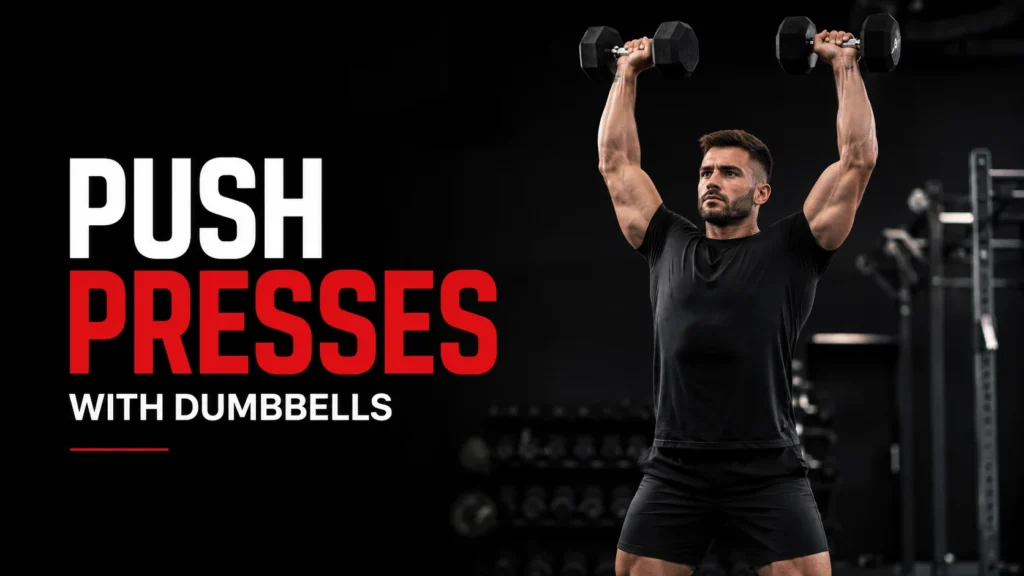
There’s a version of overhead pressing that feels almost unfair — like you found a cheat code. You’re moving more weight than a strict press, training more of your body at once, and building a kind of explosive strength that carries over to nearly everything else you do. That’s the push press.
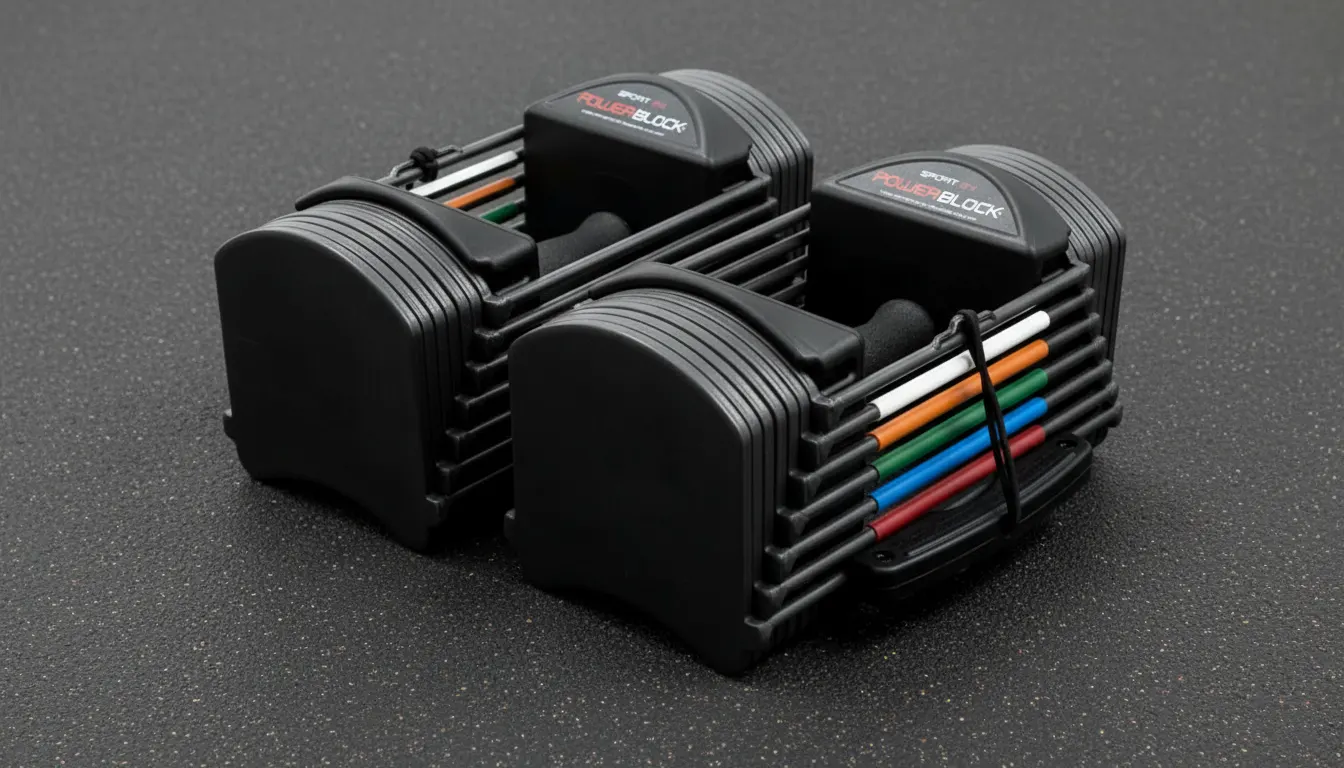
With dumbbells specifically, it’s one of the best compound movements you can do in a home gym. No barbell required, no rack, no spotter. Just a pair of dumbbells, some space, and a willingness to actually learn the movement instead of just winging it.
Most people treat it like a cheat-rep version of the overhead press. Dip a little, shove the weight up, repeat. And honestly, that’s where the movement breaks down for most beginners. There’s real technique here, and when you get it right, you’ll feel the difference immediately.
What Makes the Push Press Different
The push press isn’t just a shoulder press with bent knees. The whole point is that your legs initiate the lift, not your arms. Your legs create the momentum, your arms finish it. That sounds simple. It isn’t until it clicks.
In a strict overhead press, you grind the weight up through raw shoulder and tricep strength. The push press allows you to use heavier dumbbells because your lower body — your quads, glutes, and hips — launches the weight off your shoulders before your arms take over. Done right, you can press 20–30% more than your strict press max, sometimes more.
That leg-to-arm handoff is what coaches call “core-to-extremity timing.” It’s the same sequencing pattern that shows up in throwing, jumping, and swinging a bat. Training it with the push press makes you more athletic, not just stronger.
For home gym training specifically, push presses are valuable because they let you push your shoulders harder with limited equipment. If you’ve only got a set of fixed dumbbells and your max is a 30kg pair, push presses let you still train near-max overhead loading without needing heavier weights.
How to Do Dumbbell Push Presses
Starting position
Hold a dumbbell in each hand at shoulder height. The heads of the dumbbells should rest on or just above your shoulders, not out in front of you. Your elbows should be angled slightly forward — not straight out to the sides, not pointing straight down. Think of it as the front rack position without the barbell. Feet hip-width apart, knees slightly soft.
One thing beginners often miss here: your torso needs to be upright. If you’re leaning forward even slightly before you dip, the whole movement goes sideways from there.
The dip
This is a shallow, controlled quarter squat. You’re not going deep — maybe three to four inches of knee bend. The important thing is that your torso stays vertical throughout. This is where most people fall apart: they lean forward as they dip, which shifts the weight forward and turns the whole drive phase into a mess.
Keep your weight in your heels and mid-foot, not the balls of your feet. If you tip forward even slightly, you lose the ability to generate force straight up through the ground.
The drive
This is the make-or-break part. As soon as you hit the bottom of the dip, you reverse direction explosively — no pause, no hesitation. Drive your heels into the floor, extend your knees and hips hard, and feel the dumbbells pop off your shoulders.
You should actually notice the dumbbells become lighter at this moment. That’s the leg drive doing its job. The arms engage right as that force transfers from the hips into the weight. If you pause at the bottom, you lose the stretch reflex and the drive is half as effective.
The press
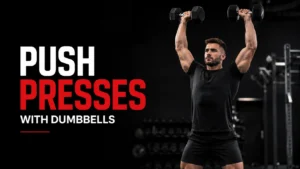
Your arms take over from where the leg drive leaves off. Press the dumbbells straight up, lock out overhead with your biceps near your ears. At the top, the weight should be stacked over your shoulders, over your hips — a solid vertical column.
The descent
Lower the dumbbells back to your shoulders under control. A lot of people rush this part. You don’t need to drop them — control the eccentric, get your starting position back, and flow into the next rep.
The Timing Problem
The biggest issue you’ll see is arms starting too early. People begin pressing before their legs have finished extending. This defeats the whole purpose. You end up doing a kind of half-strict, half-assisted press that’s worse than both.
The cue that works: think of your legs finishing before your arms start. The dumbbells should already be moving upward when your arms engage. Your hands are following the momentum, not creating it. Once you feel that distinction, the movement makes much more sense.
Another common error is the pause at the bottom of the dip. This usually feels awkward at first because most people think they need a moment to “load up.” They don’t. The stretch reflex only works if the turnaround is immediate. Dip and immediately drive — smooth, continuous, no stop at the bottom.
Mistakes Worth Knowing About
Forward lean on the dip. This is probably the most common fault. The torso tips forward, the dumbbells drift in front of the body, and the drive ends up pushing the weight at an angle instead of straight up. If you keep leaning forward, try practicing against a wall: stand with your back close to a wall and dip, keeping your upper body from touching it. That tactile feedback fixes the problem fast.
Going too heavy too soon. The push press feels easier than a strict press, so people load up quickly. But heavier weight amplifies every technical error. Your looping dip gets worse, your timing falls apart, and you end up grinding the weight up with your arms anyway — which isn’t the point. Start lighter than you think you need to.
Short-changing the hip extension. Some people dip and drive but never fully extend their hips at the top of the drive. This limits the force transfer significantly. Full extension — standing tall, glutes squeezed — is when the weight pops off your shoulders most efficiently. Practice the drive with no arm involvement at first and watch what happens: with full hip extension, the dumbbells will actually float up on their own.
Locking the knees too early. Once the drive is done, your legs should finish extending and stay there until the weight is overhead. Some people buckle at the knees mid-press or start another dip while their arms are still pushing. Keep everything tight through the lockout.
Who the Push Press Is Good For
Honestly, most people with a basic fitness background should be doing push presses. If you already know how to overhead press with decent form, adding the leg drive is a fairly natural progression.
Athletes will get a lot out of this — the explosive lower-body pattern carries over to jumping, sprinting, and throwing mechanics. But it’s not just for athletes. Anyone trying to build functional overhead strength in a home gym setting will benefit, especially if their dumbbell selection is limited and they need to make lighter weights feel harder.
People who’ve plateaued on strict pressing also find push presses useful. It gives your shoulders a break from pure grinding while still keeping overhead work in your program, and the extra load stimulus can break through sticking points over time.
Who Should Be More Careful
If you have existing shoulder impingement issues, be honest about your range of motion before loading up. The dumbbell variation is actually more shoulder-friendly than a barbell push press for most people — the neutral or slightly angled grip allows more natural shoulder mechanics — but it still requires good overhead mobility.
Lower back issues are worth watching, too. The dip creates some spinal loading, especially if your core isn’t braced properly. This isn’t a reason to avoid the movement, but it’s a reason to start light and focus on keeping your core tight through the entire rep.
And if you can’t do a decent strict overhead press yet — if your form is shaky, your shoulder mobility is limited, or you’re a true beginner — get the strict press sorted first. The push press is built on that foundation. Without it, you’re just using leg drive to paper over overhead pressing problems.
Where It Fits in Your Training
Push presses belong early in a workout, before fatigue sets in. This is a power movement — it requires coordination and speed, and both deteriorate when you’re tired. Putting it after you’ve already hammered your shoulders with lateral raises makes no sense.
A typical placement: after a brief warmup, before your main accessory work. Some people use it as the primary strength movement in an overhead day.
For sets and reps, it’s flexible. Heavier and lower reps (3–5) build raw pressing power. Moderate weight for 6–10 reps builds strength-endurance and is how most home gym lifters will use it. Higher rep sets (12–15) with lighter dumbbells become more metabolic — closer to what you’d see in a conditioning context.
One option that works well: start a session with 4–5 sets of push presses, then move to strict presses with a lighter dumbbell as a follow-on. The strict press after a push press session will humble you, which tells you how much leg drive was doing.
Variations Worth Trying
Single-arm dumbbell push press. Significantly harder on your core — the unilateral loading forces your trunk to work against rotation on every rep. Also great for identifying and fixing side-to-side strength imbalances. If one arm consistently struggles with the timing or the lockout, this will expose it.
Alternating push press. You can alternate arms each rep or each set. Less challenging than strict single-arm work, but good for building rhythm and keeping volume up without frying your shoulders.
Pause at the top. Pressing to lockout and holding for a beat — one or two seconds — before lowering builds overhead stability and teaches you what a real locked-out position feels like. Useful if you tend to rush the top of the movement or if your lockout feels wobbly.
Tempo dip, fast drive. Take a slow, controlled dip (2–3 seconds), then explode upward. This isolates the drive phase and forces you to develop leg power without relying on a fast dip for momentum. It’s harder than it sounds and good for technique development.
Frequently Asked Questions (FAQs)
Can I do push presses without ever learning the strict press?
You can, but it’s not ideal. The strict press teaches you overhead mechanics and builds the baseline shoulder strength that makes push pressing safer and more effective. Think of strict pressing as the prerequisite.
How much more can I push press than strict press?
Roughly 20–30% more for most people, sometimes more once the technique is dialed in. If you’re pressing nearly the same weight in both, your leg drive is either minimal or your strict press is limited by something other than raw strength.
Is this movement safe for home training without a spotter?
Yes. Unlike bench pressing, you can safely dump dumbbells to the side if a rep goes wrong. Just be aware of your surroundings and practice doing so with light weight before you load up.
How often should I do push presses?
Once or twice a week works well for most people. If you’re using it as your primary overhead movement, once per week with good volume is plenty. As a secondary movement alongside strict pressing, twice a week is fine.
Want stronger hamstrings, glutes, and posterior chain development? Check out the Stiff Legged Deadlift with Dumbbells for proper form, key benefits, and tips to perform this hinge movement safely and effectively.