Most people treat calf training as an afterthought — a few half-hearted sets at the end of leg day before heading home. If your calves have always been your most frustrating body part, that approach is exactly why.
Here’s what most gym advice gets wrong: Seated calf raises with dumbbells are not just a machine substitute. They are a targeted, biomechanically specific movement that trains a completely different portion of your calf than standing raises do. Once you understand that distinction, the whole game changes.
Why Your Calves Are Not Growing (And What’s Actually Missing)
Calves are notoriously stubborn. Walk into any gym, and you’ll find people with enormous quads and negligible lower legs — not because they skipped calf day, but because they’ve been training only half the muscle.
The calf is not one muscle. It’s two: the gastrocnemius and the soleus. They look similar on the surface, but their anatomy is completely different, and they respond to exercise in completely different ways.
The gastrocnemius is the large, two-headed muscle that gives the calf its visible shape — the diamond outline you see from behind. It crosses both the knee joint and the ankle joint, which matters enormously for how you train it.
The soleus sits underneath the gastrocnemius. It’s broader, flatter, and denser. Because it only crosses the ankle joint (not the knee), it stays active regardless of your knee position. And because the gastrocnemius goes slack when your knee is bent, the soleus ends up carrying most of the load during seated movements.
That’s why seated calf raises with dumbbells exist as a distinct exercise rather than just a modified version of the same movement. When you sit down and place a dumbbell on your thigh, you’re not doing a “modified” calf raise. You’re training the soleus in a way that standing raises cannot replicate.
What the Research Actually Shows
A 2023 study published in Frontiers in Physiology put this to the test directly. Researchers had untrained adults train one leg with standing calf raises and the other with seated calf raises — same load, same sets, same frequency, for 12 weeks. MRI scans measured muscle volume before and after.
The results were more nuanced than most fitness content suggests. Standing raises produced significantly more gastrocnemius growth — the lateral head grew about 12.4% with standing versus 1.7% with seated. That’s a large difference. However, soleus growth was nearly identical between conditions — around 2.1% to 2.9% depending on the leg.
Seated calf raises do not produce inferior soleus development compared to standing raises — they just don’t train the gastrocnemius. Do only seated raises and you leave significant gastrocnemius growth on the table. Do only standing raises and your soleus stays undertrained. Both exercises belong in your program.
The Anatomy of a Seated Calf Raise
The Soleus: Your Endurance Anchor
It originates from the back of the tibia and fibula just below the knee and attaches to the heel via the Achilles tendon. Its fiber composition is predominantly slow-twitch — built for sustained effort rather than explosive bursts. Walk anywhere for ten minutes and your soleus has been working the whole time.
Because it’s a slow-twitch dominant muscle, it tends to respond well to higher rep ranges and greater training volume. Sets of 15 to 20 reps are not excessive for the soleus — they’re often where the best growth stimulus lives.
The Gastrocnemius: Why It Steps Aside
When your knee is bent at 90 degrees — as it is when you sit for a calf raise — the gastrocnemius enters what’s called active insufficiency. It’s already shortened at the knee and can’t generate meaningful force at the ankle simultaneously. The muscle is still present, still attached, but it can’t contribute much. This is not a flaw in the exercise. It’s the point of the exercise.
The Achilles Tendon and Plantar Flexion
Both muscles attach via the Achilles tendon and produce plantar flexion — the act of pushing your foot downward, or in this case, raising your heel. The range of motion available to you during a seated calf raise depends partly on ankle flexibility. Restricted ankles will limit how high your heels travel, reducing the stretch and contraction available to the soleus.
This is why ankle mobility work isn’t just for runners. It directly impacts how well your calf training actually works.
How to Do Seated Calf Raises with Dumbbells: Step-by-Step
The setup matters more than most people realize. Done carelessly, seated dumbbell calf raises produce mediocre results. Done precisely, they’re one of the best soleus exercises you can perform without a machine.
Equipment You Need
- A sturdy flat bench, chair, or box
- One or two dumbbells of appropriate weight
- A raised surface for your feet — a weight plate, a small step, a yoga block, or a dedicated calf raise block
You can skip the elevated foot surface and just keep your feet flat on the floor, but you’ll lose the bottom stretch. The deep dorsiflexion at the bottom — heels dropping below toes — is where a significant portion of the calf stimulus comes from. Skipping it shortchanges the exercise.
Setup Position
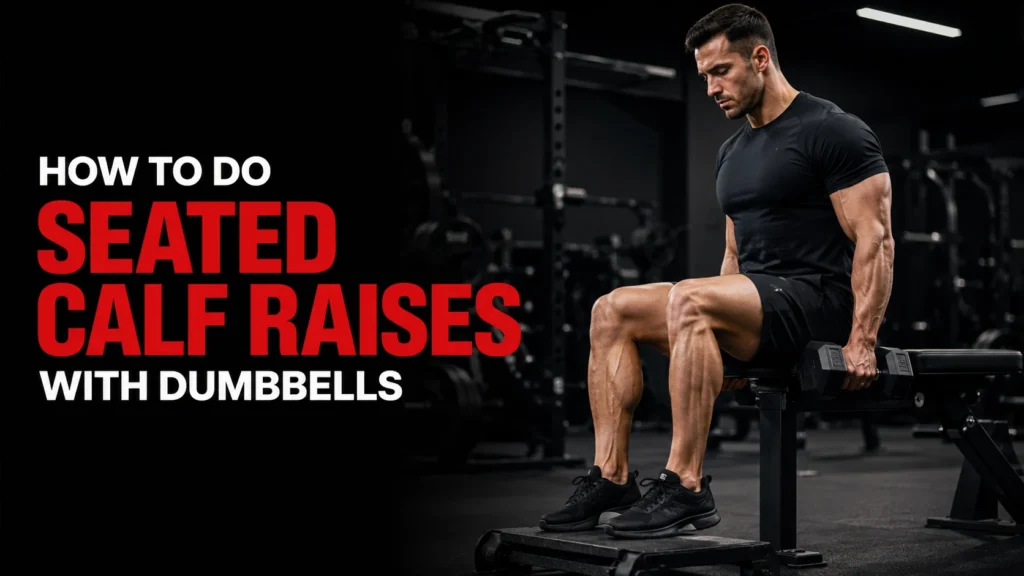
Sit on the bench with your feet hip-width apart, heels off the edge of the raised surface so they can drop freely. Your knees should be at approximately a 90-degree angle. Shins vertical or close to it. Back straight, core lightly braced.
Place a dumbbell on end on top of each thigh, close to your knee. If you’re using a single heavier dumbbell, rest it flat across both thighs. A folded towel under the dumbbell prevents discomfort on the quadriceps — worth using once the weights get heavy.
The Movement
Lower your heels below the level of your toes. Feel the stretch in the calf — this is your starting position for each rep, not the neutral flat position. Don’t let the heels rest on the floor between reps. Maintaining tension throughout the set is more productive than resetting each time.
Drive through the balls of your feet. Push up as high as you can, squeezing the calf at the top of the movement. Hold the top position for one full second. Then lower with control over two to three seconds. Don’t bounce at the bottom. The bounce is how people trick themselves into thinking they’re doing more work than they are — momentum takes over and the muscle stops being challenged.
Repeat for the target number of reps.
Breathing
Exhale as you raise your heels. Inhale as you lower. Don’t hold your breath through sets, especially heavier ones.
Common Mistakes That Kill Your Calf Progress
Cutting the Range of Motion Short
This is the most damaging mistake. If your heels don’t drop below your toes at the bottom, you’re missing the deep stretch that drives much of the growth stimulus. Research on muscle growth increasingly supports the idea that training at longer muscle lengths — the stretched position — produces greater hypertrophy than partial-range work. For the soleus, this means heels below the level of the balls of your feet on every single rep.
Using Momentum and Bouncing
A fast, bouncy seated calf raise feels like effort. It isn’t. When you bounce at the bottom, you transfer the load from muscle to tendon and connective tissue, bypassing the very tissue you’re trying to develop. Slow the eccentric (lowering phase) down to two or three seconds. You’ll immediately feel how much harder the exercise becomes — and how much less weight you actually need.
Loading Too Heavy Too Soon
Heavier dumbbells are not inherently better for calf training. Because the calf responds well to higher reps, trying to use the heaviest dumbbell you can find often just produces compensated form and a shortened range of motion. Start lighter than feels necessary. Master the full range first. Add load incrementally.
Not Elevating the Feet
Training with feet flat on the floor limits the stretch at the bottom. You won’t damage anything, but you’re consistently shortchanging the stimulus. A single 25-pound weight plate as a foot platform is all you need to change this.
Placing the Dumbbell Too Far from the Knee
The further the dumbbell sits toward mid-thigh, the more awkward it becomes to stabilize, and the more it tends to slide during the movement. Keep the dumbbell close to the knee — resting on the distal end of the thigh just above the kneecap. This is the most stable and comfortable position.
Ignoring the Pause at the Top
The brief squeeze at the top of the movement is not optional showmanship. It ensures you’ve completed a full plantar flexion and gotten the maximum contraction before lowering. Without it, reps tend to become progressively shorter as fatigue accumulates.
Programming: Sets, Reps, Frequency, and Load
Rep Ranges
For the soleus specifically, higher rep ranges tend to work well. Three to four sets of 12 to 20 reps per session is a reasonable starting point. Some trainees respond well to even higher reps — 20 to 25 — given the soleus’s slow-twitch fiber composition. If a set of 15 reps feels comfortable and controlled at a given weight, you haven’t maxed out the stimulus at that rep count yet.
This doesn’t mean you should never use lower reps. Progressive overload across a range of intensities — occasionally heavier sets of 8 to 12 alongside higher-rep sets — gives the muscle different stimuli and keeps adaptation happening.
Training Frequency
Calves recover relatively quickly. Training them two to three times per week is standard for most people trying to build the muscle. Some advanced trainees go higher, particularly those who find calves respond to more frequent work.
The caveat: if you’re doing heavy sets with slow eccentrics and full range of motion, calves will be sore. Give yourself 48 hours between sessions at minimum.
Progressive Overload
This is where most calf training falls apart. People pick a dumbbell weight and use it indefinitely. Muscles don’t grow without progressive challenge. Track what you did last session. Add a rep, add a set, or add weight when the current setup becomes too manageable. It doesn’t need to be complicated — but it does need to happen.
A practical progression: if you completed 3 sets of 15 reps with controlled form last session, try 3 sets of 16 or 17 this session. When you hit 20 clean reps, add weight and drop back to 12 to 15.
Where to Place It in Your Workout
Calf training at the end of leg day is the default, and it works fine. If your calves are genuinely lagging, consider training them earlier in the session when you have more energy and focus. Pairing a set of seated raises with a set of standing dumbbell calf raises as a superset is an efficient way to train both portions of the calf in a single block.
Variations of Seated Calf Raises with Dumbbells
Single-Leg Seated Dumbbell Calf Raise
Hold one dumbbell on one thigh and lift only that foot. Working one leg at a time increases the relative load per leg, which is useful if you don’t have access to heavier dumbbells. It also addresses side-to-side imbalances — common and worth fixing, since asymmetrical calf strength affects gait and ankle stability.
Toes-In Seated Calf Raise
Turning the toes inward (pigeon-toed) during the raise shifts more emphasis toward the lateral (outer) head of the gastrocnemius — though given the knee is bent, the effect is modest. More practically, some people simply feel a better contraction through a slightly altered foot position. Worth experimenting with.
Toes-Out Seated Calf Raise
The inverse — feet angled outward — nudges the emphasis toward the medial (inner) portion of the calf. Again, the change is subtle when seated, but varying foot position across different sessions provides a broader stimulus than always using the same neutral position.
Slow Eccentric Seated Calf Raise
This isn’t a separate exercise so much as a technique. Lower your heels over four to five seconds on every rep. Research on eccentric training strongly supports longer-duration eccentric phases for hypertrophy, and the soleus responds particularly well given its fatigue-resistant fiber composition. This version is more demanding than it looks, and you’ll need to reduce the dumbbell weight significantly.
Isometric Pause Variation
At the top of the movement, hold for three to five seconds per rep before lowering. The combination of contraction intensity and extended time under tension produces a different type of fatigue and growth stimulus than standard repetitions.
Benefits of Seated Calf Raises with Dumbbells Beyond Aesthetics
Ankle Stability and Injury Prevention
Calf strength, specifically plantar flexor strength, is directly connected to ankle stability. Athletes who include structured lower-leg resistance training reduce their ankle injury risk — some research suggests by roughly 30% compared to those who skip it. This matters for anyone who runs, plays court sports, hikes, or lifts heavy.
Performance in Running and Jumping
The soleus is a primary contributor to running economy. It absorbs load during each foot strike and provides propulsive force at toe-off. A stronger soleus doesn’t just look better — it makes running more efficient and explosive movements more powerful.
Rehabilitation and Achilles Tendon Health
Loaded calf raises are a well-established component of Achilles tendinopathy rehabilitation protocols. The seated variation, because it places less absolute load on the Achilles than heavy standing work, is often the appropriate starting point for people returning from lower-leg issues. This should always involve guidance from a physiotherapist when an active injury is present.
Relevance to Older Adults
Research on calf strength and older adults is consistent: stronger plantar flexors improve balance, reduce fall risk, and support independent mobility. Seated calf raises with dumbbells are low-impact, adjustable, and can be done on any chair, which makes them genuinely accessible for older trainees.
Choosing the Right Dumbbell Weight
Getting the weight right matters more for calf training than for most exercises, because the range of motion and tempo are so central to the exercise quality.
A weight that allows you to complete 15 controlled reps with a full stretch at the bottom and a genuine squeeze at the top is the right starting weight — even if it feels light. Too heavy, and the range of motion collapses into a partial rep with a bounce.
For most beginners, 10 to 20 pounds per leg works well. Intermediate trainees often train with 25 to 45 pounds. As the soleus develops and you master the eccentric control, you can push this progressively higher over months of consistent training.
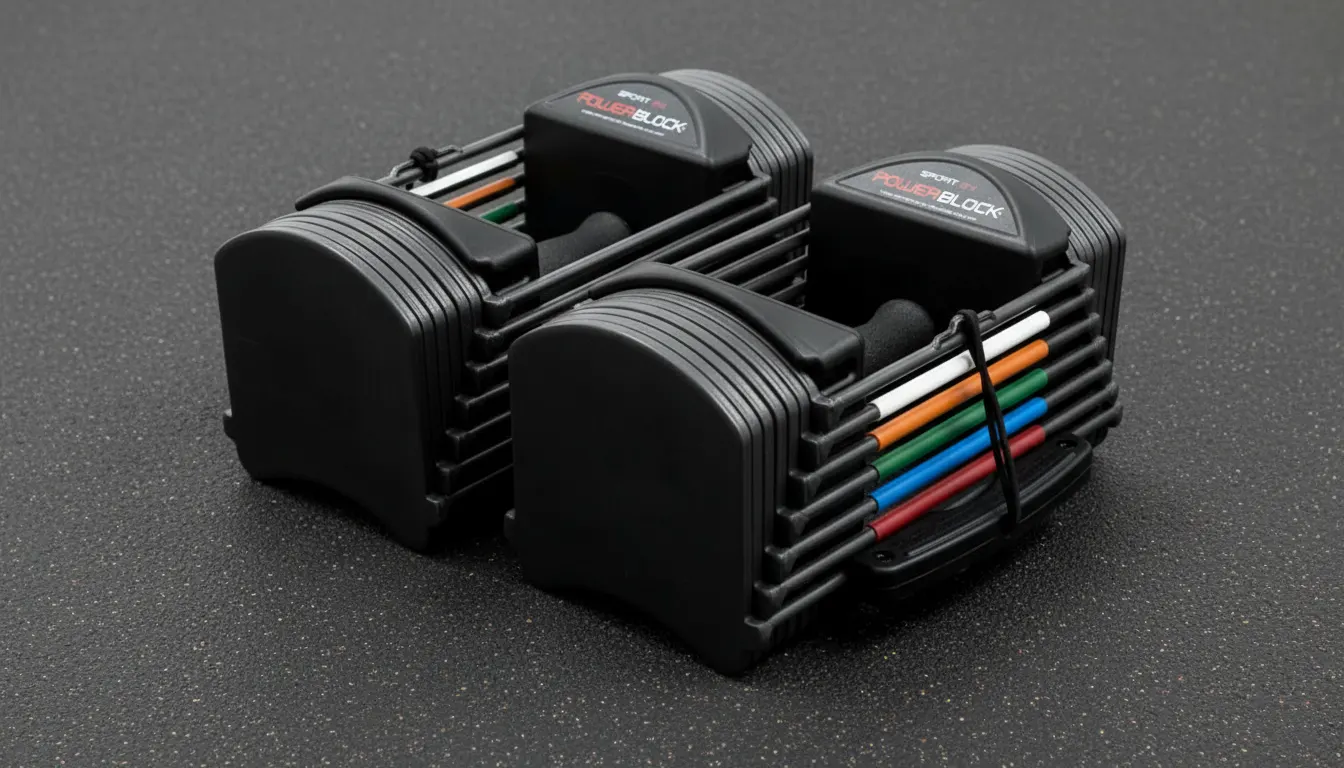
Adjustable dumbbells are particularly practical for seated calf raises because you’re increasing load incrementally in small jumps. A fixed-weight set with large gaps between increments makes progressive overload harder to manage.
Frequently Asked Questions (FAQs)
Can I do seated calf raises with dumbbells without a raised surface for my feet?
You can, but you should use one whenever possible. The elevated surface lets your heels drop below toes, which provides the deep stretch at the bottom of each rep that maximizes the training stimulus. Even a single 45-pound plate under your feet makes a meaningful difference.
How many reps should I do for seated calf raises with dumbbells?
For soleus hypertrophy, 12 to 20 reps per set is a practical range. The soleus is a slow-twitch dominant muscle and responds well to volume and higher reps. That said, occasionally training heavier in the 8 to 12 rep range adds variety and ensures you’re challenging the muscle across different intensities.
Do seated calf raises with dumbbells work the same as the seated calf raise machine?
They target the same muscles and produce comparable results when performed correctly. The machine provides a more stable setup and makes it easier to load heavier, but dumbbells work entirely well for building soleus strength and size. The key variables — range of motion, tempo, and progressive overload — are the same regardless of equipment.
Why do my calves never seem to grow, no matter how much I train them?
Several possibilities: training only one variation (usually standing, missing the soleus), using too little range of motion, bouncing at the bottom instead of controlling the eccentric, not applying progressive overload, or not training with sufficient volume. Often it’s a combination of these. Fixing range of motion and tempo alone tends to produce visible progress within six to eight weeks.
Is it safe to do seated calf raises with dumbbells if I have Achilles tendon pain?
Loaded calf raises are used therapeutically for Achilles tendinopathy under proper guidance. The seated variation places less demand on the Achilles than standing work, making it a common starting point in rehabilitation. That said, if you have an existing Achilles issue, get assessed by a physiotherapist before resuming or modifying your training rather than relying on general guidance.
How often should I train calves?
Two to three sessions per week are appropriate for most people. Calves recover faster than most muscle groups, but heavy sets with full range and slow eccentrics do cause real fatigue. Allow at least 48 hours between sessions. Consistent frequency over months matters more than any single session’s intensity.
Should I train seated and standing calf raises in the same session?
Yes, pairing them in the same session is an efficient way to cover the full calf complex. Seated raises for the soleus, standing raises for the gastrocnemius. The total volume per session stays manageable, and both portions of the muscle get trained.
Can seated calf raises with dumbbells help with ankle stability?
Stronger plantar flexors — which include the soleus trained by seated raises — directly support ankle stability and reduce injury risk. Athletes who include lower-leg strengthening in their programs consistently show better ankle control during cutting, landing, and deceleration movements.
What if I don’t have dumbbells? Can I substitute something?
A weight plate, a backpack with books, a loaded gym bag, or even a sandbag placed across the thighs works the same way. The principle is simply adding resistance to the seated plantar flexion movement. Improvised loads work fine when the load is stable and comfortable enough to maintain form throughout the set.
How long before I see results from seated calf raises?
With consistent training two to three times per week, controlled tempo, full range of motion, and progressive overload, most people notice meaningful changes in lower-leg density and definition within eight to twelve weeks. Calves are slow responders by reputation, but that reputation mostly comes from people training them with half-hearted effort and poor technique.
In conclusion
Seated calf raises with dumbbells are one of the more underrated exercises in lower-body training. Not because they’re flashy or complex, but because they fill a gap that most people don’t know exists — consistent, direct soleus development through a full range of motion with progressive load.
The soleus won’t win any Instagram impressions on its own. But it’s what separates calves that look developed from all angles from calves that only look decent from one side. It contributes meaningfully to running economy, ankle stability, and functional strength that carries into every movement pattern you do.
The exercise itself takes about ten minutes to learn and a few sessions to master. After that, it’s a matter of applying the same principles that work everywhere else in training: full range, controlled tempo, progressive overload, and adequate frequency.
Stop treating calf day as an afterthought. Add seated dumbbell calf raises, do them correctly, and give it three months. The difference will be visible.