There’s a version of the gym where everyone just bench presses, curls, and does some ab work. Then there’s the version where people actually train. The dumbbell clean and press lives in that second version.
It’s not a trendy movement. It won’t go viral on social media. But if you’ve been stuck doing isolated muscle work and wondering why your fitness feels flat and disconnected, this is probably the lift you need to add.
What makes it unusual is that it combines two things most programs treat separately: explosive power production in the lower body and overhead pressing strength in the upper body. Do it right and you’re not just burning calories, you’re building the kind of total-body coordination that carries over to nearly everything else you train.
What the Dumbbell Clean and Press Actually Is
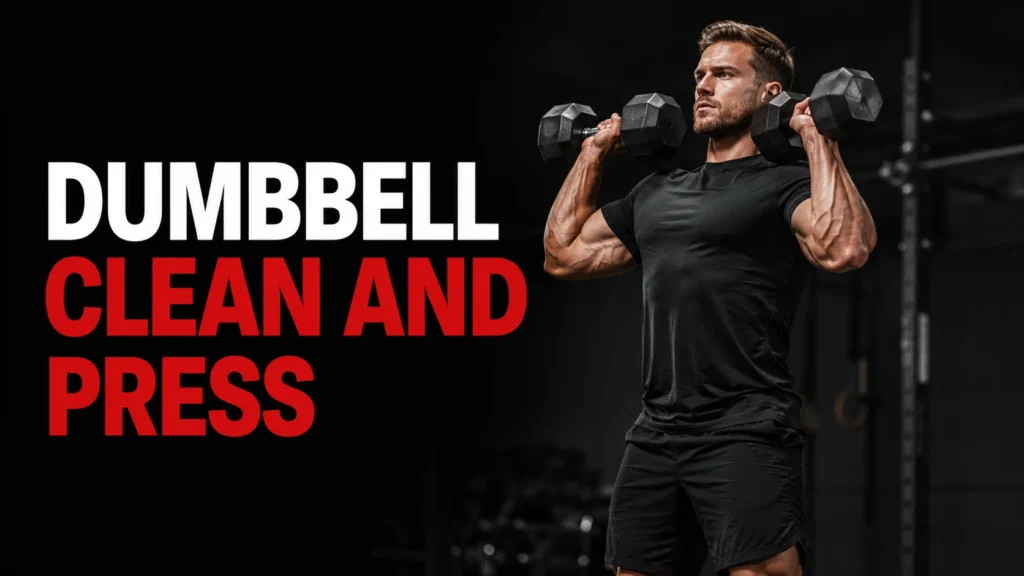
The movement has two parts, as the name suggests. The clean is the athletic phase — you’re pulling the dumbbells from a hinged position up to your shoulders using your legs and hips to generate power. The press is the strength phase — you lock out overhead from the shoulder.
It’s worth understanding the history briefly, because it explains why this lift matters. Before 1972, the clean and press was an Olympic weightlifting event. It was dropped because judging became too complicated — lifters were bending backward so aggressively that officials couldn’t reliably assess whether it was a strict press or something closer to a jerk. That tells you something about the nature of the lift: it’s demanding enough that even the best lifters in the world were pushing its limits.
With dumbbells, you lose a little loading potential but gain something meaningful in return. Your wrists rotate naturally, your arms move independently, and the learning curve is significantly shorter than with a barbell. For home gym lifters especially, it’s close to ideal — you don’t need much space, you don’t need specialty equipment, and the movement rewards honest effort from both sides of the body.
How to Do It: Step by Step
Before getting into technique details, here’s the key mental frame: this is not a bicep curl with a squat on the bottom. It’s a power movement. The legs initiate, the hips extend explosively, and the arms mostly guide the dumbbells rather than lift them.
Starting Position
Stand with your feet about hip-width apart, a dumbbell on the floor outside each foot. Hinge at the hips to reach down, keeping your back flat. Your shoulders should be roughly over or slightly in front of the dumbbells, and your chest up. Think of the setup like the bottom of a Romanian deadlift — not like a full squat to the floor.
Grip the dumbbells with a neutral grip (palms facing each other). Your hips are higher than your knees, your core is braced, and your weight is over your midfoot.
The Pull (Clean Phase)
This is where most people go wrong. Drive through your heels and think about standing up hard and fast — not pulling the dumbbells with your arms. As you extend through your hips and knees, your shoulders rise and the dumbbells follow. Once your hips finish extending, that’s when you shrug aggressively, pulling your shoulders toward your ears. Then — and this part is the tricky bit — you pull your elbows high and quickly rotate your wrists to “catch” the dumbbells at shoulder height.
You’re not muscling them up. You’re using the momentum from the hip drive and shrug to get the dumbbells moving, then catching them in what’s called the front rack position — dumbbells resting on the front of your shoulders, elbows pointing forward.
The Catch and Front Rack
This usually feels awkward at first. You’re essentially getting your elbows under the dumbbells and letting them rest on the meaty part of your anterior shoulders. Most beginners either catch too low (letting the dumbbells just hang in their hands at chest level) or too far forward (holding them away from the body instead of resting them on the shoulders). The goal is a compact, stable position where the weight is over your center of mass, not out in front of you.
The Press
From the front rack, brace your core, squeeze your glutes, and press the dumbbells overhead until your arms are fully locked out and the dumbbells are roughly over your ears — not in front of your head. This matters more than people realize. If you press the dumbbells forward of your ears, you lose structural integrity at the top and your lower back has to compensate.
Lower the dumbbells back to your shoulders with control, then hinge back down to the floor for the next rep. That’s one.
The Part That Trips People Up Most
The transition from the pull to the catch is where the movement falls apart for most people, even experienced lifters. You have to be willing to get under the dumbbells slightly — not a full squat, but a quick bend in the knees to absorb the catch. If you try to catch them while standing completely upright, you end up either crashing them into your shoulders or short-circuiting the clean into an awkward high pull.
A drill that genuinely helps: practice the catch without any pulling. Stand upright, hold the dumbbells at your sides, and then quickly “throw” your elbows forward and under while bending your knees slightly. That snap-under motion is the skill. Once you feel it without having to worry about generating power, the full clean makes a lot more sense.
Common Mistakes
Muscling it up with the arms. This is the big one. If you walk away from a set feeling it mostly in your biceps and upper traps, you’re not using your legs and hips enough. The arms should be almost passive in the pull phase — they guide, they don’t lift. Lower the weight and practice the explosive hip drive without worrying about the catch.
Letting the dumbbells drift forward. During the pull, the dumbbells should travel close to your body — think of dragging them up your thighs. If they swing out in an arc, you lose the mechanical advantage of the hip extension and the clean becomes far harder to catch correctly.
Pressing forward instead of up. Once you’re in the front rack, a very common mistake is pressing the dumbbells out in front of you instead of straight up. You’ll know this is happening if your lower back arches excessively at the top, or if the dumbbells end up noticeably in front of your head rather than above it.
Going too heavy too soon. This lift requires coordination across multiple joints in sequence. Piling on weight before the pattern feels smooth is how people get hurt, specifically at the wrist from a bad catch or the shoulder from a compromised overhead position. Start lighter than you think you need to.
Rushing the descent. Once the weights get heavy, there’s a temptation to drop them fast and bounce into the next rep. That’s fine for conditioning work, but if you’re training for quality, the lowering phase still matters. Control the press back to the shoulder, then hinge down deliberately.
Who This Exercise Is Built For
The dumbbell clean and press suits a wide range of people but is especially well-suited to:
Athletes and active people who want functional power. If you play sports, do martial arts, hike, or just want to move better in real life, this movement develops the hip drive and full-body coordination that translates. It’s not a gym exercise — it’s a training expression of how athletic humans actually move.
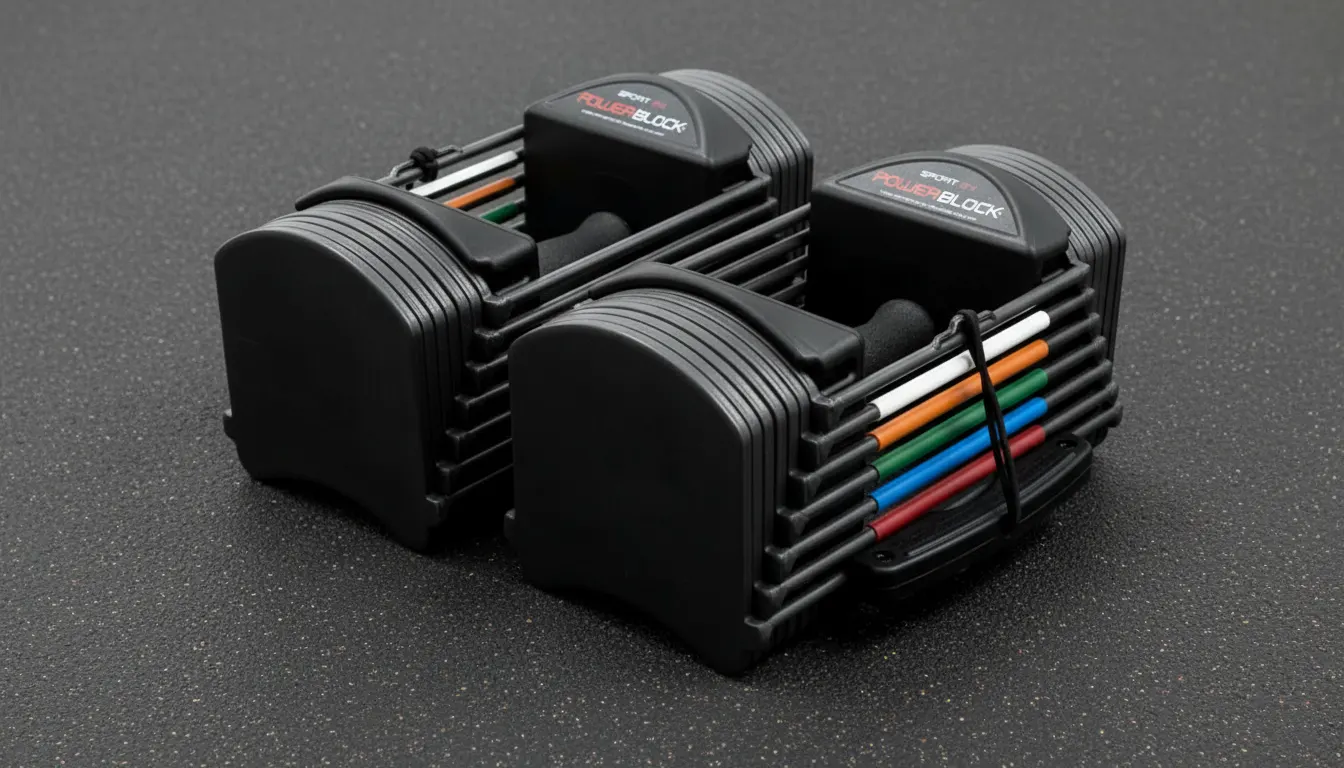
Home gym lifters with limited equipment. With a single pair of adjustable dumbbells and some floor space, you can run a genuinely effective training program built around this lift. It replaces multiple exercises in one.
People who find traditional programming boring. If you’ve been doing chest/shoulders/triceps splits for years and feel like you’re just going through the motions, this lift will remind you that training can be demanding and interesting at the same time.
Intermediate lifters looking to add power work without Olympic lifting. Learning the barbell clean is a significant time investment. The dumbbell version gives you most of the same qualities — explosive hip extension, triple extension, power transfer — with a fraction of the technical learning curve.
Who Should Be Cautious
This isn’t the right lift for everyone right now. Be honest with yourself here.
If you have a current shoulder injury or limited overhead mobility, pressing overhead with any significant load isn’t a great idea. The dumbbell variation is more forgiving than a barbell because your wrists and arms can rotate naturally, but it still requires solid shoulder health and enough mobility to lock out confidently overhead. If you can’t reach full overhead extension without pain or your lower back going into significant extension, address that first.
If you have wrist issues, the catch position can be problematic. The front rack with dumbbells is generally less demanding on the wrist than the barbell version, but it still requires some wrist extension. People with chronic wrist problems might find that using wrist wraps or modifying the catch (letting the dumbbells rest more in the hand than on the shoulder) helps.
Lower back problems deserve caution too. The hinge component of the clean is loaded and fast. If your lower back is currently unhappy, build it up with Romanian deadlifts and kettlebell swings before layering in this complexity.
Complete beginners to lifting might want to spend a few months building a base with simpler movements — deadlifts, squats, overhead presses — before adding this. Not because it’s dangerous, but because you’ll learn it faster and execute it better once you already understand those foundational patterns.
Where to Put It in Your Training
The dumbbell clean and press is a power movement first. That means it should come early in a session when you’re fresh — not as a burnout finisher after heavy squats and rows. When you’re fatigued, the technique deteriorates, and the explosive quality that makes this lift valuable disappears.
For strength and power development, 3-5 sets of 3-6 reps works well. You want enough weight that the hip drive is necessary, but not so much that the catch breaks down or the press turns ugly.
For conditioning and metabolic work, you can go lighter and push 8-15 reps, or incorporate it into circuits. It becomes a different animal at higher rep ranges — more cardiovascular, more demanding on grip and shoulder endurance. This version fits well in interval training or complex-style workouts where you chain it with other movements.
If you’re running a more traditional push/pull/legs split, it logically belongs on a leg day or full-body day — not because it doesn’t hit the upper body, but because the lower body does most of the work in the clean and the limiting factor for heavy sets usually ends up being leg drive, not pressing strength.
A practical starting structure for someone new to the movement:
- Week 1-2: 3 sets of 5 reps, focus only on technique, light weight
- Week 3-4: 3-4 sets of 5 reps, add weight when form is consistent
- Week 5+: Work up to 4-5 sets of 4-6 reps as a power movement, or shift to higher rep conditioning work
Variations Worth Knowing
Hang clean and press. Instead of pulling from the floor, you start with the dumbbells hanging at hip level. This removes the floor pull entirely and focuses the clean on the second pull phase — the hinge and hip extension. It’s easier to learn, the range of motion is shorter, and you can load it a bit heavier. Most coaches actually recommend starting here rather than from the floor.
Single-arm clean and press. One dumbbell, one arm at a time. This is brutally demanding on your core because the offset load wants to rotate you, and your trunk has to resist that with every rep. Your pressing shoulder gets more time under tension, and you’ll notice pretty quickly if one side is significantly weaker than the other. This is a great option for advanced lifters or anyone who wants to really challenge stability.
Clean to push press. Instead of a strict overhead press at the top, you add a knee dip and leg drive — a push press. This lets you handle more weight and trains a more athletic, explosive overhead pattern. The downside is that the press becomes somewhat less demanding on the shoulders specifically. Neither version is wrong; they just train slightly different qualities.
A Note on Weight Selection
People consistently go too heavy with this lift, which is ironic because the whole point is to develop explosive, quality movement. If you’re spending half your energy just getting the dumbbells to your shoulders and arriving there with nothing left for the press, drop the weight.
A good rule of thumb: start with what you’d use for a moderate set of 10 on a dumbbell overhead press. That should feel almost too easy for the clean portion. As the pattern solidifies over a few weeks, you can push the load progressively.
The ceiling on dumbbell clean and press weight is usually your pressing strength, not your leg drive. Your legs are capable of cleaning far more than your shoulders can press. Which is fine — you’re not training for a competition. But it does mean that once the weights get heavy enough that the press becomes a real grind, you might get more out of separating the movements for a while.
The Practical Takeaway
If you’ve been lifting for any meaningful amount of time and this movement isn’t somewhere in your program, it’s worth adding — even periodically. It fills a gap that most dumbbell training leaves open: pure explosive power combined with overhead strength in a single coherent pattern.
Start from the hang position if you’re new to it. Learn the catch separately before worrying about the full sequence. Keep the weight honest long enough for the hip drive to become instinctive. And put it early in your session, not as an afterthought.
Once it clicks, it genuinely feels different from most gym exercises. There’s a quality of athleticism to it — a sense that you’re doing something that requires real coordination, not just loading a machine and grinding through reps. That’s not a small thing. It’s worth chasing.
Frequently Asked Questions (FAQs)
Can I do the dumbbell clean and press every day?
Not if you’re actually training it hard. It’s a demanding, full-body movement that requires recovery. Two to three times per week is plenty. If you’re using it for light conditioning work, you might get away with more frequency, but don’t mistake movement practice for full-effort training sessions.
Is the dumbbell clean and press good for fat loss?
Yes, but not for the reason most articles give. It’s not magic — it burns calories like any hard work does. What makes it useful in a fat loss context is that it builds muscle and develops power while demanding significant metabolic output. That’s a better investment than just doing cardio.
What’s the difference between a clean and press and a thruster?
A thruster starts from a squat (dumbbells in the front rack), you drive up from the squat and use that momentum to press overhead in one continuous movement. The clean and press involves catching the dumbbells at the top of a hip extension and then pressing from a standing position. They’re related, but the clean and press is more of a two-phase movement; the thruster is one continuous push.
What does the dumbbell clean and press work?
Pretty much everything. The legs and hips drive the clean, the traps and upper back do the shrug and pull, and the shoulders and triceps finish with the press. Your core is working the entire time to hold it all together. It’s genuinely full-body in a way most exercises aren’t.
Will clean and press build muscle?
Yes, though it’s not a pure hypertrophy exercise. You’ll build real muscle in the legs, traps, and shoulders — but because it’s an explosive movement, the loads are lower than straight strength work. It builds muscle, power, and conditioning simultaneously, which isolated exercises can’t do. For size specifically, pair it with dedicated accessory work.
How do you do a dumbbell clean to press?
Hinge down, grab the dumbbells with a flat back. Drive through your heels explosively, shrug hard at the top, flip your elbows under to catch the dumbbells at your shoulders. From there, press straight overhead to lockout. The key: your legs do the work on the way up. If your arms are tired after the clean, you’re muscling it.
Is the clean and press effective?
It’s one of the most honest lifts you can do. For general strength, power, and conditioning it’s excellent. It transfers well to sport and athletic movement because it trains the body to produce force explosively through multiple joints at once. The technique takes a few sessions to dial in, but once it clicks it earns its place in almost any program.
Want to build explosive shoulder strength and full-body power? Check out Push Presses With Dumbbells for proper form, key benefits, and tips to generate more force safely and effectively.