
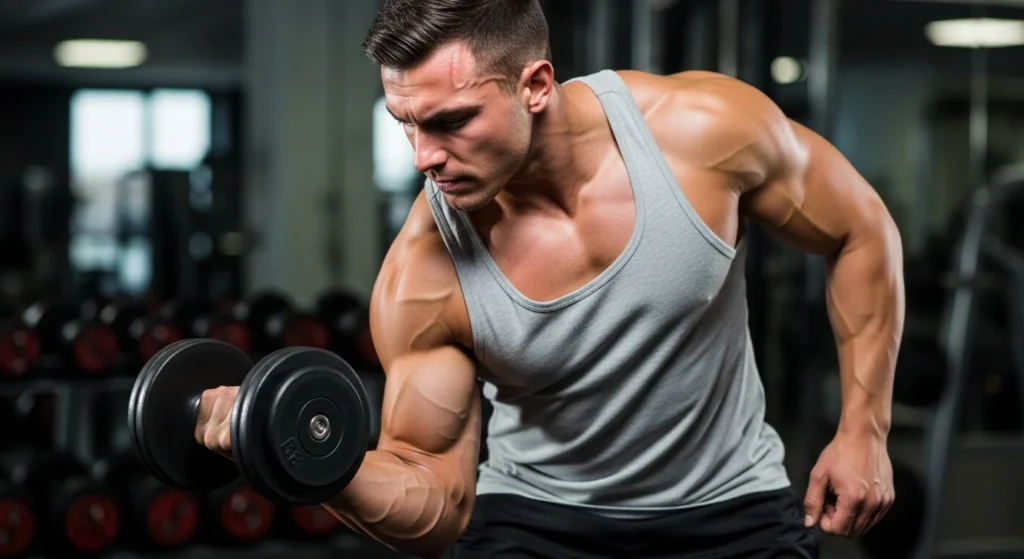
If your goal is to build stronger, bigger, and more defined arms, biceps workouts with dumbbells should be at the core of your training routine. Dumbbells are one of the most effective tools for biceps development because they allow for a full range of motion, balanced strength, and better muscle activation compared to machines or barbells.
Why Dumbbells Are Perfect for Biceps Workouts
Before diving into exercises, it’s important to understand why dumbbells are so effective.
1. Greater Range of Motion
Dumbbells allow your arms to move naturally, helping you achieve a deeper stretch and stronger contraction—key factors for muscle growth.
2. Fix Muscle Imbalances
Each arm works independently, preventing your stronger arm from compensating for the weaker one.
3. Improved Muscle Activation
Studies in exercise science show that unilateral movements (like dumbbell curls) increase neuromuscular engagement, leading to better hypertrophy.
4. Versatility
From beginner-friendly curls to advanced variations, dumbbells offer endless options for biceps workouts.
Understanding the Biceps Muscle
To maximize your results, you need to know what you’re training.
The biceps brachii has two heads:
- Long head (outer arm): Gives the biceps its peak
- Short head (inner arm): Adds thickness
There’s also the:
- Brachialis: Lies underneath and pushes the biceps up for bigger-looking arms
- Brachioradialis: Forearm muscle that contributes to overall arm size
A complete biceps workout with dumbbells should target all these areas.
The Best Biceps Workouts with Dumbbells
1. Dumbbell Bicep Curl (Classic Curl)
Why It Works
This is the foundation of all biceps workouts with dumbbells.
How to Do It
- Hold dumbbells at your sides, palms facing forward
- Curl the weights upward while keeping elbows close to your body
- Squeeze at the top
- Lower slowly
Pro Tips
- Avoid swinging your body
- Focus on controlled movement
- Keep tension throughout the rep
2. Alternating Dumbbell Curl
Benefits
- Improves focus on each arm
- Helps correct imbalances
Execution
- Curl one arm at a time while the other rests
- Maintain strict form and control
3. Hammer Curl
Target Area
Brachialis and brachioradialis
How to Perform
- Hold dumbbells with palms facing each other
- Curl without rotating your wrists
Why You Need It
Hammer curls add thickness and overall arm size—essential for a complete look.
4. Incline Dumbbell Curl
Why It’s Powerful
Provides a deeper stretch, especially targeting the long head.
Steps
- Sit on an incline bench
- Let your arms hang fully
- Curl while keeping elbows stationary
Key Tip
Don’t rush—slow reps maximize muscle tension.
5. Concentration Curl
Best For
Isolation and peak contraction
How to Do It
- Sit and rest your elbow on your thigh
- Curl the dumbbell slowly
- Squeeze hard at the top
Benefit
Excellent for building the biceps peak.
6. Zottman Curl
Unique Advantage
Works both biceps and forearms in one movement.
Execution
- Curl with palms facing up
- Rotate at the top
- Lower with palms facing down
7. Reverse Dumbbell Curl
Focus
Forearms and brachialis
Technique
- Use an overhand grip
- Keep movements controlled
8. Spider Curl (Dumbbell Version)
Why It Works
Maintains constant tension on the biceps.
Setup
- Lie chest-down on an incline bench
- Let arms hang straight
- Curl upward without swinging
9. Preacher Curl (Using Dumbbells)
Benefits
- Eliminates cheating
- Increases muscle isolation
Sample Biceps Workouts with Dumbbells
Beginner Workout
Perform 2–3 sets of each:
- Dumbbell Curl – 10–12 reps
- Hammer Curl – 10–12 reps
- Concentration Curl – 10 reps
Intermediate Workout
- Incline Dumbbell Curl – 3 sets (10–12 reps)
- Alternating Curl – 3 sets (10 reps each arm)
- Hammer Curl – 3 sets (12 reps)
- Reverse Curl – 2 sets (12–15 reps)
Advanced Workout
- Incline Curl – 4 sets (8–10 reps)
- Spider Curl – 3 sets (10–12 reps)
- Zottman Curl – 3 sets (10 reps)
- Concentration Curl – 3 sets (12 reps)
Training Tips for Bigger Biceps
1. Focus on Progressive Overload
Gradually increase weights or reps over time.
2. Control the Eccentric Phase
Lower the weight slowly (2–4 seconds) to maximize muscle damage and growth.
3. Train 2–3 Times Per Week
Allow enough recovery while maintaining frequency.
4. Mind-Muscle Connection
Consciously squeeze your biceps during every rep.
5. Use Proper Form Over Heavy Weight
Lifting heavier with poor form reduces effectiveness and increases injury risk.
Common Mistakes to Avoid
Swinging the Weights
Using momentum reduces biceps activation.
Not Using Full Range of Motion
Partial reps limit muscle development.
Training Too Heavy Too Soon
Focus on control before increasing weight.
Ignoring Other Arm Muscles
Neglecting the brachialis and forearms leads to incomplete development.
Nutrition for Biceps Growth
Muscle growth doesn’t happen without proper nutrition.
Key Nutrients
- Protein: 1.6–2.2g per kg of body weight
- Carbohydrates: Fuel your workouts
- Healthy Fats: Support hormone production
Hydration
Stay well-hydrated for optimal performance and recovery.
How Long Does It Take to See Results?
With consistent biceps workouts with dumbbells, you can expect:
- Strength gains: 2–4 weeks
- Visible muscle growth: 6–8 weeks
- Significant transformation: 3–6 months
Consistency and proper technique are the key factors.
Dumbbells vs Barbells for Biceps
| Feature | Dumbbells | Barbells |
|---|---|---|
| Range of Motion | Greater | Limited |
| Muscle Balance | Excellent | Can cause imbalance |
| Stability | Requires more control | More stable |
| Versatility | High | Moderate |
Dumbbells are generally better for overall development and symmetry.
Weekly Training Plan Example
Day 1: Biceps + Back
Day 2: Rest
Day 3: Chest + Triceps
Day 4: Rest
Day 5: Biceps Focus (Dumbbell-only workout)
Day 6: Shoulders + Core
Day 7: Rest
Frequently Asked Questions (FAQs)
Are dumbbells enough to build big biceps?
Yes. With proper training, progressive overload, and consistency, dumbbells alone are more than enough.
How many exercises should I do for biceps?
3–5 exercises per workout are ideal for most people.
Can beginners start with dumbbells?
Yes. Dumbbells are beginner-friendly and safer than many alternatives.
What weight should I use?
Choose a weight that allows you to complete reps with proper form while still feeling challenged.
How often should I train biceps?
2–3 times per week for optimal growth.
Do I need heavy weights to grow biceps?
Not necessarily. Moderate weights with proper form and tempo are highly effective.
Why are my biceps not growing?
Common reasons include poor form, lack of progressive overload, and inadequate nutrition.
Are hammer curls necessary?
Yes. They target supporting muscles and improve overall arm size.
You can also follow “How to Do Dumbbell Curls” for dumbbell workouts, and fitness tips to help you get better results.