
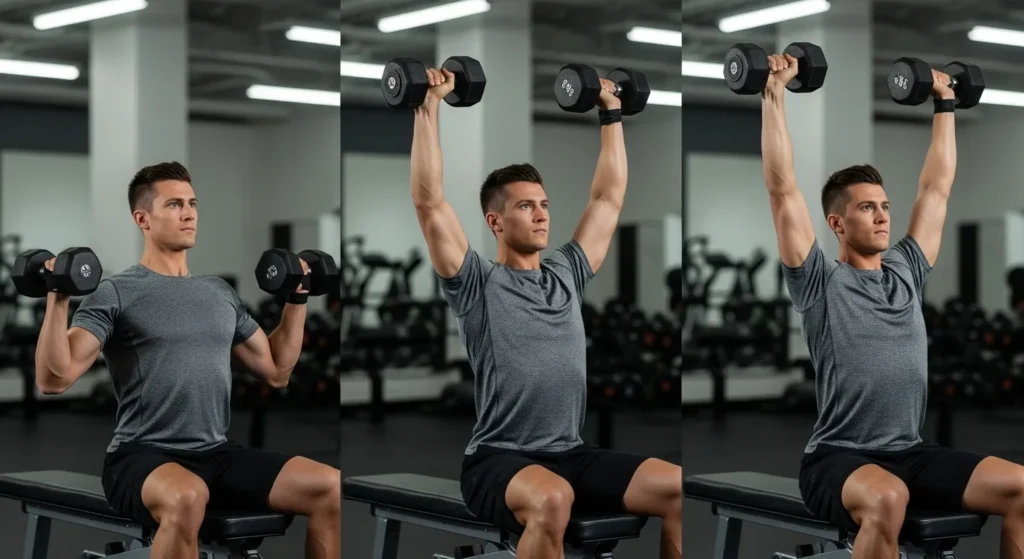
The shoulder press with dumbbells is one of the most effective exercises for building strong, well-rounded shoulders. Whether you’re training at home or in the gym, this movement delivers serious results for muscle growth, strength development, and overall upper-body stability.
What Is a Shoulder Press with Dumbbells?
The shoulder press with dumbbells (also called the dumbbell overhead press) is a compound upper-body exercise that primarily targets the shoulder muscles while engaging the triceps and upper chest.
Unlike barbell presses, dumbbells allow for:
- A greater range of motion
- Better muscle activation
- Improved balance and coordination
- Reduced risk of muscle imbalances
Muscles Worked in Shoulder Press with Dumbbells
Understanding which muscles are involved helps you execute the exercise more effectively.
Primary Muscles
- Anterior deltoid (front shoulder)
- Lateral deltoid (side shoulder)
Secondary Muscles
- Triceps brachii
- Upper chest (clavicular head of pectoralis major)
- Trapezius
Stabilizer Muscles
- Core muscles
- Rotator cuff
- Lower back
Benefits of Shoulder Press with Dumbbells
1. Builds Strong, Defined Shoulders
This exercise is one of the best for developing all three heads of the deltoids, giving you that wide, aesthetic shoulder look.
2. Improves Functional Strength
Pressing weight overhead mimics real-life movements, improving your ability to lift, push, and carry objects.
3. Enhances Muscle Symmetry
Since each arm works independently, it helps correct strength imbalances.
4. Increases Core Stability
Even in a seated position, your core must engage to stabilize the weights.
5. Safer for Joints
Dumbbells allow a more natural movement path, reducing strain on the shoulders compared to barbells.
How to Do Shoulder Press with Dumbbells (Step-by-Step)
Follow these steps carefully to ensure proper form and maximum effectiveness.
Step 1: Set Up
- Sit on a bench with back support (or stand if doing the standing variation)
- Hold a dumbbell in each hand
- Rest the dumbbells at shoulder height
- Palms should face forward or slightly inward
Step 2: Position Your Body
- Keep your back straight and chest up
- Engage your core
- Feet flat on the ground
Step 3: Press the Dumbbells Up
- Exhale as you press the dumbbells overhead
- Extend your arms fully but don’t lock your elbows
- Keep the movement controlled
Step 4: Lower the Weights
- Inhale as you slowly lower the dumbbells back to shoulder level
- Maintain control—don’t let gravity take over
Step 5: Repeat
- Perform for the desired number of reps
Proper Form Tips (Critical for Results)
- Keep your wrists straight (avoid bending backward)
- Don’t arch your lower back excessively
- Keep your elbows slightly in front of your body
- Avoid banging dumbbells together at the top
- Move in a controlled tempo
Common Mistakes to Avoid
1. Using Too Much Weight
Heavy weights often lead to poor form and injury. Start light and progress gradually.
2. Arching the Lower Back
This shifts tension away from the shoulders and puts stress on the spine.
3. Incomplete Range of Motion
Not lowering the dumbbells fully reduces muscle activation.
4. Flaring Elbows Too Wide
This can strain the shoulder joints.
5. Rushing the Movement
Fast reps reduce effectiveness and increase injury risk.
Shoulder Press Variations
Adding variations keeps your workouts fresh and targets muscles differently.
1. Seated Dumbbell Shoulder Press
- Provides more stability
- Ideal for beginners
2. Standing Dumbbell Shoulder Press
- Engages more core muscles
- Improves balance and coordination
3. Arnold Press
- Adds rotation for greater muscle activation
- Named after Arnold Schwarzenegger
4. Neutral Grip Shoulder Press
- Palms face each other
- Easier on the shoulder joints
5. Single-Arm Dumbbell Press
- Improves unilateral strength
- Enhances core engagement
Shoulder Press with Dumbbells vs Barbell Press
| Feature | Dumbbells | Barbell |
|---|---|---|
| Range of Motion | Greater | Limited |
| Muscle Activation | Higher | Moderate |
| Balance Requirement | High | Low |
| Injury Risk | Lower | Slightly higher |
| Weight Capacity | Lower | Higher |
Best Rep Ranges for Different Goals
For Muscle Growth (Hypertrophy)
- 8–12 reps
- 3–4 sets
For Strength
- 4–6 reps
- 4–5 sets
For Endurance
- 12–15+ reps
- 2–3 sets
How Often Should You Do Shoulder Press?
- Beginners: 2 times per week
- Intermediate/Advanced: 2–3 times per week
Allow at least 48 hours of recovery between shoulder workouts.
Sample Shoulder Workout with Dumbbells
Here’s a simple but effective routine:
Beginner Workout
- Shoulder press with dumbbells – 3×10
- Lateral raises – 3×12
- Front raises – 3×12
Intermediate Workout
- Shoulder press with dumbbells – 4×8–10
- Arnold press – 3×10
- Lateral raises – 3×12
- Reverse flys – 3×12
Expert Tips to Maximize Results
- Focus on mind-muscle connection
- Control both lifting and lowering phases
- Gradually increase weight (progressive overload)
- Warm up your shoulders before training
- Stretch after workouts
Who Should Do Shoulder Press with Dumbbells?
This exercise is ideal for:
- Beginners and advanced lifters
- Home workout enthusiasts
- Athletes needing upper-body strength
- Anyone aiming for broader shoulders
Safety Tips
- Always warm up before lifting
- Use a spotter for heavy weights
- Stop immediately if you feel pain (not fatigue)
- Maintain proper posture throughout
Shoulder Press with Dumbbells for Home Workouts
One of the biggest advantages of this exercise is its simplicity. All you need is:
- A pair of dumbbells
- A bench (optional)
You can easily incorporate it into your home fitness routine without expensive equipment.
Progression Strategy
To continue making gains:
- Increase weight gradually
- Add more reps or sets
- Try advanced variations
- Reduce rest time for intensity
Frequently Asked Questions (FAQs)
Is shoulder press with dumbbells better than barbell?
Dumbbells are generally better for muscle balance and range of motion, while barbells allow heavier lifting.
Can beginners do shoulder press with dumbbells?
Yes, beginners should start with light weights and focus on proper form.
Should I do shoulder press sitting or standing?
Seated is better for beginners; standing engages more core muscles.
How heavy should my dumbbells be?
Choose a weight that allows you to complete your reps with good form but still feels challenging.
Is shoulder press enough for shoulders?
It’s a great compound exercise, but combining it with isolation exercises yields better results.
Can shoulder press cause injury?
Yes, if done with poor form or excessive weight. Always prioritize technique.
How long does it take to see results?
With consistent training and proper nutrition, noticeable results can appear within 4–8 weeks.
Should I lock my elbows at the top?
No, keep a slight bend to maintain tension and protect your joints.
Can I do this exercise every day?
No, shoulders need recovery. Train them 2–3 times per week.
What’s the best variation for muscle growth?
The standard seated or standing dumbbell shoulder press is highly effective for hypertrophy.
You can also follow “How to Do Overhead Press with Dumbbells” for dumbbell workouts, and fitness tips to help you get better results.