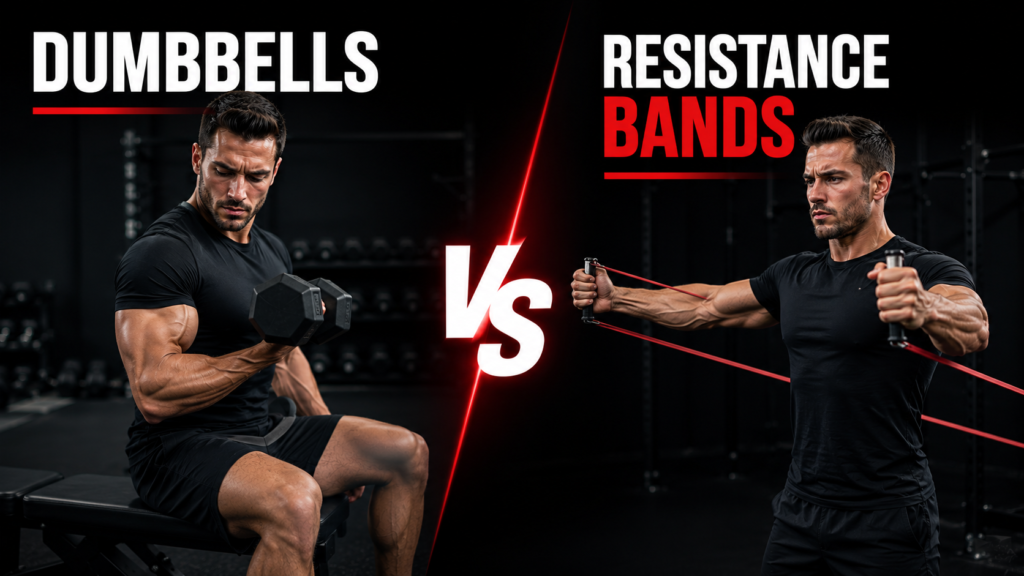
Most home workouts start the same way: a burst of motivation, a quick search for equipment, then confusion over what actually works better. The dumbbells vs resistance bands debate sounds simple, but choosing the wrong tool can slow your progress, waste money, and leave you frustrated when results do not match the effort.
Resistance bands are cheap, portable, and surprisingly versatile. Dumbbells feel more “serious” and are trusted for building real strength and muscle. So which one should you invest in if your goal is better results at home?
Here is the truth: both work, but they do not work equally for every goal. If you want maximum muscle growth and long-term strength, dumbbells are hard to beat. If you need joint-friendly training, portability, or a low-cost setup, resistance bands are incredibly effective. Understanding the real differences between dumbbells vs resistance bands will help you train smarter, avoid wasting money, and build a setup that actually matches your goals
How Each Tool Actually Loads Your Muscles
Constant Resistance vs. Variable Resistance
When you pick up a 25-pound dumbbell and curl it, you are lifting 25 pounds at every single degree of the movement. The load does not shift. Your bicep is working against the same gravitational force at the bottom, the midpoint, and the top. This is called isotonic resistance, and it is what makes dumbbells so predictable and measurable.
Resistance bands work on a completely different principle. When the band is slack or barely stretched, resistance is very low. As you pull or stretch the band further, tension builds progressively until, at maximum stretch, the band is at its hardest. This variable resistance profile means your muscle is not experiencing a consistent load throughout the rep.
That variable quality is both a benefit and a limitation, depending on what you are training for.
The Strength Curve Problem with Bands
Your muscles naturally produce different amounts of force at different joint angles. In most pushing and pulling movements, you are weakest at the beginning of the movement and strongest near the lockout. A standard bicep curl, for instance, is hardest in the bottom half where leverage is poor and easiest near the top.
Resistance bands have the opposite loading pattern. They start easy and get harder as you approach the peak contraction. For exercises like a squat, a bench press, or a bicep curl, this actually matches your ascending strength curve reasonably well. But for pulling exercises like rows or chin-ups, where the movement is hardest at the top, bands add the most resistance exactly where you can least afford it. This is a legitimate mechanical mismatch that matters for training quality.
Dumbbells do not have this problem. The load is consistent, and you can select a weight that challenges you appropriately across the full range of motion.
Muscle Hypertrophy: What the Research Says
The Evidence on Strength Gains
A 2019 meta-analysis published in Sage Open Medicine, covering 224 participants, found that elastic resistance training produced statistically equivalent strength gains to conventional free-weight training across upper and lower limb exercises. That sounds like a draw.
But the details matter. Both training groups improved in muscle strength and size in studies comparing the two, but free weight groups showed significantly greater increases in lean mass and isokinetic strength in studies involving older adults over 12-week interventions.
A 2024 study from The Rehabilitation Journal, which ran a randomized controlled trial with 60 track and field athletes across three groups over eight weeks, found something interesting: there was no significant difference between resistance band and dumbbell training groups in the vertical jump test, but the resistance band group showed significantly better results in the standing broad jump test compared to the dumbbell group. Both beat the control group who did nothing.
What this tells you is that bands and dumbbells produce different adaptations. Bands may have an edge in explosive horizontal power. Dumbbells have an edge in raw lean mass gains. Neither is universally superior.
Why Dumbbells Win for Hypertrophy
Muscle growth is driven by mechanical tension applied near failure, with sufficient volume over time. Dumbbells allow you to select the exact weight you need, increase it by 2.5 to 5 pounds when you are ready, and track that progression with precision. Progressive overload is a cornerstone of muscle growth, and dumbbells allow for precise and incremental increases in load. Resistance bands come in various tension levels, but the increments between them are typically less precise, and it is more difficult to quantify the exact resistance at a given stretch length.
There is also the eccentric loading question. Research, including a 2017 meta-analysis in the British Journal of Sports Medicine, confirms that eccentric loading produces greater muscle growth than concentric-only training. Dumbbells load the eccentric phase as heavily as the concentric. Resistance bands actually reduce tension during the lowering phase as the band returns toward its resting length, which means you get a lighter eccentric stimulus on most exercises. That is a real disadvantage for hypertrophy.
Hypertrophy researcher Eric Helms, PhD, stated plainly that he would agree with recommending free weights and machines for hypertrophy, with bands and bodyweight working in a pinch.
Where EMG Studies Can Mislead You
Electromyography studies measure electrical activity in muscles during exercise, and they are frequently cited in the resistance bands debate. The picture they paint is mixed. Researchers found that weights activated the primary targeted muscles more than bands, but resistance bands engaged the secondary and stabilizer muscles more than weights.
What EMG does not tell you is whether muscle growth actually occurred over weeks and months. It measures activation in a single session, not the hypertrophic adaptation that follows. The two are related but not equivalent. A movement that challenges your stabilizers more heavily in one session does not necessarily produce more total muscle tissue over a 12-week block.
Stabilizer Muscles and Functional Strength
Research published in the Journal of Strength and Conditioning Research shows that dumbbell pressing can produce comparable, and in some cases greater, pectoral activation than barbell pressing, even at lighter absolute loads. The reason comes down to two factors: a greater range of motion and the ability to train each arm independently.
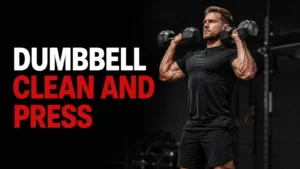
When you press two separate dumbbells overhead, your rotator cuff, core, and smaller stabilizing muscles activate to control each weight independently. That demand carries over to real-world tasks in a way that machine training simply does not replicate.
Resistance bands also challenge stabilizers, and for rehabilitation contexts this is particularly valuable. Using resistance bands naturally forces you to engage your stabilizing core muscles, and bands are especially helpful when coming back from an injury or working through a mobility limitation. People with lower back issues who cannot safely load their lumbar spine can still get a good strength workout using resistance bands.
The difference is that with dumbbells you can progressively overload the stabilizer challenge by increasing weight. With bands, once you have adapted to the instability, your ceiling for further stimulus is lower.
Joint Safety and Injury Risk
How Bands Protect Your Joints
Dumbbells load your joints with gravitational force throughout the movement. A heavy overhead dumbbell press compresses the shoulder joint. A heavy dumbbell squat loads the spine and knees. None of this is inherently dangerous when form is good and loads are sensible, but the compressive forces are real.
Resistance bands generate resistance in the direction they are stretched, not necessarily downward. This allows you to perform strengthening exercises with minimal joint compression. For someone with lower back pain or shoulder impingement, this is meaningful. You can strengthen the supporting muscles without placing a direct, heavy load on the injured area itself.
The elastic nature of resistance bands creates smoother, more forgiving resistance than the rigid weight of dumbbells. The gradual buildup of tension reduces stress on tendons and ligaments while still challenging the target muscles effectively. Many physical therapists favor bands because they allow controlled resistance without excessive joint stress.
A 2025 systematic review of 25 randomized controlled trials involving 1,318 older adults showed that elastic band training significantly improves lower limb strength and balance, reducing fall risk.
When Dumbbell Risk Increases
The injury risk with dumbbells is real but almost entirely technique-dependent. Momentum, poor form, going too heavy too soon, and lacking proper warm-up are the primary culprits. A 2022 study in the Journal of Strength and Conditioning Research identified these as the main injury risk factors in weight training.
Beginners in particular benefit from starting with lighter dumbbells or resistance bands to master movement patterns before loading the exercise heavily. The band’s self-limiting resistance acts as a natural check on bad form.
Progressive Overload: Where Dumbbells Have No Real Competition
If you are serious about getting stronger over months and years, this is the most important consideration.
Progressive overload means increasing the demand on your muscles over time. You can do this by adding weight, increasing reps, adding sets, shortening rest periods, or slowing the tempo. Dumbbells let you do all of these things, and the weight increment is clearly quantifiable.
You know you pressed 30-pound dumbbells for three sets of ten. Next week you try 32.5 or 35 pounds. The progression is clear, tracked, and measurable.
Resistance bands do not offer this. It is difficult to know exactly how much resistance you are working against with a band, so people who want to be scientific about the amount of weight they are lifting cannot do that with bands. With dumbbells, you can clearly track the load and progress it over time.
As you get stronger, the ceiling on band resistance also becomes a problem. Most resistance band sets max out around 40 to 50 pounds of equivalent tension, and that estimate is rough because band resistance varies with stretch distance, anchor point, and band length. An intermediate or advanced trainee can easily exceed what any band set can provide for compound movements.
Cost, Space, and Portability
This is where resistance bands win clearly and consistently.
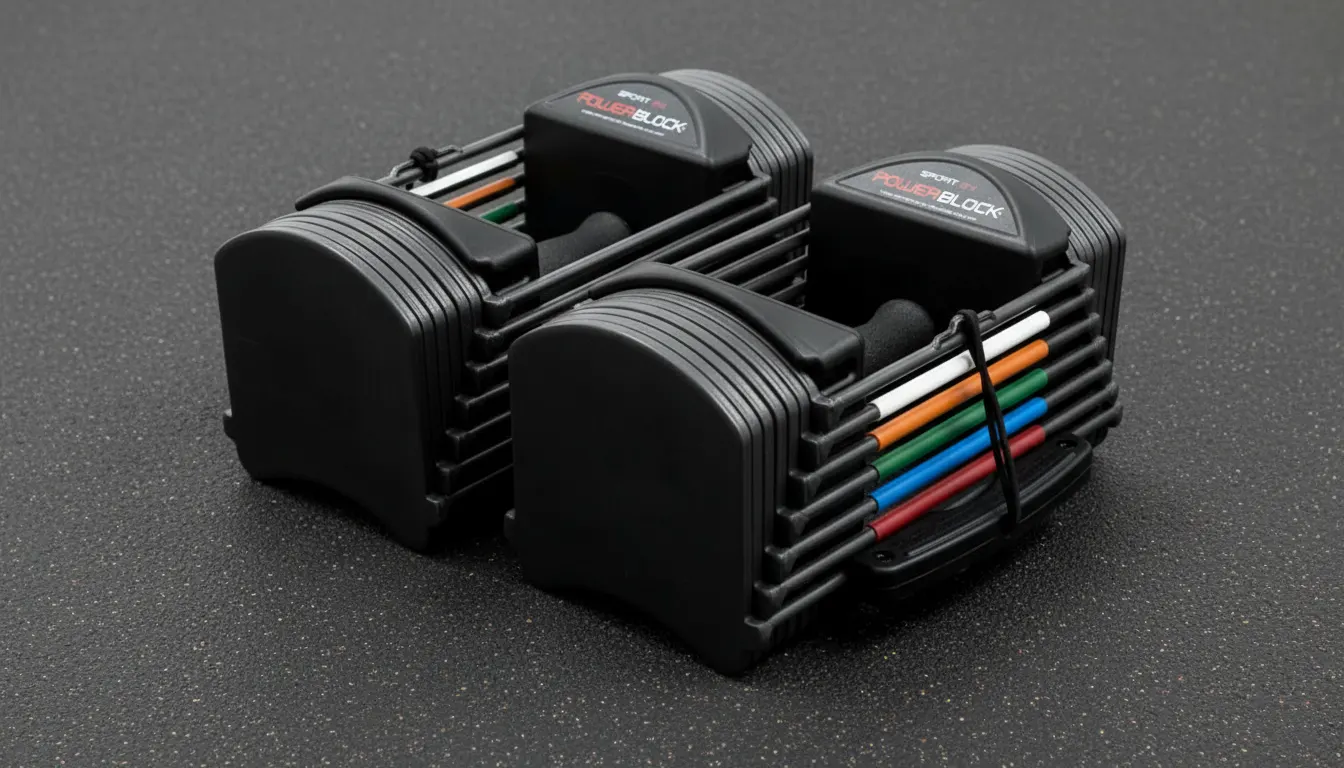
A quality set of resistance bands costs between $20 and $60 and fits in a gym bag. A set of adjustable dumbbells that cover the range from 5 to 50 pounds costs anywhere from $150 to $400, and even a compact set takes up meaningful space. A full fixed dumbbell rack covering 5 to 75 pounds is a serious investment running into the thousands.
For people who travel frequently, train in small apartments, or want a secondary kit for when they are away from their main setup, resistance bands make obvious sense. No airline charges luggage fees for them.
That said, the cost advantage does not make bands better for building strength. It makes them more accessible. There is a difference.
Who Should Use What
Dumbbells Are the Better Choice If:
- Building maximum muscle mass is your primary goal
- You are an intermediate or advanced trainee who has already outgrown band resistance
- You want to track your progress precisely and follow a structured progressive overload plan
- You are training for athletic performance, particularly power and strength that requires heavy compound loading
- You plan to train seriously for years and need a tool that scales with your strength indefinitely
Resistance Bands Are the Better Choice If:
- You are recovering from an injury and need joint-friendly resistance
- You travel regularly and need portable training equipment
- You are a complete beginner and want to learn movement patterns before loading them heavily
- Budget is a genuine constraint
- You want to add variety and targeted work to an existing dumbbell routine, particularly for shoulder health, hip activation, or rotational exercises
The Case for Using Both
The most effective home gym setups combine both. Bands are genuinely excellent for warm-up activation work, mobility exercises, shoulder and hip stability drills, and high-rep isolation work at the end of a session. Dumbbells carry the main strength work. They complement each other rather than competing.
The smartest lifters do not choose one or the other. They use both strategically.
Frequently Asked Questions (FAQs)
Can resistance bands build the same amount of muscle as dumbbells?
For untrained beginners, resistance bands can produce meaningful muscle growth comparable to dumbbells in the short term. As training age increases and baseline strength rises, the limited maximum resistance of bands becomes a genuine bottleneck. Intermediate and advanced trainees who rely exclusively on bands for compound movements will hit a ceiling. Dumbbells do not have this ceiling.
Are resistance bands better for beginners than dumbbells?
Bands are more forgiving for beginners because they are self-limiting in a useful way: the resistance drops off if you lose control of the movement, and there is no weight to drop on yourself. However, learning to move correctly with moderate dumbbells is also very accessible. Either works for beginners, but a moderate set of dumbbells provides more long-term value.
How do I know what resistance band is equivalent to a specific dumbbell weight?
You cannot know precisely, and that is part of the problem with bands for strength tracking. The resistance a band provides changes based on how far it is stretched, the angle of pull, and the band’s starting length. Most band manufacturers provide a rough resistance range (for example, 10 to 35 pounds), but treat these as estimates rather than exact figures.
Are resistance bands safe for people with joint pain?
For most common joint conditions, yes. Resistance bands generate tension in the direction of the stretch rather than a compressive downward force, which makes them easier on the knees, spine, and shoulders than heavy free weight exercises. Physical therapists routinely use elastic resistance for rotator cuff rehabilitation, knee recovery, and lower back strengthening. Always consult a clinician before starting any exercise program if you have an existing injury.
Can I build a complete training program using only resistance bands?
You can build a reasonable training program with bands, and for someone training at home with no other equipment, it is far better than doing nothing. The honest caveat is that resistance bands alone are not optimal for building maximum muscle mass or strength, particularly for lower body compound movements that require heavy loading to produce results.
Which is better for weight loss, dumbbells or resistance bands?
Neither is specifically a fat-loss tool. Both increase muscle mass over time, and muscle mass raises resting metabolic rate. The best tool for weight loss is the one you will actually use consistently. If bands keep you training at home instead of skipping workouts, they produce better fat-loss outcomes than dumbbells sitting unused.
Do resistance bands wear out?
Yes. Latex bands degrade over time, particularly with sun exposure, sweat, and sharp folding. High-quality bands from reputable manufacturers can last several years with proper storage, but you should inspect them before every session for nicks, fraying, or thin spots. A snapping band can cause real injury.
Should I use both dumbbells and resistance bands in the same workout?
Absolutely. Bands are excellent for warm-up activation work before compound dumbbell exercises. A set of banded glute bridges before squats, or a few sets of banded pull-aparts before pressing, improves joint preparation and reduces injury risk. The two tools complement each other well within a single session.
In conclusion
Dumbbells are the better tool for building strength and muscle mass over the long term. They provide consistent, quantifiable resistance, allow for precise progressive overload, load the eccentric phase properly, and scale with you indefinitely as you get stronger. If you are choosing one tool to build a serious strength practice around, it is dumbbells.
Resistance bands are genuinely useful, not as a substitute for dumbbells but as a complement. They are outstanding for joint-friendly rehabilitation work, warm-up activation, functional movement variety, and training in contexts where dumbbells are not practical. A good band set costs almost nothing and fits in a drawer.
The strongest case for bands is accessibility. They lower the barrier to training for people dealing with injury, budget limits, or space constraints. A beginner who trains consistently with bands will outperform an intermediate who barely touches their dumbbells.
Buy the dumbbells for your strength work. Pick up a set of bands for everything else. Train consistently, track your progress, and resist the urge to overthink the equipment question when the real variable is whether you show up.
Want to build a fuller, more defined chest? Check out Inner Chest Workout With Dumbbells for effective exercises, proper form tips, and strategies to improve chest contraction and muscle development.