Most people spend a lot of time choosing the right set of adjustable dumbbells — comparing dial systems, reading reviews, calculating weight ranges. Then the set arrives, they use it for two years, and one morning the dial won’t turn. The selector pin feels gritty. A plate rattles on every rep. And suddenly a $300 investment starts behaving like something pulled from a yard sale.
Understanding Your Dumbbell’s Mechanism Before You Maintain It
Dial or Selector-Knob Systems
Brands like Bowflex SelectTech, NÜOBELL, and Core Fitness use a dial-based system. Turning the knob to a weight setting moves internal cams that either hold or release individual plates in the cradle. When you lift the handle, only the selected plates come with it.
The vulnerability here is the dial mechanism itself. Dust, chalk, and sweat powder work their way into the dial housing. Over time this creates resistance and, in worse cases, causes the dial to feel locked. Bowflex’s own support documentation notes that debris blocking the selection tabs in the cradle base is one of the most common causes of a stuck dial — and the fix is as simple as removing obstructions from the base before trying to force the knob.
Selector Pin Systems
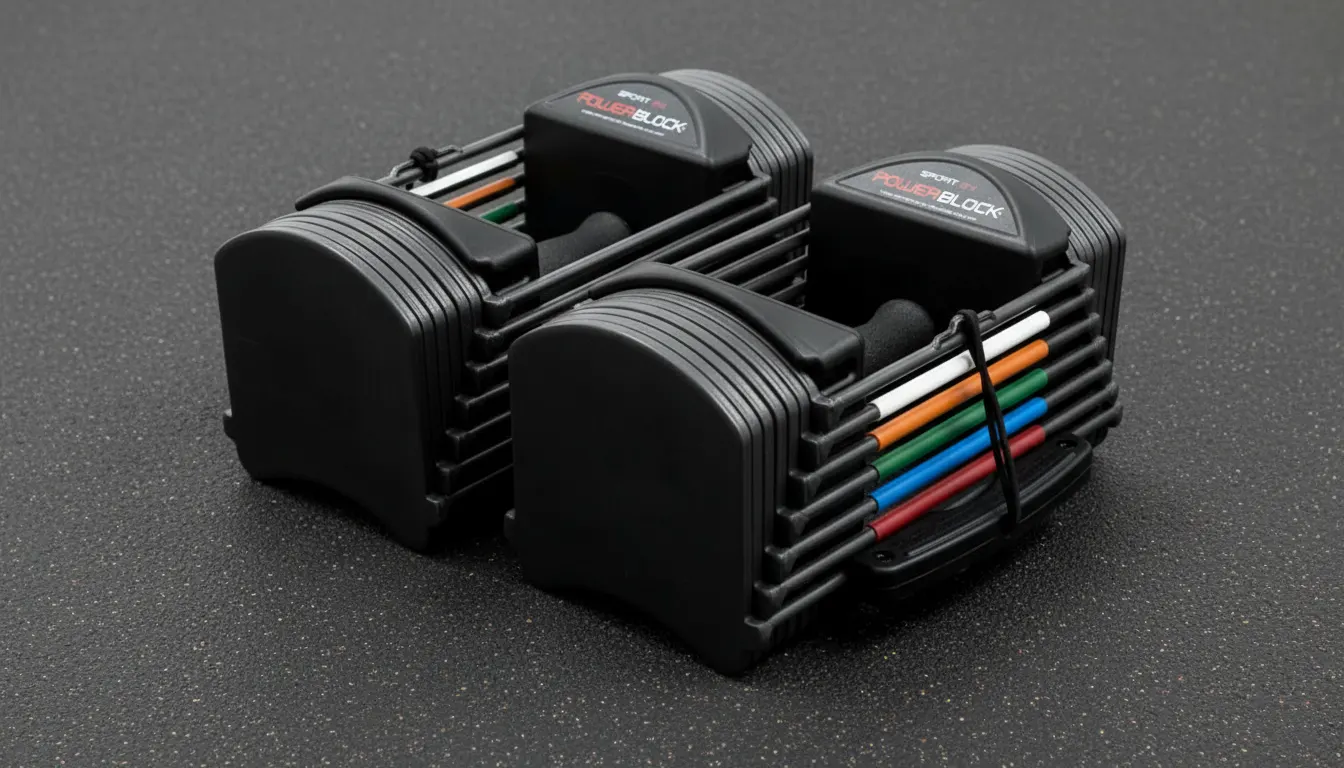
Pin-and-plate systems, common in PowerBlock and commercial selectorized designs, use a metal pin inserted through a plate selector to hold the weight stack together. The pin mechanism is generally more robust than a dial, but it is vulnerable to bent pins and debris in the plate holes.
The most important maintenance step for pin systems is keeping the plate contact surfaces clear. If grit jams a plate hole, the pin won’t seat fully.
Spinlock and Collar Systems
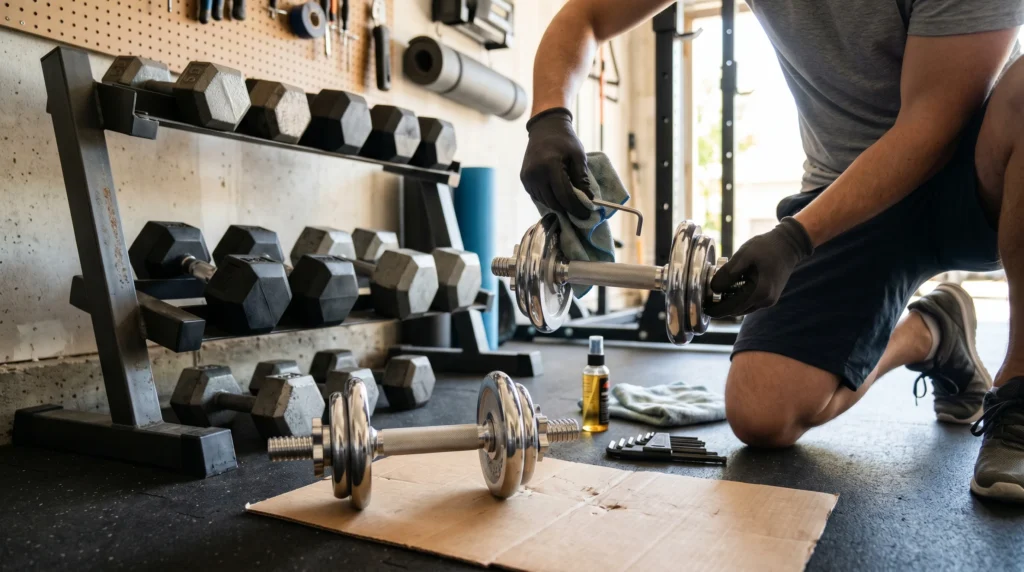
Traditional adjustable sets using a threaded bar and collar are simpler mechanically, but the collars develop thread wear over time and can slip if not tightened properly before each set. Spring washers in sets like Flybird’s design can degrade, causing inconsistent clamping force. The fix is usually washer replacement, which is inexpensive.
Daily Maintenance: What to Do After Every Single Workout
Wipe down the entire set after each session. Use a soft microfiber cloth, slightly damp if needed. Focus especially on the handle grip, the areas where plates sit flush against each other, and any exposed metal along the selector mechanism. Sweat collects in recessed areas more than on flat surfaces, so give those zones extra attention.
Dry everything completely before putting the dumbbells back. A damp cloth pass followed by a dry cloth pass is faster than dealing with corrosion months later. If you train hard and sweat heavily, this step matters more than it sounds.
Return the dumbbells to their cradle or stand. Leaving them on a concrete floor invites moisture from condensation, debris from foot traffic, and surface scratches from grit. The cradle also ensures the plates are seated correctly for the next session — when plates rest in the wrong position overnight, the next morning’s dial adjustment can feel wrong even before any real problem develops.
Check that the dial or pin is returned to the minimum weight setting. This is a specific recommendation from MX Select’s official documentation and applies broadly to selector-based systems. Storing the dumbbell at minimum weight reduces stress on the locking tabs and internal cams.
Monthly Deep Clean: The Full Process
Cleaning the Handle
The handle accumulates the most biological material: skin oils, sweat, chalk residue, and sometimes rubber debris from flooring. Use warm water and a small amount of mild dish soap on a soft brush. Work it into the knurling grooves, then rinse the cloth and wipe away the soap. Don’t pour water over the mechanism.
For disinfection, a diluted solution of isopropyl alcohol (70%) applied to a cloth works well. Apply to cloth first, not directly to the handle. Avoid bleach — it degrades metal finishes and can attack rubber grip coatings.
Cleaning the Weight Plates
If your system allows it, remove the plates from the cradle and clean each plate face individually. This is where debris hides most effectively — between adjacent plate surfaces, in slot channels, and along the locking tab edges. Use a dry soft brush first to dislodge loose particles, then a lightly damp cloth to clean each surface.
Compressed air is genuinely useful here. Blowing it through the plate slots and along the selector rails removes debris a cloth can’t reach. REP Fitness recommends this specifically for their QuickDraw system, and the approach works across most plate-based mechanisms.
Cleaning the Cradle
The cradle base collects whatever falls off the plates and handle. Wipe it out with a slightly damp cloth, paying attention to the rail channels where the plates slide. Any debris sitting in those channels will cause friction during plate selection on the next adjustment.
For Bowflex SelectTech users specifically: the cradle base is where stuck dials most often originate. Bowflex’s official support documentation recommends thoroughly inspecting the base for debris before concluding that any other component is at fault.
Drying Protocol
Every component — handle, plates, cradle — must be completely dry before reassembly. Residual moisture trapped between plates is exactly where rust starts, because those surfaces stay in contact and hold moisture longer than exposed areas. If you clean in the morning, let everything air dry for at least 30 minutes before reassembly.
Lubrication: What to Use, What to Avoid, and When to Skip It Entirely
Oil-based lubricants attract dust and debris. They create a sticky residue that turns into a grinding paste over time — the opposite of what you want inside a precision selector mechanism. REP Fitness’s product analyst Noah Tenenbaum stated explicitly that their adjustable dumbbells generally don’t need lubrication at all, and that keeping the mechanism clear of debris with compressed air is typically sufficient.
When lubrication is genuinely necessary — because a mechanism is stiff after cleaning and the stiffness isn’t due to debris — use a dry Teflon-based lubricant or a food-grade silicone spray. Apply it sparingly to the specific moving surfaces: locking pins, dial grooves, selector lever pivot points. Apply it to a cotton swab or small cloth first, not directly from the can. Then work the mechanism back and forth several times to distribute it, and wipe away any excess.
For spinlock collar systems, a light application of silicone grease to the threads reduces wear and makes tightening smoother. This is one case where a small amount of grease is appropriate because the thread contact surface is designed to carry load.
Never spray any lubricant into the plate slots or cradle rails. These surfaces need to be clean and dry for the plates to seat correctly.
Rust Prevention: The Real Long-Term Threat
Humidity Control
If your gym is in a garage or basement, a dehumidifier is one of the most effective investments you can make for equipment longevity. Exposed metal with even minor coating damage will oxidize in consistently humid air, regardless of how often you wipe the dumbbells down. Running humidity levels below 50% makes a significant difference.
Rubber gym mats placed under and around your dumbbell station buffer against concrete condensation, which is a seasonal issue in climates with cold winters. Cold concrete can draw moisture from warmer air, and that moisture settles on anything resting on the floor.
Powder Coat and Finish Maintenance
Most adjustable dumbbell plates ship with some form of finish — powder coat, paint, or rubber coating. Once that finish chips or scratches, bare metal is exposed. Small chips on powder-coated plates can be touched up with matte black paint or even a permanent marker. This isn’t aesthetically perfect, but it seals the metal and stops corrosion from expanding outward from the chip.
Check plates during your monthly clean. Pay particular attention to the edges of plates, which are most vulnerable to chipping from contact during adjustment.
Silicone-Based Protective Wax
A thin application of carnauba wax or silicone-based protective spray on exposed metal handle surfaces creates a moisture barrier without the debris-attracting properties of oil. Apply it to a cloth, buff it onto the metal, and let it dry. This is optional maintenance but adds a layer of protection for dumbbells stored in high-humidity environments.
Storage: Environment and Position Both Matter
Use the purpose-built stand or cradle at all times. Most adjustable dumbbell systems ship with a cradle because the plates are designed to rest in specific positions. Storing the handle outside the cradle puts stress on the locking mechanism. Storing plates loose on a shelf creates chip and dent risk from contact.
Keep them away from direct sunlight and extreme temperatures. UV exposure degrades rubber and plastic components over time. Extreme heat — inside a car trunk on a summer afternoon, for instance — can cause thermal stress on certain plastic dial components. Extreme cold makes metal mechanisms stiffer on first use.
Never store them on bare concrete floors long-term. Concrete is hygroscopic — it absorbs and releases moisture. Equipment resting on it picks up that moisture cycle. Rubber mats interrupt the contact.
Keep them away from cleaning sprays stored in the same area. Ammonia-based cleaners like some glass cleaners can off-gas in enclosed spaces and accelerate oxidation on metal. This sounds like a small detail, but it matters in compact home gym spaces where chemicals sit on shelves near equipment.
Inspecting for Wear: A Pre-Workout Safety Check
Check that the lock is fully engaged before lifting. For dial systems, turn to the selected weight and confirm the number window shows clearly. Then do a two-second tug test: a gentle upward pull followed by a small twist. Nothing should shift, click unexpectedly, or feel gritty. For pin systems, confirm the selector pin is fully seated — flush, not half-in. For spinlock collars, confirm even tightening on both sides.
Verify both sides match the same weight setting. Asymmetric loading is a specific failure mode for adjustable dumbbells. If the left dial shows 25 lbs and the right shows 30, you have an imbalanced dumbbell, which stresses the wrist, elbow, and shoulder joints differently on each side.
Listen on the first rep. A clean lock is silent under controlled movement. A partial lock produces a click or a subtle shift on the second or third rep. If you hear or feel anything off, stop the set, return the dumbbell to the cradle, and re-seat it before continuing.
Look for visible damage during the monthly clean. Cracked plates should be replaced immediately. A cracked plate under load can fracture further and create a sudden weight release. Check the handle where it meets the selector mechanism for any signs of bending or stress marks.
Troubleshooting Common Problems
The Dial Won’t Turn
This is the most common complaint with selector-knob systems. Start with the simplest cause before assuming a broken component. Check the cradle base for debris in the plate channels. Confirm the stand is on a level surface — a tilted cradle causes plates to sit unevenly, which binds the selector.
For Bowflex SelectTech specifically, the support documentation recommends removing the handle from the base, flipping it to expose the locking mechanism button, pressing it with a blunt object while turning the dial to the minimum setting. This resets the internal cam position.
If debris is the cause, clear the base, wipe the plate tabs, and reassemble one pair of plates at a time while testing the dial at each step. This isolates whether a specific plate is causing the bind.
The Selector Pin Won’t Seat
On pin-and-plate systems, a pin that won’t drop fully usually means debris in the plate hole, a slightly bent pin, or a plate hole that has developed a burr from impact. Clean the plate holes with a dry brush. If the pin is bent, replacement pins are available from most manufacturers and are straightforward to install.
Plates Rattle During Lifts
Rattling under load means plates are not fully seated in the locking mechanism. Stop the set. Return to the cradle, re-select the weight, and confirm the lock. If the rattle persists at a specific weight setting, test each increment above and below it — the problem often narrows to a single plate with a worn locking tab. Replace that plate.
The Mechanism Feels Stiff After Cleaning
If stiffness develops right after a deep clean, the cause is usually residual moisture that hasn’t fully dried. Let the mechanism dry completely — at least 30 minutes in open air. If stiffness persists after complete drying, apply a minimal amount of dry Teflon lubricant to the specific contact surface that feels resistant.
Collars Keep Slipping (Spinlock Systems)
Slipping collars on spinlock systems indicate either worn threads or insufficient tightening. Tighten both collars evenly, not one side first. If the collar slips even when fully tightened, the threads are worn and the collar needs replacement. Most manufacturers sell collar replacements cheaply, and this is a straightforward swap.
Maintenance Schedule Summary
Consistency matters more than intensity. A daily two-minute habit beats a monthly hour-long session that gets skipped.
After every session: Wipe down the handle and exposed plate surfaces with a soft cloth. Dry thoroughly. Return to cradle. Reset to minimum weight setting.
Monthly: Deep clean the handle, plates, and cradle. Clean between plate surfaces. Use compressed air in slots and rails. Inspect powder coat for chips and touch up as needed. Check all hardware for tightness on spinlock systems.
Every six months: Full disassembly (where the design permits). Clean internal mechanism components. Inspect selector pins, dial internals, and locking tabs for wear. Replace worn parts. Assess the storage environment for humidity issues.
Before every workout: Two-second tug test. Confirm both sides match. Listen on the first rep.
When to Call the Manufacturer vs. Replace the Component
Manufacturers of quality adjustable dumbbells — Bowflex, PowerBlock, REP Fitness, Nuobell, and others — maintain replacement parts programs. Before buying a new set because one component failed, check whether the specific part is available.
Common replaceable parts include: selector pins, locking mechanism springs, spinlock collars, dial assemblies on some systems, and individual weight plates. Many of these cost under $20 and swap in minutes.
Contact the manufacturer when you’ve exhausted the standard troubleshooting steps and the problem persists. Have your serial number available. Describe the specific symptom and which troubleshooting steps you’ve already tried. Most manufacturers with competent support will either walk you through an additional fix or ship a replacement part.
Consider replacing the entire set when structural components fail — a cracked handle, a broken selector housing that no longer holds the mechanism together, or a dial assembly replacement that costs more than 40% of a new set’s price. Those are the edge cases where economic logic points toward replacement.
Frequently Asked Questions (FAQs)
How often should I clean my adjustable dumbbells?
Wipe them down after every session. Do a thorough clean of the plates, cradle, and mechanism once a month under normal use. If you train in a garage or basement with higher dust or humidity levels, clean more frequently — every two weeks is reasonable for those environments.
Can I use WD-40 on my adjustable dumbbell mechanism?
No. WD-40 is a water displacer and light solvent, not a long-term lubricant, and it leaves a residue that attracts dust and debris. Use a dry Teflon-based lubricant or silicone spray if lubrication is needed, and apply it sparingly.
My dial-type dumbbells rattle slightly even when locked. Is this normal?
A small amount of mechanical play in dial systems is common and generally not a safety issue, but verify the lock carefully before each lift. Do the tug test: a gentle upward pull plus a slight twist. If nothing shifts and the rattle only occurs from vibration rather than under load, monitor it during use. If anything shifts during the tug test, re-seat and re-lock before lifting.
How do I prevent rust on the metal parts of my adjustable dumbbells?
Control the humidity in your storage space — keep it below 50% if possible using a dehumidifier. Dry the dumbbells completely after every use. Touch up any chips in the powder coat or paint with matte black paint to seal exposed metal. A thin application of carnauba wax or silicone spray on exposed metal handles adds a moisture barrier without attracting debris.
Can I store my adjustable dumbbells in the garage?
Yes, but garages require more maintenance attention than climate-controlled spaces. Use rubber mats to buffer against concrete condensation. Run a dehumidifier if the garage stays damp in winter or during rainy seasons. Inspect the equipment more frequently — monthly at minimum — and check the powder coat condition regularly.
What’s the correct way to check that my adjustable dumbbell is locked before lifting?
For dial systems: select your weight, confirm the number window shows clearly, then do a two-second tug test (gentle upward pull plus a small twist). Nothing should click or shift. For pin systems: confirm the selector pin is fully seated and flush on both sides. For spinlock systems: confirm both collars are evenly and firmly tightened. Never skip this check, even if you used the same weight setting yesterday.
My adjustable dumbbell dial feels stiff in cold weather. How should I handle this?
Cold temperatures make metal mechanisms stiffer temporarily. Bring the dumbbells indoors to room temperature before your session if possible, or allow a brief warm-up period before training at full weight. Avoid forcing a stiff dial — work the mechanism through its range gently before loading it.
How long should adjustable dumbbells last with proper maintenance?
With consistent care, a quality set of adjustable dumbbells should last between 10 and 20 years. Budget sets with lighter-duty selector mechanisms typically have shorter service lives even with good maintenance — roughly 5 to 8 years under regular use. The locking mechanism and dial assembly are the most common first-failure components.
Is it safe to use adjustable dumbbells if one plate has a small crack?
No. Replace a cracked plate immediately. A crack under cyclic load stress grows, and a plate that fractures during a lift creates a sudden weight imbalance that can cause injury. Replacement plates are available from most manufacturers for far less than the cost of treating a wrist or shoulder injury.
Do adjustable dumbbells need to be returned to minimum weight after every use?
Yes, for selector-based systems. Storing the handle at the minimum weight setting reduces stress on the locking tabs and internal cams. For spinlock systems, removing the plates and storing the bar separately is preferable for the same reason.
In conclusion
Adjustable dumbbells are a good investment — compact, versatile, and capable of handling years of serious training. What determines whether they deliver that return is what happens after the workout, not during it. The two-minute post-session wipe, the monthly deep clean, the quick tug test before the first rep: none of this is complicated. It just has to be consistent.
The people who open their garage gym after two years to find a perfectly functioning set of adjustable dumbbells aren’t doing anything exotic. They’re doing the basics — keeping moisture off metal, keeping debris out of mechanisms, keeping plates seated properly. That’s it. These habits cost almost nothing and they separate equipment that lasts from equipment that doesn’t.
Looking for a space-saving strength solution for your home gym? Check out PowerBlock Adjustable Dumbbells to see how this compact, durable system works, its key features, and whether it’s the right upgrade for your training setup.