
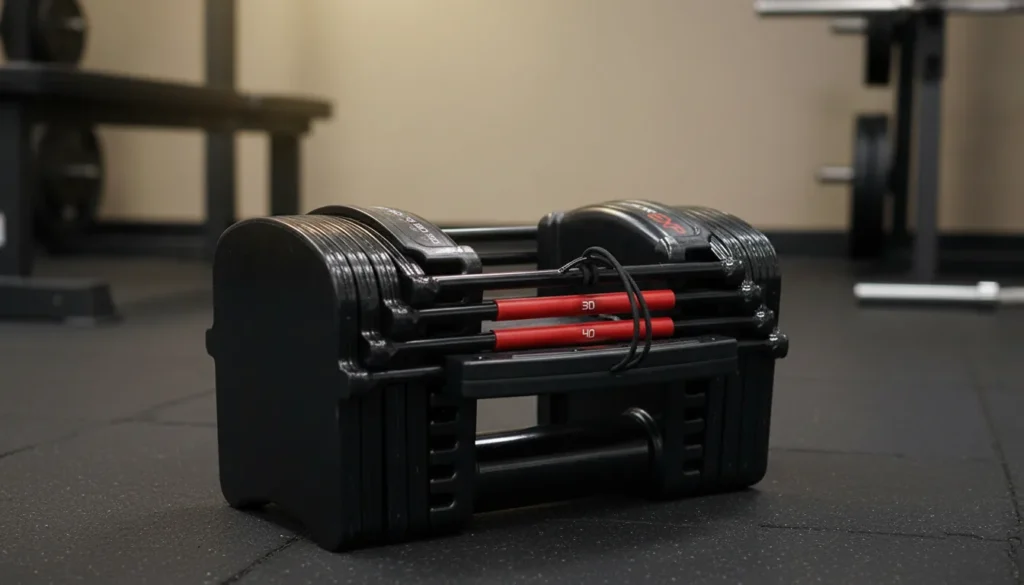
If you’re researching home gym equipment and wondering whether POWERBLOCK adjustable dumbbells deserve a spot in your workout space, you’re in the right place. This comprehensive review draws from years of real user experiences to help you make an informed decision about investing in these unique strength training tools.
Space-Saving Innovation That Actually Works
The POWERBLOCK Adjustable Dumbbell system represents a game-changing solution for fitness enthusiasts facing limited space constraints. Instead of requiring an entire wall-mounted rack filled with traditional fixed-weight dumbbells, this compact design consolidates multiple weight options into one streamlined unit. Users consistently praise how these dumbbells transform cramped apartments and modest home gyms into functional training environments without sacrificing exercise variety.
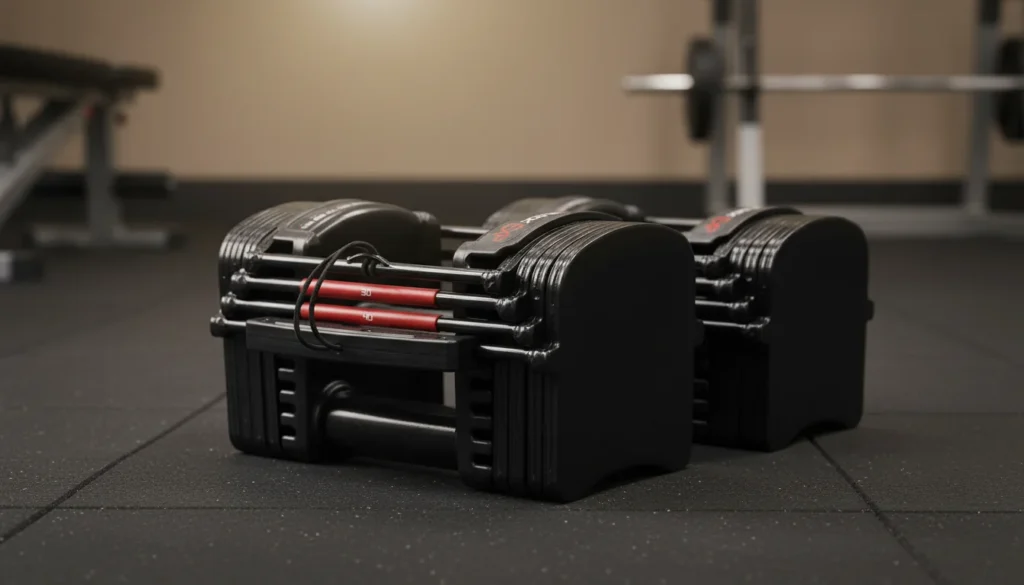
The footprint comparison is dramatic—where you might need 20 or more pairs of conventional dumbbells occupying significant floor space, the POWERBLOCK system fits comfortably on a small stand or designated corner. This efficiency makes them particularly appealing for urban dwellers and anyone who values their square footage.
Build Quality and Durability: Built to Last Decades
Constructed primarily from alloy steel with a rubberized handle coating, these dumbbells demonstrate remarkable longevity. Multiple users report using their sets daily for four-plus years without experiencing functional degradation. The welded metal construction inspires confidence, with one reviewer noting, “they feel like they will definitely last a lifetime.”
The paint finish shows some susceptibility to minor cosmetic wear from plate-on-plate contact during restacking, but this doesn’t affect performance. Several long-term owners emphasize that while aesthetic scuffs may appear over time, the structural integrity remains uncompromised even after thousands of workout sessions.
The selector pin mechanism, though plastic, proves more durable than initial appearances suggest. It flexibly accommodates slight misalignment during insertion and quickly returns to its proper shape, though users recommend paying attention when engaging the pin to ensure proper seating.
Weight Adjustment System: Quick but Not Instantaneous
The POWERBLOCK employs a selector pin system that allows weight changes in approximately 5-10 seconds for standard 10-pound increments. This speed positions the system between traditional spin-lock dumbbells (which require 1-2 minutes per change) and dial-adjustment competitors, offering a practical middle ground.
Changing weights involves pulling a U-shaped plastic pin and repositioning it at the desired weight slot. The system works smoothly when the dumbbells rest on a firm, level surface—a detail worth noting. Users report that soft surfaces like thick rubber mats or cushioned benches can prevent proper pin alignment, making a dedicated stand highly recommended.
For 2.5-pound incremental adjustments, the process requires additional steps. You must remove the base unit from the weight stack, flip a lever, tilt the dumbbell to slide out cylindrical weight inserts, flip the lever back, and return the base to the stack. While this takes roughly 20-30 seconds, it disrupts fast-paced circuit training flow. Many users simply stick with 10-pound jumps during high-intensity sessions to maintain momentum.
Weight Range and Expandability: Room to Grow
The Stage 1 set (5-50 pounds per hand) provides ample resistance for most upper body exercises and many compound movements. What sets POWERBLOCK apart is its expansion capability—you can add Stage 2 (bringing dumbbells to 70 pounds) and Stage 3 (maxing out at 90 pounds) as your strength progresses.
This modular approach means your initial investment grows with you rather than becoming obsolete. Reviewers who purchased expansion kits report seamless integration, though occasionally note minor cosmetic differences like color variations between generations.
One limitation deserves mention: the weight progression doesn’t include 12.5, 22.5, 32.5, or 42.5-pound settings. You can achieve 5, 10, 15, 17.5, 20, 25, 27.5, 30, and so on—but those “x2.5” increments fall outside the system’s design. Some users compensate with magnetic add-on plates or wrist weights for precise progressive overload.
Ergonomics and Hand Fit: The Adaptation Period
The POWERBLOCK’s distinctive cage-style design differs dramatically from traditional dumbbell ergonomics. The handle sits within a rectangular frame, creating a unique grip experience that requires an adjustment period.
For average-sized hands, clearance proves adequate but not generous. Users describe roughly 1/4 to 1/2 inch of space between knuckles and the internal weight tubes. Those with particularly large hands or who use thick lifting straps may experience occasional knuckle contact with the cylindrical 2.5-pound weight inserts positioned below the handle.
Interestingly, many lifters grow to appreciate this compact design. The weight feels like “an extension of your limb” during presses and curls, and the broad, flat sides facilitate leg-assisted positioning for exercises like chest presses—you can comfortably rest the dumbbells on your thighs while getting into position.
The contoured rubber grip provides excellent traction even during sweaty training sessions, eliminating concerns about slippage despite the lack of traditional knurling.
Exercise Versatility: A Few Limitations
POWERBLOCK dumbbells excel at the vast majority of standard exercises—presses, rows, flyes, raises, curls, and lunges all feel natural once you’ve acclimated to the shape. The square profile actually enhances certain movements by providing stable contact points.
However, some specialized exercises present challenges. Goblet squats and other movements requiring non-traditional grips (like holding the weight plate rather than the handle) feel awkward due to the protruding support rails. Overhead tricep extensions requiring both hands on a single dumbbell don’t work well given the handle’s limited width.
The cage design also means you won’t be able to drop these weights in the manner some lifters do with traditional dumbbells. This isn’t necessarily negative—it encourages controlled movement and core engagement—but represents a training adjustment for those accustomed to releasing weights at failure.
Sound and Feel During Use
Expect a subtle clicking or clanking sound during exercises as the weight plates experience minor movement within the assembly. This isn’t alarming or indicative of poor construction—it’s simply the physics of nested metal plates in motion. Users wearing headphones during workouts rarely notice this acoustic feedback.
The weight distribution creates a slightly different balance than cylindrical dumbbells, particularly with the 2.5-pound adder weights inserted in the handle base. Some reviewers describe a mild top-heavy sensation during overhead presses, though this doesn’t impact safety or effectiveness once you’ve adapted.
Shipping and Packaging Considerations
Amazon ships POWERBLOCK sets in two separate boxes, each containing one dumbbell. This practice occasionally causes confusion among buyers expecting a single consolidated package. Most receive both boxes on the same day, though delivery windows may vary by 24-48 hours.
The packaging utilizes dense styrofoam protection surrounding each unit. While exterior boxes often arrive showing wear from the 50+ pound contents, the foam successfully prevents damage to the dumbbells themselves. Recent shipments include “Part of a Set” stickers addressing earlier concerns about incomplete orders.
For those on upper-floor residences, coordinate with delivery personnel—these are heavy packages that Amazon drivers may leave at building entrances rather than carrying to your door.
Stand Recommendation: Not Optional
While technically not required, investing in a POWERBLOCK-compatible stand transforms the user experience. The stand positions weights at an ergonomic height, eliminating repeated bending that strains your back between sets. More importantly, it ensures the dumbbells rest on a perfectly firm, level surface, enabling smooth selector pin operation.
The compact stand model costs approximately $69 and includes small slots designed to hold the removable 2.5-pound weight inserts when not in use. Users consistently describe this accessory as essential rather than optional, particularly for those planning daily training sessions.
Value Proposition: Expensive but Economical
The complete POWERBLOCK system (Stage 1 through 3 with stand) represents a significant upfront investment approaching $1,000. This price point initially shocks some buyers until they calculate the alternative cost.
A commercial dumbbell set spanning 5-90 pounds in 5-pound increments would require 18 pairs of dumbbells. At typical gym equipment pricing, this easily exceeds $2,000-3,000, plus the cost of storage racks and the space they occupy. Viewed through this lens, POWERBLOCK becomes the economical choice for serious home training.
The five-year limited warranty provides additional peace of mind, though users consistently report durability extending well beyond that timeframe with reasonable care.
Common Criticisms Worth Noting
No product earns universal praise, and POWERBLOCK’s limitations deserve honest acknowledgment:
The missing weight increments (12.5, 22.5, 32.5, 42.5 pounds) frustrate lifters who prefer precise progressive overload in 2.5-pound steps across all ranges. Workarounds exist but add complexity.
The adjustment speed for 5-pound changes lags behind dial-system competitors, making them less ideal for trainers conducting rapid circuit-style classes or athletes performing extensive drop sets with fine weight graduations.
The cage design feels foreign initially, particularly for experienced lifters accustomed to traditional dumbbell ergonomics. While most users adapt within a few workouts, some never fully embrace the different grip dynamics.
Rare manufacturing inconsistencies appear in some expansion sets, with occasional reports of plates sticking together or slight angle mismatches between stages. These issues aren’t widespread but occur often enough to warrant mention.
Who Should Buy POWERBLOCK Dumbbells?
These adjustable dumbbells shine for specific user profiles:
- Space-constrained fitness enthusiasts in apartments, condos, or homes with dedicated but modest workout areas
- Progressive trainers who anticipate steady strength gains and appreciate the expandable design
- Budget-conscious buyers willing to invest upfront to avoid the cumulative cost of multiple fixed-weight dumbbell pairs
- Home gym builders seeking durable, long-term equipment rather than temporary solutions
- Careful lifters who maintain controlled form and won’t abuse equipment through dropping or throwing
They’re less ideal for:
- Circuit training specialists requiring split-second weight transitions
- Athletes with very large hands who may experience comfort issues
- Lifters requiring every 2.5-pound increment without supplementary equipment
- Users expecting traditional dumbbell ergonomics without adaptation
Practical Tips from Long-Term Users
Experienced POWERBLOCK owners offer valuable insights:
- Always verify pin seating before lifting—take two seconds to visually confirm both sides locked at identical weights rather than discovering mid-rep you’re holding 30 pounds on one end and 40 on the other.
- Use the stand as your adjustment platform. The firm, elevated surface makes weight changes faster and more reliable.
- Start with Stage 1 unless you’re already lifting very heavy. Many users regret immediately buying all three stages when their current strength level only requires the base set.
- Wear proper footwear during training. The warning about unlocked sections occasionally sticking to locked portions is worth heeding—steel-toe protection guards against accidental drops.
- Clean the selector mechanism periodically. Dust and chalk buildup can impede smooth pin insertion over time.
Final Verdict
After analyzing hundreds of user experiences spanning several years of real-world use, POWERBLOCK Adjustable Dumbbells earn their reputation as premium home fitness equipment. The combination of space efficiency, build quality, weight range, and long-term durability justifies the investment for individuals committed to sustained strength training.
The learning curve exists but proves brief for most users. The minor ergonomic compromises pale against the practical advantages of consolidating an entire dumbbell rack into two compact units. For home gym builders prioritizing quality, longevity, and sensible space utilization, few alternatives match POWERBLOCK’s proven track record.
These dumbbells won’t suit everyone—gym enthusiasts with unlimited space and budget might prefer the familiarity of traditional fixed-weight sets, while circuit training specialists might favor faster-adjusting dial systems. But for the vast majority of home fitness enthusiasts, POWERBLOCK represents the sweet spot of functionality, durability, and value.
Where to Buy: Official Store Only
If you’ve decided to invest in POWERBLOCK Adjustable Dumbbells, purchase exclusively from the official Amazon store. Avoid third-party resellers and unauthorized distributors who may sell incomplete sets, older discontinued models, or products lacking proper warranty coverage.
Short on time but want maximum results? Try these Top 11 Full Body Workout With Dumbbells to train your entire body efficiently.