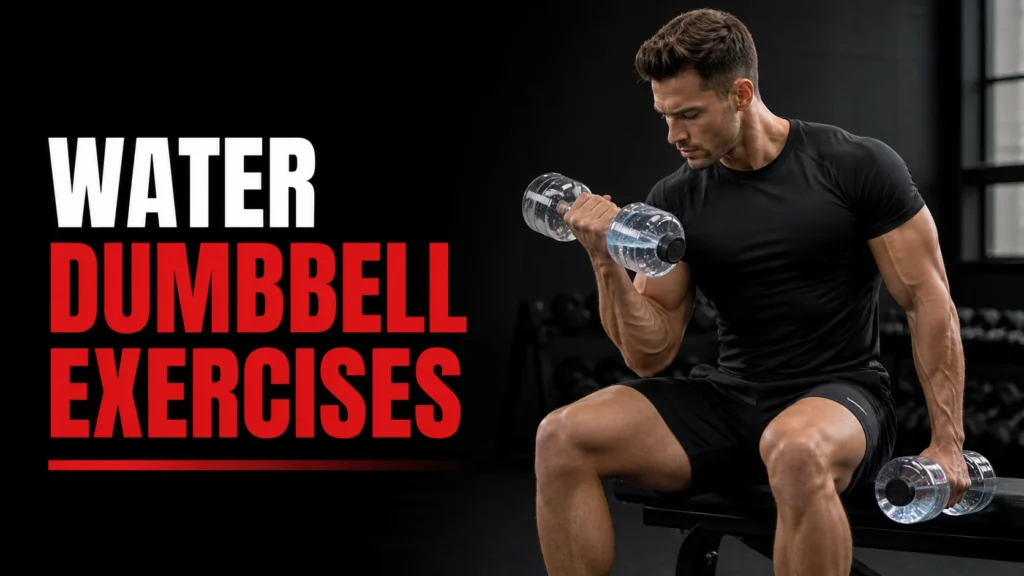
If you’ve spent any time in an aqua aerobics class, you’ve probably noticed people pulling foam dumbbells through the water and wondered — is that actually doing anything? The short answer is yes, more than most people expect. Water dumbbell workouts combine the joint-protecting properties of buoyancy with genuine resistance training, producing results that land-based gym sessions simply cannot replicate in the same way.
What Are Water Dumbbells and How Do They Actually Work
Water dumbbells, also called aqua dumbbells or pool dumbbells, are buoyant weights made from closed-cell EVA foam or plastic. On land they weigh almost nothing — typically under a pound. Submerge them, and they immediately fight to float back to the surface. That upward force is what creates resistance during your workout.
This is the key distinction from regular dumbbells. A cast-iron dumbbell resists gravity pulling it down. A water dumbbell resists buoyancy pushing it up. When you push one down toward the pool floor, you’re working your muscles against that upward force. When you pull it horizontally through the water, the foam’s surface area creates drag in every direction of movement, giving you resistance on both the concentric and eccentric portions of every rep.
Traditional land weights only resist in one direction — downward. Water dumbbells resist in every direction you move them. That 360-degree resistance pattern recruits more stabilizer muscles and produces a different training stimulus than anything you can replicate with iron.
The size of the foam head determines how much resistance you get. Larger surface area means more drag and more buoyancy — so larger dumbbells are harder to push through water, not heavier. This is why a beginner might start with a smaller dumbbell and progress to a larger one as their strength builds.
The Science Behind Water Dumbbell Workouts
What the Research Actually Shows
The evidence for aquatic exercise has grown substantially in recent years. A 2024 randomized controlled trial published in the Korean Journal of Family Medicine compared aquatic exercises directly to land-based rehabilitation for people with knee osteoarthritis. Participants in the aquatic group saw pain scores drop by 50% on the WOMAC scale, compared to just 17% in the land group. Functional ability improved by 48% in the water group versus 11% on land.
A 2024-2025 systematic review in the journal Geriatrics analyzed 12 randomized controlled studies across five major databases including PubMed and Cochrane. The review found that water-based exercise significantly improved balance, pain levels, stiffness, and walking ability in adults with osteoarthritis. Those aren’t marginal gains — they’re clinically meaningful outcomes.
Harvard Health has cited data showing that jogging in water burns approximately 350 calories per 30 minutes for a 150-pound person, compared to around 250 calories for the same duration on land. The water’s density and the thermoregulatory demands of exercising in it both contribute to that gap. Research-based metabolic equations from the Compendium of Physical Activities suggest that thermoregulation alone can increase calorie expenditure by 5 to 15% during aquatic exercise.
Why Water Reduces Joint Stress Without Reducing the Workout
Water’s buoyancy supports a substantial portion of body weight during exercise. This doesn’t mean the muscles are off the hook — it means the compressive load on cartilage, menisci, and spinal discs drops significantly while the muscles still work hard against water resistance. This is why people recovering from surgery can often exercise in water weeks before they can safely return to land-based training.
The hydrostatic pressure of water also has a documented effect on reducing soft tissue swelling, which matters for anyone managing chronic joint inflammation. Warm water specifically relaxes muscles, reduces perceived stiffness, and makes a wider range of motion achievable than the same person might manage on a gym floor.
Who Benefits Most from Water Dumbbell Exercises
The honest answer is most people, but the benefits stack up differently depending on your situation.
People managing joint conditions — osteoarthritis, rheumatoid arthritis, post-surgical recovery — find water exercise accessible when land training isn’t. The 2024 osteoarthritis research above makes a strong case here: this isn’t just “easier,” it’s measurably more effective for certain goals.
Older adults dealing with balance concerns and reduced bone density get a training environment where falls don’t result in impact injuries. The challenge to proprioception in water — your body constantly adjusting to buoyancy and water movement — actually improves neuromuscular coordination over time.
Overweight individuals often find water exercise more comfortable because buoyancy offsets body weight during movement, making exercises achievable that would be painful on land.
Athletes use pool training for active recovery days. The resistance is real enough to maintain conditioning, while the low-impact nature allows fatigued muscles to move without the inflammatory stress of another land session.
Beginners who find gym environments intimidating sometimes find pool classes more approachable. The water obscures body shape, the temperature is comfortable, and the pace of aqua classes tends to be inclusive.
That said, water training alone has limits. If your goal is building maximum strength or significant muscle hypertrophy, the resistance available from foam dumbbells will eventually plateau. Most serious athletes use aquatic training as a complement to land training, not a replacement.
Choosing the Right Water Dumbbells
Size and Resistance Levels
Small buoys (approximately 6 inches in diameter) are appropriate for beginners, older adults, anyone with shoulder impingements, or people new to resistance training in any form. They create moderate drag and manageable buoyancy force.
Medium buoys (approximately 8 to 10 inches) suit intermediate exercisers who have built a baseline of water fitness and want more challenge from the same movement patterns.
Large buoys (over 10 inches) are for experienced aquatic exercisers who want to push intensity. The surface area of large foam dumbbells creates enough drag that controlled movement becomes genuinely difficult.
Materials
Most quality water dumbbells are closed-cell EVA foam. This material is chlorine-resistant, dries quickly, doesn’t absorb pool chemicals, and maintains buoyancy over years of use. Some models include a plastic or padded core pipe as the grip, which matters during longer workouts — bare foam handles become uncomfortable when hands are wet and pruning.
Avoid any weighted dumbbell in the pool. Metal corrodes in chlorinated water, is difficult to control underwater, and doesn’t produce the same resistance pattern that foam creates. Equipment designed specifically for aquatic training performs differently and more safely than any land-based improvisation.
Water Dumbbell Exercises: A Complete Library
Upper Body Water Dumbbell Exercises
Bicep Curls Stand in chest-deep water in a staggered stance with one foot forward for stability. Hinge slightly at the hips with your chest angled toward the pool floor. Hold a dumbbell in each hand behind you with elbows slightly bent. Alternate arms, contracting the bicep to draw each dumbbell forward and up toward your chest. Lower under control. Do 10 to 15 reps per arm.
Tricep Pressdowns Stand with elbows bent and dumbbells held near your chest. Push both dumbbells down through the water toward your thighs by straightening the arms, feeling the tricep engage through the full range. Return to start and repeat. The upward resistance from the buoyancy makes this a true tricep challenge, unlike gravity-only movements.
Lateral Raises Stand in shoulder-depth water, arms at your sides holding one dumbbell in each hand. Raise both arms out to the side simultaneously until they’re level with the water surface. Lower slowly, resisting the buoyancy on the way down. This targets the lateral deltoid — the muscle responsible for shoulder width — with resistance in both directions of movement.
Front Punches (Alternating) Start with both dumbbells at chest height. Extend one arm forward in a punching motion, driving the dumbbell through the water, then draw it back while punching the other arm forward. This trains the shoulder, tricep, and core simultaneously, and the twisting motion adds rotational resistance from the water.
Chest Press Stand with feet shoulder-width apart holding a dumbbell in each hand at chest level. Push both dumbbells forward until your arms fully extend, then draw them back. The water provides push and pull resistance, making this more demanding than a similar movement in air.
Chest Fly Start with arms extended forward, dumbbells submerged side by side. Open your arms outward in a wide arc until they’re extended to each side, then bring them back together. The closing phase works the pectoral muscles in a pattern similar to a cable fly machine.
Upright Row Hold both dumbbells in front of your thighs. Pull them up the front of your body toward your chin, leading with your elbows. This trains the upper trapezius and shoulder muscles, and the water drag through the upward pull makes each rep feel heavier than it looks.
Seated Row (Pool Edge or Step) Sit on a pool step or underwater bench with your legs extended in front of you. Hold a dumbbell in each hand with arms extended forward. Pull both dumbbells back toward your torso, squeezing the shoulder blades together. Release forward and repeat. This is one of the few water exercises that effectively targets the mid-back musculature.
Single-Arm Single-Dumbbell Core Challenge Hold one dumbbell with one hand and nothing in the other. The uneven buoyancy force immediately challenges your core to compensate. Any pressing, raising, or pulling motion done with a single dumbbell will activate deep stabilizers on both sides — the loaded side fighting buoyancy, the unloaded side fighting the imbalance. This is particularly effective for identifying and correcting strength asymmetries.
Lower Body Water Weights Exercises
Standing Leg Raise Hold a dumbbell in one hand for balance (or rest one hand on the pool edge). Extend the opposite leg forward to hip height, keeping it straight. Lower it back and repeat. Switch sides. The water resistance challenges hip flexor strength while buoyancy reduces the load on the standing leg’s knee.
Side Leg Raise Stand upright and raise one leg out to the side as high as comfortable, then lower it. The lateral movement through water targets the hip abductors — glutes medius especially — which are often undertrained in standard gym programs.
Flutter Kicks with Dumbbell Support Hold a dumbbell in each hand in front of you, face down in the water if comfortable (or hold the pool edge). Perform rapid alternating flutter kicks with straight legs. The buoyancy of the dumbbells helps maintain your horizontal position while the kicking motion drives cardiovascular intensity and lower leg conditioning.
Aqua Squats Stand in waist-deep water with feet shoulder-width apart, holding dumbbells at your sides. Squat until thighs approach parallel, then stand back up. The water reduces compressive force on the knees by roughly 50% compared to dry land squats, making this exercise accessible to people who cannot perform land squats without pain.
Standing Hip Extension Stand facing the pool wall, holding the edge for support. With a dumbbell held between your ankles or thighs (optional), extend one leg back behind you, squeezing the glute. Return and repeat. Without the dumbbell, this is low-intensity — the dumbbell held between the legs adds meaningful resistance to the hip and glute.
Core Water Dumbbell Exercises
Woodchop Hold one dumbbell with both hands in front of you, submerged. Rotate your torso as you bring the dumbbell across your body from one hip toward the opposite shoulder, mimicking a chopping motion. The rotational resistance from the water is distinctly different from a cable or band woodchop — the resistance increases as you accelerate the movement.
Standing Oblique Crunch Stand with one dumbbell held overhead with both hands. Draw your right knee up toward your right elbow while crunching the dumbbell down to meet it. Alternate sides. This motion is harder than it looks in water because the buoyancy of the dumbbell assists in one direction and resists in the other depending on orientation.
Deep Water Suspended Core Hold In deep water with a buoyancy belt, hold a dumbbell in each hand straight down at your sides. Without touching the pool bottom, maintain a vertical position for 30 to 60 seconds. The effort required to stay upright with the downward pressure from the dumbbells is an isometric core workout unlike anything replicable on dry land.
Rock and Roll (Single Dumbbell) In deep water, hold one dumbbell with both hands in front of you. Use the dumbbell to create momentum — pulling it forward flips your lower body back; pushing it back brings your lower body forward. This full-body transfer of power from arms to core to legs is a proprioceptive and strength exercise simultaneously.
How to Progress Your Water Weights Exercises Safely
Progression in water training works differently than on land. You can’t just add a 5-pound plate. Instead, the variables available to you are:
Dumbbell size. Moving from small to medium to large buoys increases both drag resistance and buoyancy force. This is the most direct way to make exercises harder.
Movement speed. Water drag is proportional to speed. Moving faster generates dramatically more resistance. A slow lateral raise is much easier than a fast one. This makes speed a powerful built-in progressive tool.
Water depth. Chest-deep water increases the demands on your cardiovascular system and challenges your balance more than waist-deep water. Deep water exercises with a buoyancy belt remove ground contact entirely, requiring constant core activation.
Range of motion. Full range of motion through water generates more drag over a longer arc than partial reps. Extending your range as strength and mobility improves is a legitimate progression strategy.
Rest periods. Shorter rest between sets or rounds increases cardiovascular intensity without changing the exercise itself.
Single-dumbbell training. Moving from two dumbbells to one for any exercise immediately increases the core stabilization challenge. The imbalanced buoyancy forces the unloaded side to compensate, which reveals and addresses strength asymmetries.
Common Mistakes in Water Dumbbell Workouts
Using momentum instead of muscle. Water resistance rewards slow, controlled movement. Swinging the dumbbells through a movement using body momentum rather than muscle contraction reduces the training stimulus and shifts stress to joints instead of muscles.
Ignoring core engagement. Every water dumbbell exercise becomes more effective — and safer — when you maintain a deliberately contracted core throughout. Without it, your lower back absorbs the forces your abdominals should be managing.
Standing too shallow. Most exercises work best in waist-to-chest depth. In very shallow water, buoyancy doesn’t work effectively, and the dumbbells lose much of their resistance. Get deep enough that the foam stays submerged.
Progressing too fast. The first session with any new buoy size will feel awkward. The buoyancy-to-surface-area ratio is genuinely different, and your neuromuscular system needs time to adapt. Give each equipment change two to three sessions before deciding the difficulty level is right.
Skipping the warm-up. Water temperature — especially in outdoor pools — affects muscle pliability. A brief warm-up of pool walking, arm circles, and leg swings gets blood flow to the muscles before loading them.
Water Dumbbell Workouts for Specific Goals
For Weight Loss
Water aerobics with dumbbells burns meaningful calories. A 150-pound person exercising at moderate intensity for 45 minutes burns roughly 260 to 400 calories depending on exercise selection and intensity — and that doesn’t include the elevated post-exercise metabolism from resistance work. Adding dumbbells to a water aerobics session increases resistance, which means more muscle fiber recruitment, more energy expenditure, and the added benefit that muscle tissue burns more calories at rest than fat tissue.
For weight loss, train 3 to 4 times per week at moderate-to-high intensity, keep rest periods short, and favor circuit-style workouts that keep your heart rate elevated. Combine with dietary management — water exercise alone, like any exercise, won’t overcome a significant caloric surplus.
For Arthritis and Joint Pain
Research supports water dumbbell exercises as one of the most effective interventions available for osteoarthritis management. The 2024 randomized trial cited earlier showed 50% pain reduction in aquatic therapy participants over 8 weeks. Start with small buoys and waist-depth water. Focus on range-of-motion work first, then gradually introduce resistance. Three sessions per week appears to be the effective dose based on available research.
Warm water pools (around 32°C) provide additional benefit for muscle relaxation and pain reduction during exercise. If your facility offers warm water options, prioritize them for arthritis management.
For Rehabilitation and Recovery
Always coordinate with your physical therapist or physician before starting post-surgical aquatic exercise. That said, water’s buoyancy allows movement much earlier in recovery than land training because compressive joint loads drop significantly. Many rehabilitation protocols use aquatic exercise as a bridge between complete rest and return to land activity.
In rehabilitation contexts, two dumbbells of the same size provide bilateral symmetry, while single-dumbbell training can be used later in recovery to identify and correct imbalances between the injured and healthy side.
For Older Adults
Proprioceptive challenge in water — the constant minor adjustments to stay balanced in a buoyant medium — has been shown to improve neuromuscular coordination. Balance improvements translate directly to reduced fall risk, which is a significant concern for adults over 65. Start with a pool edge or step accessible during every session. Progress slowly, with emphasis on stability before resistance increases.
Combining Water Dumbbell Workouts with Land Training
Water training doesn’t need to replace gym sessions — the two complement each other well. Use pool sessions for:
Active recovery days between heavy land training sessions. The muscles move and stay conditioned without accumulating more inflammatory damage from impact.
Cardiovascular conditioning that doesn’t stress joints already fatigued from squats or deadlifts.
Targeted rehabilitation of specific imbalances through single-dumbbell work.
Variation that prevents adaptation plateaus and keeps training mentally fresh.
Athletes in running sports, for example, sometimes substitute one land session per week with an aquatic session during high-volume training blocks to manage cumulative joint stress while maintaining overall conditioning.
Equipment You’ll Need Beyond the Dumbbells
Water dumbbells work on their own, but a few additional items make sessions more effective.
A buoyancy belt is worth having if you plan to do any deep-water work. It keeps you suspended without effort, so you can focus entirely on the exercise rather than treading water.
Foam pool noodles can substitute for dumbbells in a pinch for some exercises, and they’re useful for supported floating during core work.
Water resistance gloves — webbed gloves that increase hand surface area — add upper body drag for exercises where the dumbbells aren’t in use.
Proper fitting goggles and a swim cap matter for any session where your face enters the water, particularly during prone flutter kick work.
Frequently Asked Questions (FAQs)
Can water dumbbell exercises build real muscle, or is it just cardio?
Water dumbbells do produce resistance training adaptations, including improved muscle tone and modest strength gains. However, the progressive resistance ceiling is lower than land training — you can increase the buoy size, speed, and depth, but eventually the available challenge maxes out. For people focused primarily on muscle hypertrophy, aquatic training is a valuable supplement rather than a standalone replacement for iron.
Do I need to know how to swim to do water dumbbell workouts?
No. The vast majority of water dumbbell exercises are performed standing in waist-to-chest-deep water. Your face stays out of the water throughout. The only exception is deep-water exercise, which requires a buoyancy belt — and even then, you’re floating, not swimming.
How often should I do water dumbbell workouts to see results?
Research on aquatic exercise for osteoarthritis rehabilitation used three sessions per week over 8 weeks as the effective dose. For general fitness and conditioning, 2 to 4 sessions per week is appropriate depending on your goals and other training. Consistency over months matters more than any particular weekly frequency.
Can I use regular metal dumbbells in the pool instead?
You shouldn’t. Metal dumbbells corrode in chlorinated water, are difficult to control underwater, can damage the pool surface, and don’t produce the buoyancy-based resistance that makes aqua dumbbells effective. The physics of the workout are fundamentally different — metal weights sink and resist downward; foam weights float and resist upward. They’re not interchangeable.
What water depth works best for water dumbbell exercises?
Most exercises work best in waist-to-chest-deep water. Waist depth provides the most ground stability for beginners. Chest depth increases the cardiovascular demand and challenges balance more. Deep water (no ground contact) is an advanced option that maximizes core activation but requires a buoyancy belt.
Are water dumbbell workouts good for lower back pain?
Water exercise is generally recommended for people with lower back pain because buoyancy reduces spinal loading. However, specific exercises matter — any movement that involves significant forward trunk flexion without core engagement can aggravate lower back issues. Focus on standing exercises with deliberate core activation, and consult a physiotherapist if pain is severe or persistent.
How do I choose between small, medium, and large water dumbbells?
Beginners should start with small buoys (approximately 6-inch diameter). If you have shoulder issues or haven’t exercised recently, small buoys prevent you from overloading the shoulder joint before it’s ready. Progress to medium buoys when the small ones feel too easy to control through a full range of motion at moderate speed. Large buoys are for experienced aquatic exercisers looking for a serious resistance challenge.
Can children use water dumbbells?
Children can use aqua dumbbells with appropriate supervision in shallow water. Small-size buoys are suitable, and sessions should focus on fun movement patterns rather than structured resistance training. Always ensure children are supervised by a lifeguard or capable adult.
Is water dumbbell exercise effective for pregnant women?
Aquatic exercise is generally considered safe and beneficial during uncomplicated pregnancies, and water’s buoyancy makes movement more comfortable as body weight increases. However, every pregnancy is different — consult your obstetrician before starting or continuing any aquatic training program during pregnancy, particularly after the first trimester.
How long before I see results from water dumbbell training?
For most people, noticeable improvements in muscle tone, joint comfort, and cardiovascular endurance emerge within 4 to 6 weeks of consistent training at 3 sessions per week. Strength gains follow, with measurable improvement typically visible by week 8. The 2024 osteoarthritis research used an 8-week protocol with three weekly sessions as the measurement point, which aligns with typical fitness adaptation timelines.
In conclusion
Water dumbbell workouts occupy a specific and valuable space in the fitness landscape — genuinely effective for resistance training, demonstrably superior to land exercise for certain populations, and accessible in ways that gym-based training often isn’t. The science has caught up to what aqua fitness instructors have known for years: working against buoyancy builds real strength and burns real calories without the joint stress that causes many people to quit exercise altogether.
The pool is an underused training environment. A pair of foam dumbbells and 40 minutes three times a week can produce meaningful improvements in strength, cardiovascular fitness, joint health, and balance. The resistance is real. The results are real. Get in the water.
Want better bicep growth and form? Check out How to Do Dumbbell Bicep Curls for step-by-step technique, common mistakes to avoid, and tips to maximize muscle activation.