If you want stronger, more defined glutes without complicated equipment, dumbbell glute bridges are one of the most effective exercises you can include in your routine. This movement delivers powerful results by isolating the glutes while keeping stress off your joints and lower back.
Many lifters underestimate the simplicity of this exercise, yet it plays a crucial role in building lower-body strength, improving posture, and enhancing overall athletic performance.
What Makes Dumbbell Glute Bridges So Effective?
Dumbbell glute bridges stand out because they directly target the glutes through controlled hip extension.
Unlike compound lifts that distribute effort across multiple muscles, this exercise isolates the glutes and ensures they perform the majority of the work.
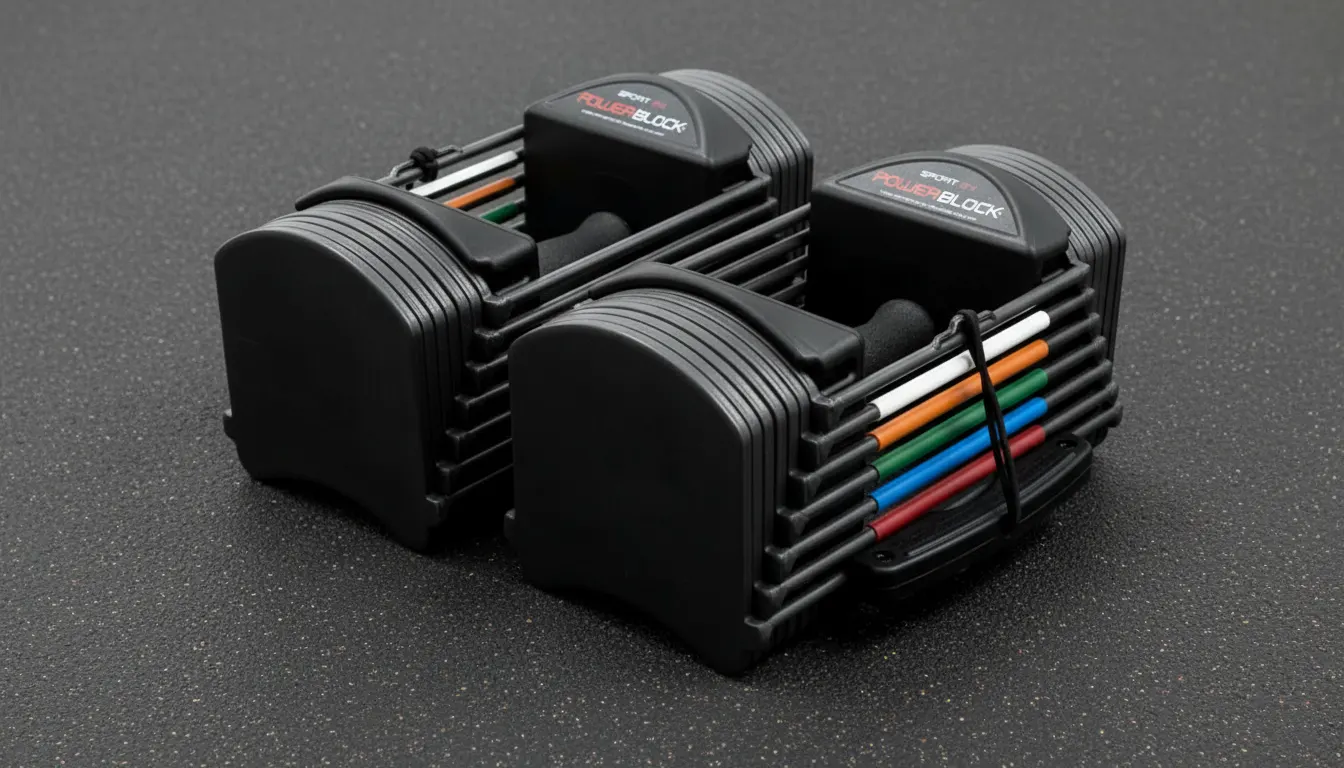
Adding a dumbbell increases resistance, which leads to greater muscle activation and long-term strength gains.
Muscles Worked in Dumbbell Glute Bridges
This exercise primarily activates the gluteal muscles, supported by several secondary muscle groups:
Primary Muscles
- Gluteus maximus (main hip extensor)
- Gluteus medius
- Gluteus minimus
Secondary Muscles
- Hamstrings
- Quadriceps
- Core muscles (stabilization)
- Lower back (erector spinae)
Strong activation of these muscles makes glute bridges one of the most direct ways to train the glutes effectively.
How To Do Dumbbell Glute Bridges Properly (Step-by-Step)
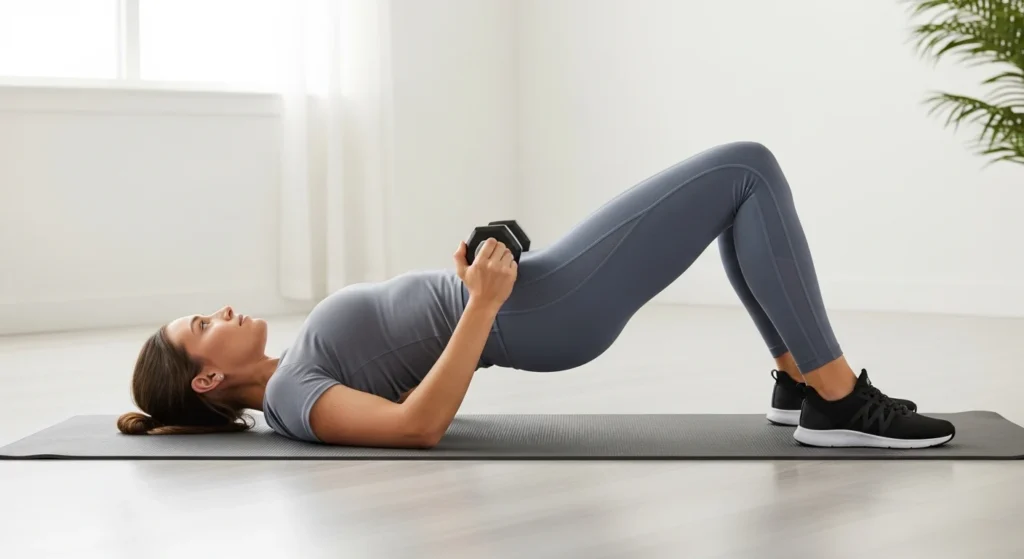
1. Setup Position
- Lie flat on your back on a mat.
- Bend your knees and place your feet flat on the ground.
- Keep feet hip-width apart.
- Position your heels close to your glutes.
2. Place the Dumbbell
- Hold a dumbbell across your hips.
- Grip it securely with both hands to prevent movement.
3. Brace Your Core
- Tighten your abdominal muscles.
- Maintain a neutral spine position.
4. Lift Your Hips
- Push through your heels.
- Drive your hips upward toward the ceiling.
- Squeeze your glutes at the top.
5. Peak Position
- Your body should form a straight line from shoulders to knees.
- Avoid arching your lower back.
6. Lower with Control
- Slowly lower your hips back down.
- Keep tension in your glutes throughout the movement.
Benefits of Dumbbell Glute Bridges
Builds Stronger Glutes
Weighted resistance improves muscle growth and strength.
Improves Hip Extension Power
Essential for running, jumping, and lifting.
Reduces Lower Back Pain
Strengthening glutes helps relieve pressure on the spine.
Enhances Athletic Performance
Better glute strength improves speed and explosiveness.
Low-Impact Exercise
Suitable for beginners and rehabilitation programs.
Dumbbell Glute Bridge Variations
Single-Leg Dumbbell Glute Bridge
- Targets one side at a time
- Improves balance and stability
Elevated Glute Bridge
- Feet placed on a platform
- Increases range of motion
Banded Dumbbell Glute Bridge
- Adds resistance for glute activation
Pause Reps
- Hold at the top for longer duration
- Enhances time under tension
Who Should Do Dumbbell Glute Bridges?
This exercise is ideal for:
- Beginners building glute strength
- Athletes improving performance
- Individuals with sedentary lifestyles
- Anyone looking to reduce lower back discomfort
Perfect Form Breakdown
Executing dumbbell glute bridges correctly is essential for results and safety.
Starting Position
Your body should be stable with your shoulders relaxed and your feet firmly planted on the ground.
Movement Execution
Drive through your heels while lifting your hips, focusing on squeezing your glutes rather than pushing with your lower back.
Top Position
Pause briefly while maintaining tension in your glutes.
Controlled Descent
Lower slowly to keep muscles engaged and avoid momentum.
Why Beginners Should Start With Dumbbell Glute Bridges
This exercise is beginner-friendly because it requires minimal coordination and can be easily adjusted based on fitness level.
It provides a safe introduction to strength training while still delivering noticeable results.
Advanced Training Strategies
Progressive Overload
Increase the weight or reps gradually to continue building strength.
Time Under Tension
Slow down each repetition to increase muscle engagement.
Supersets
Pair glute bridges with lunges or squats for a complete lower-body workout.
Dumbbell Glute Bridges vs Hip Thrusts
Both exercises target the glutes, but they differ in execution.
| Feature | Glute Bridge | Hip Thrust |
|---|---|---|
| Position | Floor | Bench-supported |
| Range of Motion | Moderate | Larger |
| Difficulty | Beginner-friendly | Intermediate |
| Equipment | Minimal | Requires bench |
Glute bridges are more accessible, while hip thrusts allow heavier loading.
Best Workout Plan Using Dumbbell Glute Bridges
Beginner Routine
- Dumbbell glute bridges: 3 sets of 10 reps
- Bodyweight squats: 3 sets of 12 reps
- Lunges: 2 sets of 10 reps
Intermediate Routine
- Dumbbell glute bridges: 4 sets of 12 reps
- Romanian deadlifts: 3 sets of 10 reps
- Step-ups: 3 sets of 10 reps
Nutrition Tips for Glute Growth
- Consume enough protein to support muscle repair
- Stay hydrated for optimal performance
- Maintain a slight calorie surplus for muscle growth
Frequently Asked Questions (FAQs)
Are dumbbell glute bridges effective?
Yes, they are highly effective for building glute strength and improving muscle activation.
How heavy should the dumbbell be?
Choose a weight that challenges you while maintaining proper form.
Can beginners do dumbbell glute bridges?
Yes, beginners can start with light weights or bodyweight.
How often should I do this exercise?
Perform it 2–3 times per week for best results.
Do dumbbell glute bridges build muscle?
Yes, they help increase muscle size when combined with progressive overload.
Should I feel it in my lower back?
No, the movement should primarily target your glutes.
What is better: glute bridges or squats?
Both are effective, but glute bridges isolate the glutes more directly.
Can I do this exercise at home?
Yes, it requires only a dumbbell and a flat surface.