Building a thick, well-defined chest at home is not a limitation—it is an opportunity to train smarter.
You do not need a barbell, cables, or expensive machines to develop your pectorals. What you need is mechanical tension, intelligent programming, and consistency. A pair of dumbbells can deliver all three when used correctly.
This guide breaks down how to build chest with dumbbells at home in a way that actually works in real life. You will learn the anatomy, the best exercises, structured workout plans, progression strategies, and the exact mistakes that prevent most people from seeing results.
Why Dumbbells Are Highly Effective for Chest Growth
Greater Range of Motion
Unlike barbells, dumbbells allow your arms to move below chest level, creating a deeper stretch in the pectoral muscles. This increased stretch enhances mechanical tension, which is the primary driver of muscle growth.
Balanced Development
Each arm works independently, preventing stronger muscles from compensating. This improves symmetry and ensures both sides of your chest develop evenly.
Joint-Friendly Movement
Dumbbells allow natural wrist and shoulder movement, reducing stress on joints. This makes them ideal for long-term training without discomfort.
Easy Progressive Overload
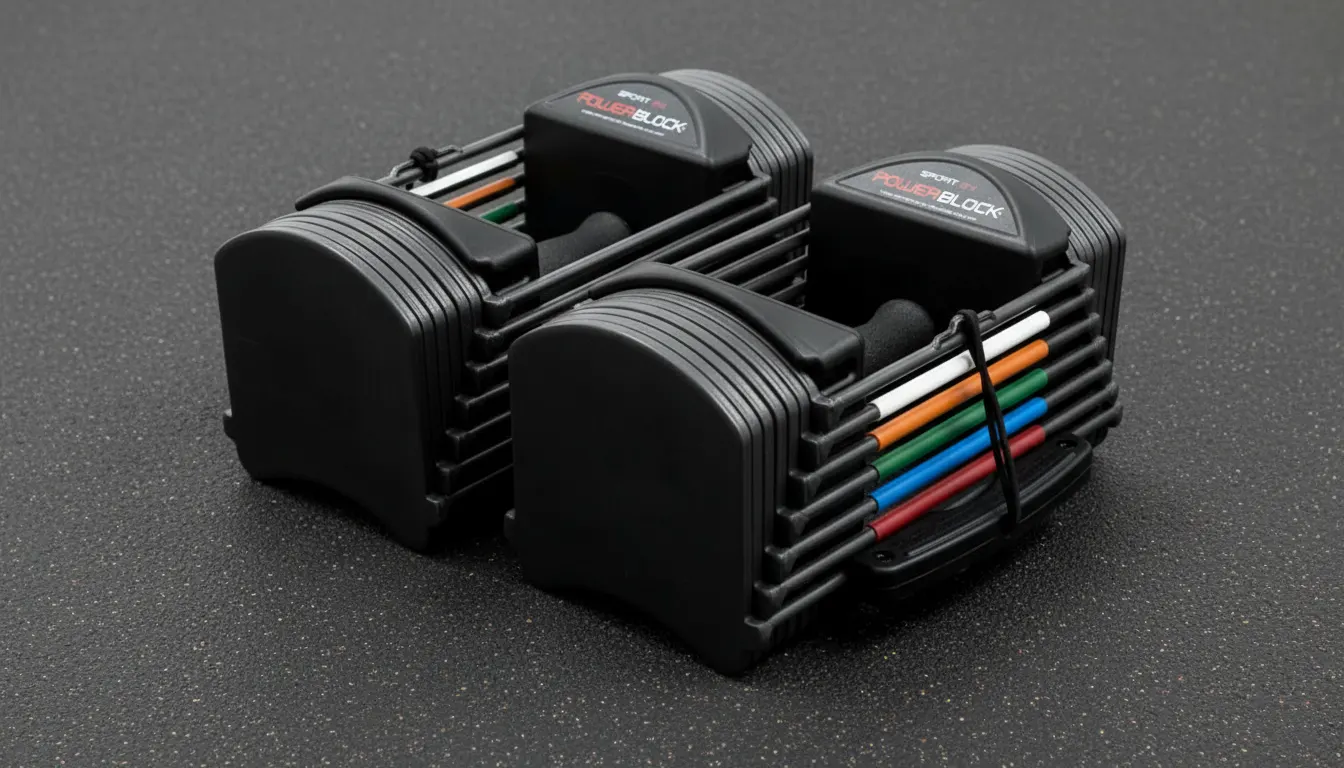
Adjustable dumbbells allow gradual increases in weight, making it easier to apply progressive overload consistently.
Understanding Your Chest Muscles: The Anatomy You Need to Know
Pectoralis Major
The main chest muscle has two key regions:
- Clavicular Head (Upper Chest)
Activated during incline movements
Critical for that “full upper chest shelf” - Sternocostal Head (Mid & Lower Chest)
Responsible for size, thickness, and density
Dominant in flat and decline pressing
Pectoralis Minor
A smaller muscle underneath that stabilizes the shoulder blade. Tightness here can limit performance and cause discomfort.
Why Training Multiple Angles Matters
No single exercise can fully develop your chest. You must train:
- Flat (overall mass)
- Incline (upper chest)
- Decline (lower chest)
- Adduction (fly movements)
How to Build Chest with Dumbbells at Home
The Best Dumbbell Chest Exercises
1. Flat Dumbbell Floor Press
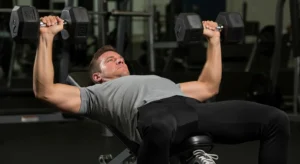
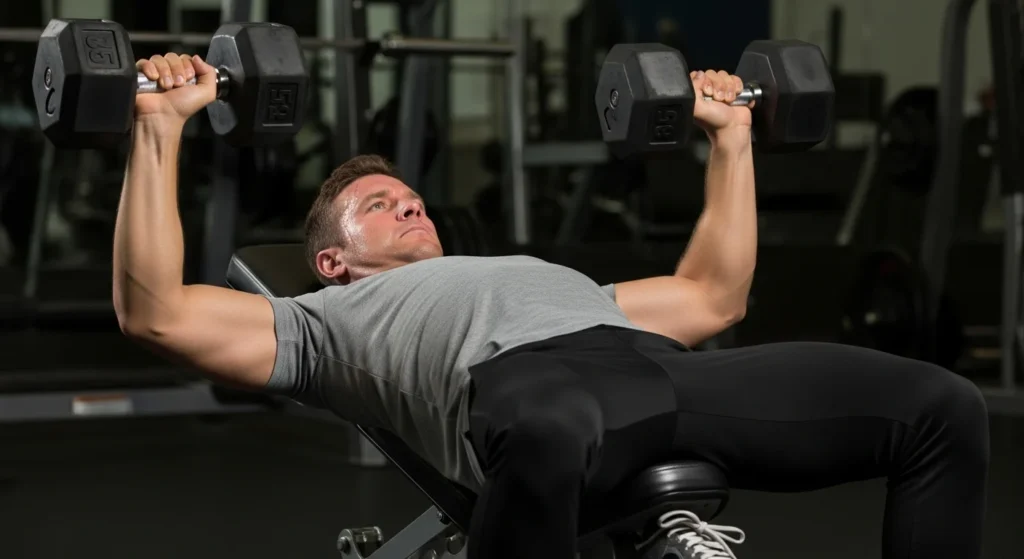
The floor press is the foundation of chest training at home. It replaces the traditional bench press while reducing shoulder strain.
How to perform:
- Lie flat on your back with knees bent and feet on the floor
- Hold dumbbells at chest level, palms angled about 45°
- Press upward in a controlled arc until arms are nearly straight
- Lower slowly until your elbows lightly touch the floor
Why it works:
The floor limits excessive shoulder stretch, making it safer while still providing high tension on the chest.
Muscles targeted: Mid chest, triceps, front delts
Sets/Reps: 3–4 sets of 8–12 reps
2. Incline Dumbbell Press
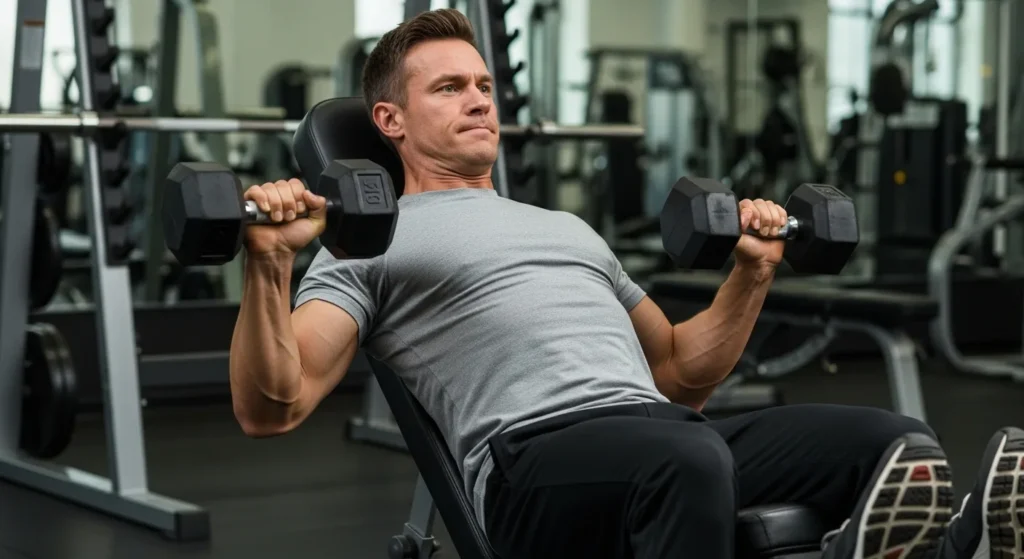
This is essential for building the upper chest, which gives your chest a fuller, more aesthetic look.
How to perform:
- Elevate your upper back using pillows, a backpack, or a low incline surface
- Keep the angle around 30–45 degrees
- Press dumbbells upward and slightly inward
- Lower under control
Why it works:
Changing the angle shifts tension to the upper chest, which is often underdeveloped.
Common mistake:
Going too steep, which turns it into a shoulder exercise.
Muscles targeted: Upper chest, front delts
Sets/Reps: 3–4 sets of 10–12 reps
3. Dumbbell Floor Fly
This movement isolates the chest through a full stretch and contraction.
How to perform:
- Lie flat with dumbbells above your chest
- Keep a slight bend in your elbows
- Lower weights outward in a wide arc
- Stop when you feel a deep stretch
- Bring them back together by squeezing your chest
Why it works:
It trains horizontal adduction, the primary function of the chest.
Key tip:
Do not turn it into a press by bending your arms too much.
Muscles targeted: Entire chest
Sets/Reps: 3 sets of 12–15 reps
4. Incline Dumbbell Fly
This variation emphasizes the upper chest through a deep stretch.
How to perform:
- Use the same incline setup as incline press
- Lower dumbbells slowly into a wide arc
- Stretch deeply but stay within a pain-free range
- Squeeze at the top
Why it works:
Stretch-mediated hypertrophy makes this highly effective for growth.
Muscles targeted: Upper chest
Sets/Reps: 3 sets of 12–15 reps
5. Dumbbell Crush Press
An underrated movement that builds inner chest definition.
How to perform:
- Hold dumbbells pressed together at chest level
- Squeeze them together throughout the movement
- Press up while maintaining constant pressure
- Lower slowly
Why it works:
The constant inward force increases chest activation beyond standard presses.
Muscles targeted: Inner chest, triceps
Sets/Reps: 3 sets of 10–12 reps
6. Alternating Single-Arm Dumbbell Press
This exercise helps fix imbalances and improves stability.
How to perform:
- Hold both dumbbells at the top position
- Lower one arm while keeping the other extended
- Press back up and alternate
Why it works:
Forces each side to work independently while engaging your core.
Muscles targeted: Chest (unilateral), triceps, core
Sets/Reps: 3 sets of 8–10 reps per side
7. Dumbbell Pullover
A unique movement that trains both chest and upper body support muscles.
How to perform:
- Hold one dumbbell with both hands above your chest
- Lower it behind your head in a controlled arc
- Feel a stretch in your chest
- Pull it back up
Why it works:
Provides a long stretch and activates supporting muscles like the serratus.
Muscles targeted: Chest, lats, serratus
Sets/Reps: 3 sets of 12 reps
8. Decline Dumbbell Press
This variation targets the lower chest.
How to perform:
- Elevate your hips using a stable surface
- Keep your upper body slightly declined
- Press dumbbells upward from chest level
- Lower slowly
Why it works:
Shifts load to the lower chest for balanced development.
Muscles targeted: Lower chest
Sets/Reps: 3 sets of 10–12 reps
9. Push-Ups on Dumbbells
A powerful finisher that increases range of motion.
How to perform:
- Place dumbbells on the floor shoulder-width apart
- Grip them and perform push-ups
- Lower deeper than usual
- Push back up with control
Why it works:
Greater range = more stretch = more muscle activation.
Muscles targeted: Chest, triceps
Sets: 2–3 sets to failure
Complete Chest Workout Plans (At Home)
Beginner Plan (2 Days/Week)
| Exercise | Sets | Reps | Rest |
|---|---|---|---|
| Flat Dumbbell Floor Press | 3 | 10-12 | 90 sec |
| Incline Dumbbell Floor Press | 3 | 10-12 | 90 sec |
| Dumbbell Flat Floor Fly | 3 | 12-15 | 60 sec |
| Push-Up with Dumbbell Handles | 2 | To failure | 60 sec |
Intermediate Plan (3 Days/Week)
| Exercise | Sets | Reps | Rest |
|---|---|---|---|
| Flat Dumbbell Floor Press | 4 | 8-10 | 90 sec |
| Incline Dumbbell Floor Press | 4 | 10-12 | 90 sec |
| Dumbbell Crush Press | 3 | 10-12 | 75 sec |
| Dumbbell Incline Fly | 3 | 12-15 | 60 sec |
| Dumbbell Pullover | 3 | 12 | 60 sec |
| Push-Up with Dumbbell Handles | 2 | To failure | 45 sec |
Advanced Superset Chest Workout (Home with Dumbbells)
| Section | Exercise | Sets | Reps | Rest |
|---|---|---|---|---|
| Superset 1 | Flat Dumbbell Floor Press (A1) | 4 | 6–8 | |
| Dumbbell Flat Floor Fly (A2) | 4 | 12–15 | 60 sec after superset | |
| Superset 2 | Incline Dumbbell Floor Press (B1) | 3 | 8–10 | |
| Dumbbell Incline Fly (B2) | 3 | 12–15 | 60 sec after superset | |
| Finisher | Alternating Single-Arm Dumbbell Press | 3 | 8 per side | |
| Push-Up with Dumbbell Handles | 2 | To failure | 45–60 sec |
How to Actually Grow Your Chest
Mechanical Tension Is the Primary Growth Driver
Muscle hypertrophy — the increase in muscle fiber size — is primarily driven by mechanical tension. This occurs when a muscle contracts while being stretched under load. During dumbbell presses, the lowering phase places the pectorals under both stretch and control, making it highly effective for growth. Slowing down the eccentric (lowering) portion increases time under tension and enhances the hypertrophic stimulus.
The Principle of Progressive Overload
Your body adapts quickly to a training stimulus, which is why progress eventually stalls. To continue building muscle, you must gradually increase the challenge over time. This is known as progressive overload, and it is essential for long-term growth.
Progression does not require adding weight every session. You can make training harder by:
- Increasing dumbbell weight
- Adding reps within the same weight
- Increasing the number of sets
- Reducing rest time
- Slowing down rep tempo
- Increasing training frequency
A practical strategy is double progression: choose a rep range (e.g., 8–12), stay at the same weight until you can complete all sets at the top range, then increase weight and repeat the cycle.
Training Volume: How Many Sets Per Week?
Weekly training volume — the total number of challenging sets per muscle group — is a key factor in muscle growth. For chest training:
- Beginners: 6–10 sets per week
- Intermediate: 10–20 sets per week
Distributing volume across 2–3 sessions is more effective than doing everything in one workout, as it provides more frequent growth signals.
Rep Ranges and Muscle Growth
Muscle growth is not limited to the 8–12 rep range. Research shows that a wide range of reps (5–30) can build muscle effectively, as long as sets are performed close to failure.
A practical structure:
- 5–8 reps for heavy compound presses
- 10–15 reps for secondary movements
- 15–25 reps for isolation exercises like flies
Warm-Up and Activation Protocols for Chest Training
Starting heavy pressing without preparation increases injury risk and reduces performance. A proper warm-up improves blood flow, mobility, and muscle activation.
Dynamic Warm-Up (5–7 Minutes)
Perform each movement for 30–60 seconds:
- Arm circles (forward and backward)
- Cross-body shoulder swings
- Light chest stretch
- Band or resistance pull-aparts
- Light push-ups (10–15 reps)
Pre-Activation Sets
Before your first working set, perform 1–2 lighter sets at 40–50% of your working weight. This primes the nervous system, improves technique, and strengthens your mind-muscle connection without causing fatigue.
Mind-Muscle Connection: The Often-Ignored Growth Factor
Many lifters struggle to feel their chest working during pressing exercises. When this happens, the triceps and shoulders take over, reducing chest activation.
To improve chest engagement:
- Squeeze your chest for 5–10 seconds before starting
- Focus on bringing your arms together, not just pushing upward
- Use a slightly wider pressing path
- Include exercises like the crush press for constant tension
Focusing attention on the target muscle has been shown to increase activation, making it a practical tool for better results.
Nutrition for Chest Growth: What You Eat Determines Recovery
Training creates the stimulus, but nutrition builds the muscle.
Protein: The Foundation
Protein provides the amino acids needed for muscle repair and growth. Aim for 0.7–1.0 grams per pound of body weight daily, spread across 3–5 meals to maximize muscle protein synthesis.
Good sources include eggs, chicken, fish, lean meat, dairy, legumes, and protein supplements.
Caloric Balance
To build muscle, a small caloric surplus of 200–300 calories is ideal. If fat loss is the goal, a slight deficit can work, but muscle growth will be slower.
Carbohydrates and Performance
Carbohydrates fuel intense training. Low intake reduces strength, endurance, and total training volume. Consume carbs before and after workouts to support performance and recovery.
Hydration
Even mild dehydration reduces strength and endurance. Stay consistently hydrated and aim for pale yellow urine as a simple indicator.
Recovery: Where Muscle Growth Happens
Muscles do not grow during workouts—they grow during recovery.
Sleep: The Most Important Factor
Growth hormone release peaks during deep sleep. Getting 7–9 hours per night is essential for muscle repair and overall performance. Poor sleep slows recovery and reduces muscle-building potential.
Active Recovery and Mobility
Light activity on rest days improves circulation and reduces soreness. Gentle stretching helps maintain flexibility and prevents tightness in the chest and shoulders.
Deload Weeks
Every 4–8 weeks, reduce training volume or intensity by about 40%. This allows your body to recover fully and prevents long-term fatigue or injury.
Common Mistakes That Kill Chest Progress at Home
Neglecting the Upper Chest
Relying only on flat pressing leads to incomplete development and a flat appearance.
Using Too Much Weight
Poor form reduces chest activation and increases injury risk.
Rushing Reps
Fast, uncontrolled reps reduce time under tension and limit growth.
Training Once Per Week
Chest responds better to 2–3 sessions per week due to frequent stimulation.
Skipping Isolation Work
Presses alone are not enough—fly movements ensure full chest activation.
How to Track Your Progress Without a Gym
Tracking progress ensures you are applying progressive overload effectively.
- Log sets, reps, and weights
- Take monthly progress photos
- Test performance every 4–6 weeks
- Measure chest circumference regularly
Consistent tracking confirms whether your training and nutrition are working.
Sample 8-Week Home Chest Training Plan
Weeks 1–2: Foundation Phase
- 2 sessions per week
- 3 exercises per session
- 3 sets of 12–15 reps
Weeks 3–4: Volume Phase
- 2–3 sessions per week
- 4 exercises
- 3–4 sets of 10–12 reps
Weeks 5–6: Intensity Phase
- 3 sessions per week
- 4–5 exercises
- 4 sets, heavier weights
Week 7: Deload
- Reduce volume and load by ~40%
Week 8: Test Phase
- Retest strength and reps
- Adjust next training cycle