If you’re serious about strength training or simply want to build a stronger lower body, knowing how to do a dumbbell deadlift the right way is essential. Many people turn the move into a squat, round their spine, or use their arms instead of their hips and legs. That’s how injuries and lower back pain happen.
The dumbbell deadlift is one of the best weight training exercises for building glutes, hamstrings, quadriceps, and lats, while also strengthening your grip and core. It’s a move you can master at home or in the gym, with just a pair of dumbbells and proper form.
How to Do a Dumbbell Deadlift
The dumbbell deadlift is a compound exercise, meaning it trains multiple muscles and joints at once. Unlike a bench press or chest press which primarily target the upper body, the dumbbell deadlift focuses on your lower body strength and the posterior chain (glutes, hamstrings, and lower back).
When you perform it correctly, the dumbbell deadlift teaches you how to hinge at the hips without stressing the lumbar spinal extensors or the cervical spine. This makes it a safer option than heavy barbell deadlifts for many people, while still giving you the benefits of full-body resistance training.
Step-by-Step Instructions
Mastering the dumbbell deadlift starts with proper form. Follow these steps to ensure safety, effectiveness, and maximum strength gains.
1. Setup Position
Stand with your feet hip-width apart, holding a dumbbell in each hand at your thighs (palms facing in). Keep your chest tall, shoulders back, and spine neutral.
2. Hip Hinge & Grip
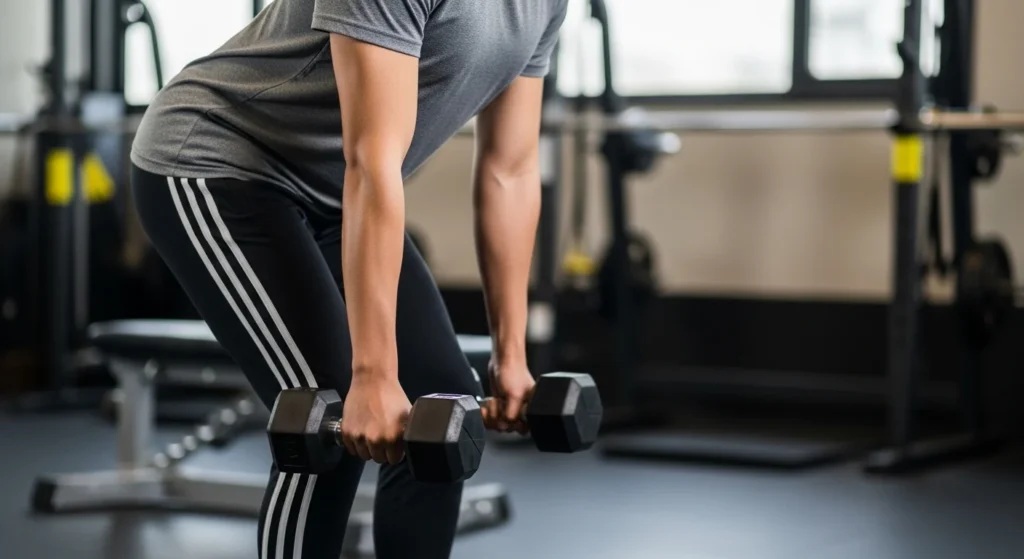
Hinge at the hips, sending them backward as if preparing to sit. Bend your knees slightly, keeping your shins vertical. Keep dumbbells close to your thighs.
3. Brace Your Core
Engage your abs and lats, keeping your back flat. Avoid rounding your lower back or straining your neck muscles.
4. Lift the Weight
Push through your heels, extending hips and knees at the same time. Keep dumbbells close to your body. Stand tall and squeeze your glutes at the top.
5. Lower With Control
Hinge at the hips again, keeping a slight knee bend. Lower dumbbells slowly to shin level while feeling your hamstrings stretch.
Dumbbell Deadlift Muscles Worked
The dumbbell deadlift is a compound exercise that works multiple muscle groups at once. Here’s a breakdown of the main muscles it targets
Primary Muscles
- Glutes: Drive hip extension and power the lift.
- Hamstrings: Control the hinge and extend your hips.
- Quadriceps: Assist with knee extension.
- Erector Spinae (Lower Back Muscles): Stabilize the spine and protect against lower back pain.
Secondary Muscles
- Lats & Traps: Keep shoulders and upper back stable.
- Core & Obliques: Brace your torso and support posture.
- Forearms & Grip Muscles: Help you hold the dumbbells securely.
- Calves: Provide balance and stabilization through your feet.
Dumbbell Deadlift Tips
- Keep Dumbbells Close: This reduces unnecessary strain on your lower back.
- Hinge, Don’t Squat: Focus on hip hinge rather than excessive knee bend.
- Neutral Spine Always: Don’t round your back, brace your core and keep shoulders retracted.
- Push Through Heels: Prevent shifting weight onto toes; this activates glutes and hamstrings.
- Move Slowly: Avoid jerking. Controlled movement builds muscle and prevents injury.
- Start Light: Especially if you’re prone to lower back pain. Gradually increase load.
- Engage Core & Lats: Protect your spine and improve stability.
5 Benefits of Dumbbell Deadlifts
1. Builds Full-Body Strength
Unlike isolated moves like the bench press or bicep curl, the dumbbell deadlift works your legs, core, back, and grip strength in one go, making it one of the most efficient compound exercises.
2. Improves Posture and Core Stability
By training your spinal stabilizers, lumbar extensors, and neck-supporting muscles, this lift helps you stand taller, fight slouching, and keep your spine aligned. A stronger core means better balance and reduced risk of back pain.
3. Joint-Friendly Alternative
Compared to barbell deadlifts, dumbbells allow a more natural range of motion. This reduces strain on your knees, shoulders, and wrists, making them beginner-friendly and safer for people returning from injury.
4. Enhances Fat Burning (EPOC Effect)
Because it recruits multiple muscle groups, the dumbbell deadlift triggers Excess Post-Exercise Oxygen Consumption (EPOC). This means your body keeps burning calories long after the workout is done—perfect for fat loss and conditioning.
5. Boosts Athletic Performance & Prevents Injuries
Deadlifts build explosive power, grip strength, and stability, key for sports performance and everyday activities like lifting, bending, or carrying heavy objects. Strengthening your posterior chain also protects your spine and reduces the risk of age-related back issues or training injuries.
5 Common Dumbbell Deadlift Mistakes
Even small errors in form can increase the risk of back injuries and limit your strength gains. Here are five mistakes to watch out for:
- Rounding the Lower Back
Many beginners let their spine curve when hinging down, putting stress on the lumbar spinal extensors. Always keep a neutral spine to avoid lower back pain. - Letting the Dumbbells Drift Forward
If the weights move away from your shins, it pulls you off balance and strains your lower back. Maintain the dumbbells close to your body as you move. - Bending the Knees Too Much
Turning the deadlift into more of a squat reduces hamstring and glute activation. Focus on pushing hips back rather than dropping too low. - Hyperextending at the Top
Leaning back and arching your spine at the top stresses the cervical spine and neck muscles. Instead, just stand tall and squeeze your glutes. - Rushing the Descent
Lowering the dumbbells too quickly increases injury risk and reduces muscle engagement. Control the movement to build strength safely.
Frequently Asked Questions (FAQs)
How to do a dumbbell deadlift correctly?
Stand with feet hip-width, hinge at hips, grip dumbbells, push through heels, lift with hips and legs, keep back neutral.
How to do a dumbbell step-up?
Step onto a bench with one leg, press through the heel, bring the other leg up, then step down slowly.
How to do a deadlift step by step?
Setup → Hinge at hips → Grip dumbbells → Brace core → Push through heels → Stand tall → Lower under control.
How to do dumbbell rows properly?
Hinge forward with a flat back, hold dumbbell in one hand, row elbow toward ribs, squeeze lats, lower with control.
Can dumbbell deadlifts replace barbell deadlifts?
Yes, for general strength and fitness. However, barbell deadlifts allow heavier loading for advanced lifters.
Are dumbbell deadlifts safe for beginners?
Yes. Start light, focus on form, and increase weight gradually. Consider guidance from a personal trainer.
Do dumbbell deadlifts help with lower back pain?
When performed correctly, they strengthen spinal stabilizers and reduce discomfort. Poor form, however, can worsen pain.
In conclusion
Learning how to do a dumbbell deadlift properly unlocks one of the most powerful tools in strength training. This exercise builds your glutes, hamstrings, thighs, and lower back. It also boosts posture and reduces the risk of back injuries.
By focusing on technique, avoiding common mistakes, and combining it with other moves like the bench press, squat, chest press, and bicep curl, you’ll achieve long-term strength building and fitness results.
The dumbbell deadlift deserves a permanent place in your workout routine, whether you’re chasing lower body strength, fat loss through the EPOC effect, or simply safer everyday movement.
Want to target your rear delts and improve shoulder stability? Learn the correct form in this guide on How to Do Dumbbell Incline Reverse Fly to build a stronger upper back and balanced shoulders.