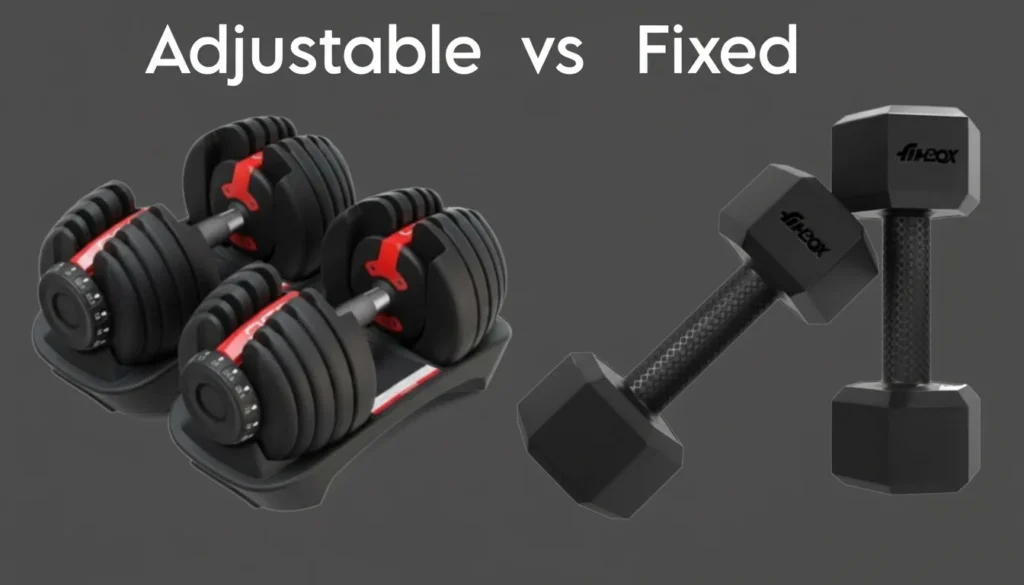
You’ve probably stood in a sporting goods store staring at two very different things: a tidy little tray holding a single pair of adjustable dumbbells that supposedly replaces 15 sets, and a full rack of fixed hex dumbbells that looks like it belongs in a real gym. Both cost real money. Both will help you build strength. The question is which one fits how you actually train.
This guide doesn’t have a predetermined winner. The honest answer is that the right choice depends on your space, your training style, your budget math, and a few details most comparison articles skip over entirely. We’re going to work through all of it.
What Are Fixed Dumbbells?
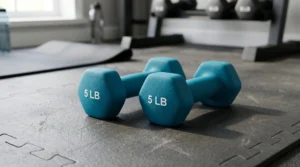
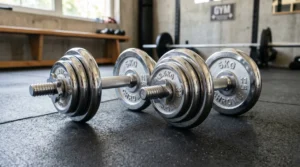
Fixed dumbbells are exactly what they sound like. The weight is permanent — cast iron, rubber-coated steel, or urethane, welded or bolted into a single solid unit. You grab them, you lift, you put them back. There’s nothing to fiddle with.
Fixed dumbbells are typically hexagonal or circular in shape, with rubber hex models being the most popular choice for home gyms because of their durability, floor-protecting coating, and non-rolling hex shape. Commercial gyms favor them precisely because durability under heavy use, multiple users, and occasional drops is non-negotiable.
Types of Fixed Dumbbell Coatings
The coating matters more than people realize, both for longevity and for what your floors look like in three years.
- Cast iron (bare): Cheapest per pound. Prone to rust and loud when dropped. Bare iron typically costs $0.50 to $1.00 per pound, which looks attractive until you find rust on your garage floor six months later.
- Rubber-coated: The most common type in home gyms. Mid-range rubber runs $1.00 to $2.00 per pound. Cheap rubber smells for months and degrades within two to three years, while quality rubber can last over a decade.
- Urethane: Commercial-grade. No odor, doesn’t degrade, scratch-resistant, and proven to last 20-plus years in commercial settings. The price is higher — usually $2.00 to $3.50 per pound — but it’s a legitimate buy-once situation.
- Chrome/stainless: Looks good. Shows fingerprints and offers no functional advantage over urethane. Mostly an aesthetic choice.
What Are Adjustable Dumbbells?
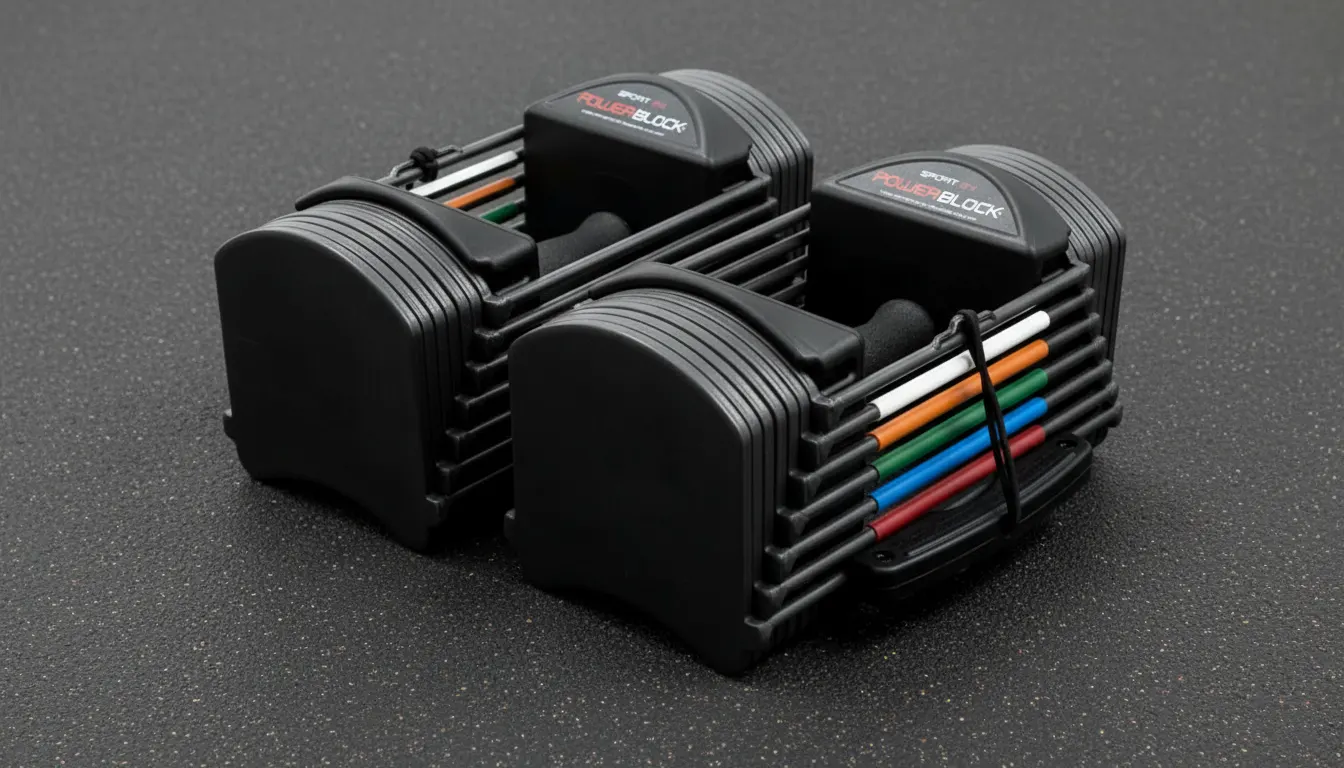
Adjustable dumbbells consolidate multiple weight increments into one unit. You change the weight using a mechanism — a dial, a pin, a spin-lock collar, or a quick-lock system — and the dumbbell loads only the plates you’ve selected.
A quality adjustable dumbbell set typically ranges from 5 to 50 pounds per hand, though premium models extend to 90 pounds or more.
The Three Main Adjustment Systems
Not all adjustable dumbbells work the same way, and the mechanism affects speed, feel, and long-term reliability.
Selectorized (dial or pin): You twist a dial or move a selector pin and the dumbbell leaves the tray loaded to your chosen weight. The Bowflex SelectTech 552, for example, adjusts from 5 to 52.5 pounds in 2.5-pound increments up to 25 pounds via a dial system. Fast to adjust, but the plastic housing can feel fragile compared to a solid steel fixed dumbbell.
Plate-loaded (spin-lock or quick-lock): You manually thread plates onto a handle and secure them with a collar. Spin-locks have a known flaw: a little motion during use can cause the plates to rotate opposite the direction of the lock, introducing rattle and instability. Quick-lock systems like Ironmaster’s patented design solve this with partially-threaded pins and interlocking plates that stay tight throughout the lift.
Handle-twist mechanism: Brands like NÜOBELL use a system where rotating the handle itself selects the weight. The SMRTFT NÜOBELL 580, for instance, adjusts from 5 to 80 pounds in 5-pound increments via handle rotation, and its knurled metal handle gives it a balance and feel closer to a fixed dumbbell than most adjustable alternatives.
Adjustable Dumbbells Vs Fixed Dumbbells: Head-to-Head Comparison
Space and Storage
This is where adjustable dumbbells win without much contest.
Adjustable dumbbells occupy roughly 2 to 3 cubic feet of space, compared to 40 to 50 cubic feet for a full set of fixed dumbbells on a rack. If you’re training in an apartment spare bedroom or a corner of your garage, that difference is the difference between having a home gym and not having one.
A single pair of adjustable dumbbells replaces what would typically require 10 to 15 pairs of fixed dumbbells, fitting in roughly the same footprint as two pairs of traditional weights. A full fixed dumbbell rack covering 5 to 50 pounds needs roughly 2 to 3 meters of wall space, plus clearance to pull weights off the rack safely.
That said, if you have the space and you’re building a proper home gym, the convenience of reaching for a 35-pound fixed dumbbell without touching a mechanism has real training value — especially mid-workout.
Cost: The Math Most Articles Get Wrong
The per-pound comparison is misleading on its own. You have to look at the total cost of covering the weight range you actually need.
Most new dumbbells cost between $1.40 and $3.00 per pound, while used dumbbells typically sell for 50 to 70 percent of retail.
Here’s the honest math for covering a 5 to 50 lb range:
| Option | Approximate Cost | Notes |
|---|---|---|
| Quality adjustable pair (5–52.5 lbs) | $300–$600 | Covers full range, one unit |
| Rubber hex fixed set (5–50 lbs, 10 pairs) | $800–$1,500 | Requires rack ($150–$300 extra) |
| Urethane fixed set (5–50 lbs) | $1,200–$2,000 | Commercial-grade, longest lifespan |
| Budget spin-lock adjustable | $50–$120 | Limited weight range, stability concerns |
Adjustable dumbbells save 56 to 76 percent versus fixed dumbbells when you need a wide weight range (10 to 50 lbs or more).
The calculation flips when you only need one or two specific weight pairs. If you’re a runner who wants a single 15-pound pair for shoulder mobility work, buying one pair of fixed dumbbells at $25 makes far more sense than spending $400 on an adjustable set.
Adjustable dumbbells can actually be more expensive than fixed if you only need a small number of specific weights. Know your needs before running the numbers.
Durability and Build Quality
Fixed dumbbells are either completely molded or welded into a single block, or permanently secured by very strong bolts. The chances of damage from rough use are significantly lower than with adjustable dumbbells, which by design have multiple components intended to be removed.
This isn’t a knock on adjustable dumbbells — it’s just physics. More moving parts means more potential failure points. A quality adjustable dumbbell from a reputable brand will outlast its warranty easily, but a cast iron hex dumbbell has essentially no mechanical failure mode.
One real-world data point worth knowing: as of June 2025, the BowFlex SelectTech 552 and 1090 adjustable dumbbell sets were recalled because weight plates can dislodge from the handle during use. That doesn’t mean all adjustable dumbbells are unsafe — but it’s a reminder that the adjustment mechanism is the component that matters most, and cheap mechanisms fail.
Training Speed and Workout Flow
This is where fixed dumbbells have a genuine edge for certain training styles.
With fixed dumbbells, there is zero time needed to adjust. This makes them by far the most efficient type for fast, uninterrupted training sessions — particularly for drop sets and supersets, where switching weight quickly is the entire point.
Even the fastest adjustable dumbbells take 5 to 15 seconds to change weight. That’s not a lot in isolation, but across a high-volume session with frequent weight changes, it adds up. If you’re doing a superset of dumbbell chest press followed immediately by lateral raises, stopping to dial down the weight breaks the training stimulus.
For straightforward working sets with rest periods between them, the adjustment time is a complete non-issue. Most people rest 60 to 90 seconds between sets anyway.
Ergonomics and Feel
Here’s a real limitation of adjustable dumbbells that deserves an honest look.
Adjustable dumbbells often lack the ergonomic feel of regular dumbbells. The “cage” design that surrounds your hand on some models limits wrist movement and alters balance, making certain exercises feel unnatural.
Selectorized models tend to be longer than their fixed counterparts when loaded to heavier weights, because the tray has to accommodate plates not in use. At 16.5 inches long when fully loaded, certain adjustable models can be cumbersome for exercises like chest flyes or neutral-grip pressing movements.
Fixed dumbbells are shorter, denser, and balanced in a way that decades of lifting have trained our hands to expect. That matters most for exercises requiring wrist rotation or specific hand positioning — hammer curls, Arnold presses, incline chest flyes.
The better adjustable dumbbell brands have narrowed this gap considerably. Ironmaster’s quick-lock system produces a dumbbell with no rattle and reasonable dimensions. The NÜOBELL’s knurled handle mimics a barbell grip. But “close to fixed” isn’t the same as fixed, and experienced lifters will notice the difference.
Weight Range and Increment Precision
Both types cover the same overall weight spectrum — from about 1 kg/2 lbs up to 50 kg/100 lbs. Adjustable dumbbells typically adjust in 1.5 to 2 kg increments. Fixed dumbbells often come in 1 kg increments at lighter weights and 2.5 to 5 kg increments as the weight increases.
For beginners, fine increments matter a lot. The difference between 10 lbs and 12.5 lbs is meaningful when you’re first building shoulder strength. Look for adjustable sets that begin at 5 or 10 pounds and provide increments of 2.5 or 5 pounds, which allows for gradual progression without overexertion.
For advanced lifters moving heavy weight, the increments matter less — the difference between 45 and 47.5 lbs is less significant when you’re already moving that kind of load.
One thing worth flagging: some adjustable models have inconsistent increment options. For example, going from 15 to 17.5 lbs might not be possible, forcing a jump from 15 directly to 20 lbs. Check the specific increment table for any model before buying.
Safety
Both are safe when used correctly. The main safety considerations are different.
With fixed dumbbells, the risk is dropping them — no mechanism fails, but iron on a toe or a hardwood floor is painful and expensive. Rubber coating significantly reduces both hazards.
With adjustable dumbbells, the mechanism itself is the variable. A properly secured plate-loaded or selectorized dumbbell is safe. A loose spin-lock collar at the top of a pressing movement is not. Always check that the mechanism is fully engaged before lifting, especially with plate-loaded models where collars can vibrate loose.
Who Should Choose Adjustable Dumbbells?
Home gym owners with limited space. If your training area is a spare bedroom, apartment, or small garage section, a pair of adjustable dumbbells covering 5 to 50 lbs in a 2-square-foot footprint is an obvious win.
People at earlier stages of their strength journey. When your working weights are still changing frequently — moving from 15 lb curls to 25 lb curls over the course of a few months — the ability to cover the full range without buying multiple pairs is genuinely useful.
Budget-conscious lifters who need range. If you need the equivalent of 10 pairs of fixed dumbbells, adjustables are significantly cheaper. The math is clear.
Personal trainers who work at clients’ homes. You can transport a complete weight selection in a car trunk, bringing professional-grade equipment to clients’ homes without the logistics of hauling multiple pairs.
Who Should Choose Fixed Dumbbells?
Lifters who train with heavy loads consistently. Heavy lifters who regularly work with 40-plus pounds per dumbbell will find fixed weights more practical. The solid construction handles intense training sessions better, and there’s no time lost adjusting between heavy sets.
Anyone who relies on drop sets or supersets as a core training method. If your program requires moving from one weight to another without rest, fixed dumbbells remove the friction entirely.
Commercial gyms and multi-user environments. Multiple people training simultaneously, each needing different weights, can’t share a single pair of adjustable dumbbells. A dumbbell rack handles concurrent training in a way no adjustable pair can.
Lifters who already own a few key pairs. If you know you only train with 25s, 35s, and 45s, buying three pairs of fixed dumbbells is cheaper and simpler than any adjustable set.
Can You Have Both?
Yes, and for many home gym setups, a hybrid approach makes practical sense.
A common configuration: one pair of adjustable dumbbells for the lower weight ranges (5 to 30 lbs), which cover most accessory and isolation work, combined with two or three pairs of fixed dumbbells at heavier weights (35, 45, 55 lbs) for compound pressing and rowing movements. You get the space savings of adjustable at lighter loads and the durability and speed of fixed where it matters most.
Adjustable Dumbbells Vs Fixed Dumbbells: Quick Comparison Table
| Factor | Adjustable Dumbbells | Fixed Dumbbells |
|---|---|---|
| Space required | Very small (2–3 sq ft) | Large (15–25 sq ft for full rack) |
| Upfront cost (full range) | Lower | Higher |
| Durability | Good (mechanism dependent) | Excellent (no moving parts) |
| Training speed | Slower (5–15 sec adjustment) | Instant |
| Ergonomics | Can feel bulky/unbalanced | Natural, balanced feel |
| Best for drop sets | No | Yes |
| Best for beginners | Yes | Yes (if buying a limited set) |
| Best for heavy lifters | Adequate (to ~80 lbs) | Preferred |
| Portability | High | Low |
| Long-term investment | Excellent | Excellent (if properly budgeted) |
Key Things to Check Before You Buy
For adjustable dumbbells:
- Minimum starting weight (some models start at 10 or 11 lbs, which is too heavy for many shoulder exercises)
- Increment options across the full weight range — not just the advertised minimum increment
- Handle length at maximum weight
- Mechanism type (quick-lock vs spin-lock vs dial vs handle-twist)
- Whether the brand has a history of recalls or reported mechanism failures
- Warranty length and what it actually covers
For fixed dumbbells:
- Coating quality — cheap rubber smells and degrades; good rubber lasts a decade or more
- Handle knurling — you want grip texture that doesn’t shred your hands
- Whether you’re buying individual pairs or a set, and whether a rack is included
- Storage dimensions vs your actual available space
- Price per pound relative to the coating type you’re getting
Frequently Asked Questions (FAQs)
Are adjustable dumbbells worth the money compared to buying a few pairs of fixed dumbbells?
It depends entirely on how many weights you need. If you require 5 or more different weight pairs, adjustable dumbbells are almost always cheaper and more space-efficient than the equivalent fixed set. If you only need one or two specific pairs, a couple of fixed dumbbells is a more economical choice.
Do adjustable dumbbells feel the same as fixed dumbbells during workouts?
Not exactly. The better adjustable models — particularly those with knurled metal handles like the NÜOBELL or Ironmaster — come reasonably close. But most adjustable dumbbells are longer and slightly different in balance compared to fixed dumbbells of the same weight. For most exercises the difference is minor; for exercises requiring precise wrist positioning it’s more noticeable.
What is the lifespan difference between adjustable and fixed dumbbells?
A quality pair of fixed dumbbells with rubber or urethane coating can last 15 to 20 years or more with no maintenance. Adjustable dumbbells have a similar expected lifespan from reputable brands, but the adjustment mechanism is the component most likely to wear or fail. Plate-loaded systems with simple hardware tend to outlast complex selectorized mechanisms.
Can adjustable dumbbells be used for all the same exercises as fixed dumbbells?
For the vast majority of exercises, yes. The main exceptions are movements where the length or shape of an adjustable dumbbell at a specific weight interferes with range of motion — like certain chest flye variations or close-grip pressing exercises. This is model-specific and less of a problem with compact, well-designed adjustable sets.
How much should I expect to spend on a quality set of adjustable dumbbells?
A quality set of adjustable dumbbells that provides a good range of weights typically costs at least $300, with premium models costing significantly more depending on weight range and increment options. Budget options below $150 generally involve spin-lock mechanisms with the stability and plate-rattle issues described earlier.
What weight range of fixed dumbbells do most home gym owners actually need?
Most intermediate lifters cover 90 percent of their training with dumbbells between 15 and 50 lbs for upper body work and 20 to 60 lbs for lower body accessory movements. Beginners typically need 5 to 30 lbs to start. Buying a full rack from 5 to 100 lbs is usually more than most home gym owners will ever need.
Are adjustable dumbbells safe for overhead pressing and heavy compound movements?
Yes, provided the adjustment mechanism is fully secured before each set. Selectorized models with dial systems and quality plate retention are generally safe for overhead work. Spin-lock collar models require more vigilance — always check collar tightness before pressing movements where a plate failure would be directly overhead.
Is it better to buy used fixed dumbbells or new adjustable dumbbells?
Used fixed dumbbells in good condition are often an excellent value at $0.50 to $1.00 per pound. If you find a quality rubber or urethane set secondhand without major coating damage, you’re getting commercial-grade equipment at a fraction of retail. The trade-off is selection — finding a full matching set of specific weights locally takes patience. New adjustable dumbbells give you a controlled starting point with warranty coverage, which matters more when the mechanism is part of what you’re buying.
How do fixed and adjustable dumbbells compare for progressive overload?
Progressive overload — gradually increasing the challenge over time — works with both. Adjustable dumbbells can be more forgiving for beginners because fine increments allow smaller jumps in weight. Fixed dumbbells require buying additional pairs as you get stronger, which adds cost but removes any mechanism between you and your target weight.
What should I look for in adjustable dumbbell weight increments for strength training?
For general strength training, 2.5 to 5 lb increments at lighter weights are ideal. At heavier loads (above 40 lbs), 5 lb increments are standard and acceptable. Watch out for models with large gaps — jumping from 15 directly to 22 or 25 lbs, for example, can stall progress and increase injury risk for exercises like lateral raises where the weight-to-strength ratio is tight.
In conclusion
Adjustable dumbbells are the better choice for most home gym owners — particularly anyone working in a small space with a need to cover a wide weight range on a reasonable budget. The space and cost savings are real, and modern adjustable dumbbells from quality brands have largely addressed the old ergonomics and reliability complaints.
Fixed dumbbells are the better choice for heavy, experienced lifters who value workout flow above all else, for multi-user environments where simultaneous training is the norm, or for anyone who only needs a few specific weight pairs rather than a full range.
Neither is objectively superior in every situation. The right answer depends on where you train, how you train, and what you can spend. If you’ve read this far, you now have enough information to make that call clearly.