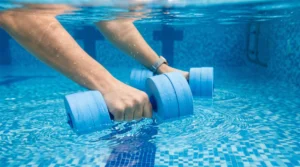
Most people assume their water weights stay clean because they live in a pool. Chlorinated water kills bacteria, so what’s the problem? The problem is what happens after the workout ends.
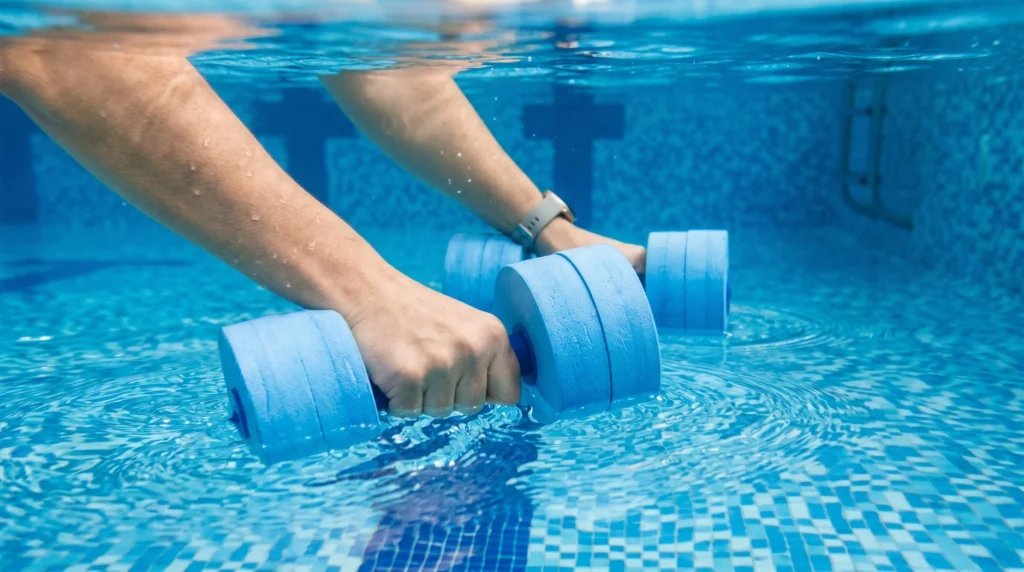
Water weights — also called aqua dumbbells or pool dumbbells — spend the majority of their life outside the pool. They sit on pool decks, in gym bags, on damp storage shelves, or in humid utility closets. That’s where the real damage accumulates: mold spores, mildew, chlorine residue, sunscreen, body oils, and algae. The pool doesn’t clean your equipment. It just delays the buildup until you pull your dumbbells out for the next session.
What Are Water Weights Made Of?
Before you grab a cleaner, you need to know what you’re cleaning. Most modern aqua dumbbells use one of two constructions, and each responds differently to cleaning agents.
Closed-Cell EVA Foam
The vast majority of water weights sold today are made from closed-cell ethylene-vinyl acetate (EVA) foam — the same material used in swim kickboards and high-quality yoga mats. “Closed-cell” means the foam’s internal structure doesn’t absorb water. This is the property that gives these dumbbells their buoyancy and makes them dry quickly between sessions.
EVA foam resists chlorine degradation reasonably well, but it’s not invincible. Prolonged UV exposure breaks down the foam’s surface over time, and harsh chemical cleaners — particularly alcohol-based solutions — can accelerate surface cracking. The foam itself is porous enough on the outside that sweat, sunscreen, and airborne contaminants can cling to the surface between sessions.
Hard Plastic Shell Models
Some water weights, particularly those used in physical therapy settings, feature a rigid plastic shell rather than solid foam. These create resistance primarily through surface area drag rather than buoyancy. Plastic models are generally easier to wipe down but can harbor bacteria in seams, joints, and handle crevices if not cleaned thoroughly. Any metal components in the handle — screws, rods, or inserts — are vulnerable to corrosion from repeated pool exposure.
Handle Materials
EVA foam handles, TPR (thermoplastic rubber) grips, and padded neoprene wraps all require slightly different care. Foam handles can develop odors from trapped sweat. Hard plastic handles with grip ridges accumulate grime in the textured grooves. Neoprene is porous and needs to dry flat rather than compressed.
The Best Way to Clean Water Weights: Step-by-Step
After Every Single Use
This is the step most people skip, and skipping it is why water weights end up smelling, cracking, or growing mold.
The moment you’re done in the pool, rinse both dumbbells under clean, fresh water. Chlorine residue left on foam surfaces over time contributes to surface degradation. A 30-second rinse under a hose or utility sink removes the bulk of it. The same applies if you train in a saltwater pool — salt is mildly corrosive to foam and handle materials if left to dry repeatedly without rinsing.
After rinsing, pat the dumbbells down with a clean towel and leave them in a ventilated spot to air dry. Never seal them in a bag or toss them in a gym locker while wet.
Weekly Deep Clean
A post-session rinse handles the surface. Once a week — or after any session where you notice a smell, visible residue, or heavy sunscreen contact — do a proper wash.
Mix two drops of dish soap with roughly two quarts of warm water. Dampen a microfiber cloth or soft sponge in the solution and wipe down the entire surface of each dumbbell, including the handle, the foam buoys, and any transition seams where materials meet. Pay attention to grip ridges and textured areas, where grime compacts. A soft-bristled toothbrush or dish brush works well for these spots.
Rinse thoroughly with clean water. Any soap left on foam can attract more dirt and cause the material to feel tacky over time. Pat dry and air out completely before storage.
One thing to avoid: alcohol-based cleaners, bleach-heavy solutions, and window cleaners. These chemicals can strip surface coatings on painted or coated handles and accelerate foam breakdown. Mild dish soap and water is the correct tool for this job. If your dumbbells have a particularly strong chemical or musty odor, a 50/50 solution of distilled white vinegar and water applied with a cloth — then rinsed off — neutralizes most odors without damaging EVA foam.
Monthly Inspection and Sanitizing
Once a month, go beyond cleaning and actually inspect your water weights for damage.
Check the foam surface for cracks, peeling, flaking, or color fading — these are signs of UV degradation or material fatigue. Check handle connections if your dumbbells have a separate plastic or metal insert; any wobble or looseness means the structural integrity is compromised. Check for mold or mildew, which typically appears as dark spots or a musty smell that doesn’t resolve with regular washing.
For genuine mold growth, a diluted solution of one part bleach to ten parts water applied carefully with a sponge — then rinsed immediately and thoroughly — can address surface mold. Be aware that repeated bleach exposure will shorten the life of most foam materials, so this is a corrective measure, not a routine one.
The Mold and Mildew Problem Nobody Talks About
Here’s something most aquatic fitness guides gloss over: your water weights are almost certainly going to develop mold at some point if you store them wet. Not because of anything you did wrong, but because foam + trapped moisture + warm, enclosed storage is exactly the environment mold spores need to establish themselves.
The pool itself doesn’t cause the mold. Chlorinated water inhibits microbial growth. But once your dumbbells leave the water, the clock starts. If they go into a damp gym bag, a garage with poor ventilation, or a storage bin without fully drying, mold can take hold within 24 to 48 hours in the right conditions.
The fix is straightforward: dry completely before storing, every time. “Completely” means the foam feels dry to the touch and has had adequate air exposure — not just a quick towel pat. On humid days, this might mean leaving them out for a few hours rather than 20 minutes.
If mold appears on EVA foam, it’s usually surface-level and treatable. If you notice the foam itself has begun to smell throughout (not just on the surface), the material may have absorbed contamination at a deeper level, and replacement is the safer call — especially for equipment used in therapeutic or shared pool settings.
Storage: The Overlooked Half of Maintenance
Cleaning your water weights means nothing if you store them in conditions that undo the work. Proper storage protects both the foam and the handle components.
Keep Them Out of Direct Sunlight
UV radiation is the primary driver of EVA foam degradation. Water weights left on a sunny pool deck or stored in a clear shed where sunlight hits them daily will break down significantly faster than those stored in shade. The foam surface becomes brittle, flaky, and loses structural integrity. If you have outdoor storage, use a covered bin, a pool shed, or keep them in mesh bags that shade the foam without trapping moisture.
Don’t Stack Heavy Objects on Top
Closed-cell EVA foam maintains its shape well under normal use, but sustained compression from stored weight can permanently deform the buoys. Keep water weights stored where nothing heavy sits on them — on a shelf, in an open bin, or hung on a hook if your dumbbells have a handle design that allows it.
Temperature Matters
Extreme heat accelerates foam breakdown and can warp or soften handle materials. Extreme cold isn’t ideal either — EVA foam can become more brittle when frozen repeatedly. Store in a temperature-stable environment: a climate-controlled room, a covered pool shed, or an insulated garage in cold climates.
Avoid Cardboard and Sealed Plastic Bags
Cardboard absorbs moisture, which then transfers back to your equipment. Sealed plastic bags trap any residual moisture against the foam, creating exactly the conditions mold needs. Mesh bags, breathable fabric bags, or open bins are far better options. If you use a hard storage container, make sure the lid allows some air exchange.
Signs Your Water Weights Need Replacing
Even with excellent maintenance, aqua dumbbells have a finite lifespan. Here’s when it’s time to replace rather than clean:
The foam has developed deep cracks, not just surface-level texture changes. Cracked foam compromises buoyancy consistency and can create rough edges that cause skin abrasion during workouts.
The handle is structurally loose or wobbling. A damaged connection between the handle and foam buoys creates an unpredictable grip during resistance movements, which is a safety concern.
The foam has a persistent smell that doesn’t respond to cleaning — not a faint post-use odor, but a deep, embedded musty or chemical smell. This typically indicates the foam has absorbed contamination beyond what surface cleaning can address.
The buoys have significantly changed shape, either flattening or becoming mismatched between the pair. Uneven buoyancy creates uneven resistance, which defeats the purpose and can contribute to asymmetrical strain during exercise.
Budget-oriented EVA foam dumbbells from lesser-known brands may show these signs within one to two years of regular use. Higher-density EVA foam from brands that use marine-grade or kickboard-grade foam typically lasts three to five years with proper care.
Practical Maintenance Schedule at a Glance
After every session: Rinse with fresh water, towel dry, air out completely before storing.
Weekly: Full wash with mild dish soap and warm water, including handle crevices and seams. Rinse thoroughly. Inspect for visible mold or surface damage.
Monthly: Check foam integrity for cracks, check handle connections for looseness, treat any mold with a diluted bleach solution if necessary, inspect metal components for corrosion (especially saltwater pool users).
Seasonally (or before off-season storage): Deep clean, dry for at least 24 hours, store in a ventilated, cool, dry location away from sunlight and pests.
Common Mistakes That Shorten the Life of Water Weights
People who use alcohol wipes on EVA foam because they’re “more sanitary” than soap and water are making a trade-off they probably don’t realize — short-term disinfection for accelerated surface degradation.
Leaving water weights on the pool deck between sessions seems convenient until the foam has spent 200 hours in direct UV exposure across a single season.
Tossing them wet into a gym bag after class is probably the single most common reason aqua dumbbells develop mold. The bag seals in moisture, the foam stays damp for hours, and mold spores find ideal conditions.
Using abrasive scrubbers damages the foam surface and creates microscopic abrasions that trap dirt and bacteria more effectively than a smooth surface.
Frequently Asked Questions (FAQs)
How often should I clean my water weights?
Rinse them after every single session. Do a full soap-and-water wash weekly. For shared or commercial pool use, clean them before and after each use.
Can I use disinfectant wipes on EVA foam water weights?
Disinfectant wipes that contain high concentrations of alcohol or bleach can degrade EVA foam over time. Mild soap and water cleans and sanitizes foam surfaces effectively without the damage risk. If you need stronger disinfection for shared equipment, a very diluted bleach solution (1:10 with water) works, provided you rinse immediately and don’t do it more than monthly.
Why do my water weights smell even after washing?
Persistent odor usually means the foam has absorbed sweat, body oils, or mold at a level below the surface. Try soaking the foam briefly in a vinegar-water solution (50/50), then rinsing and drying completely. If the smell persists after two or three treatments, the foam may be past the point of recovery.
Do water weights rust?
Pure EVA foam doesn’t rust. But many water weights include internal plastic or metal reinforcement rods and handle hardware that can corrode, particularly with saltwater pool exposure. Rinse handle components carefully after every session and inspect the handle joints monthly.
Can I clean water weights in a washing machine?
No. The agitation cycle can damage foam structure and delaminate handle connections. Handwashing with mild soap is the correct method.
How should I store water weights over winter?
Clean and dry them completely before off-season storage. Store in a cool, dry, ventilated area away from direct sunlight. Avoid sealed plastic bags or cardboard boxes. A mesh bag or open container in a climate-controlled space is ideal.
What’s the difference between cleaning foam water weights and rubber-coated dumbbells?
Rubber-coated land dumbbells can tolerate slightly stronger cleaning agents and don’t face the same mold risk from storage. Water weights made of EVA foam require gentler cleaners (no alcohol, minimal bleach), consistent post-session rinsing, and careful drying before storage. The maintenance philosophy is similar but the sensitivity of the materials differs.
Is it safe to use water weights in both chlorine and saltwater pools?
Yes, as long as you rinse them with fresh water after each session regardless of pool type. Saltwater users should check handle hardware monthly for early corrosion.
Can sunlight actually damage EVA foam water weights?
Yes, meaningfully so. UV radiation degrades EVA foam over time, causing surface brittleness, color fading, and eventual cracking. Store water weights in a shaded location and avoid leaving them on a sunny pool deck between sessions.
How long do water weights typically last with proper care?
High-density EVA foam water weights from reputable brands typically last three to five years with consistent care. Budget models using lower-density foam may show significant wear within one to two years of regular use. Handle quality is often the first failure point.
In conclusion
Water weights are simple tools. They don’t have moving parts, electronics, or complicated mechanisms. But simple doesn’t mean maintenance-free — the foam, handles, and hardware all respond to how consistently you care for them.
The core of a good maintenance routine comes down to three things: rinse after every session without exception, dry completely before storing, and inspect monthly for damage. Everything else builds on that foundation.
Get the basics right consistently, and a quality pair of aqua dumbbells will hold up for years. Let the basics slide, and even premium equipment develops mold, cracked foam, and corroded handles within a single season.
Want stronger wrists and better grip strength? Check out How to Train Your Wrists with Dumbbells for effective exercises, proper form tips, and simple ways to improve wrist stability and performance.