
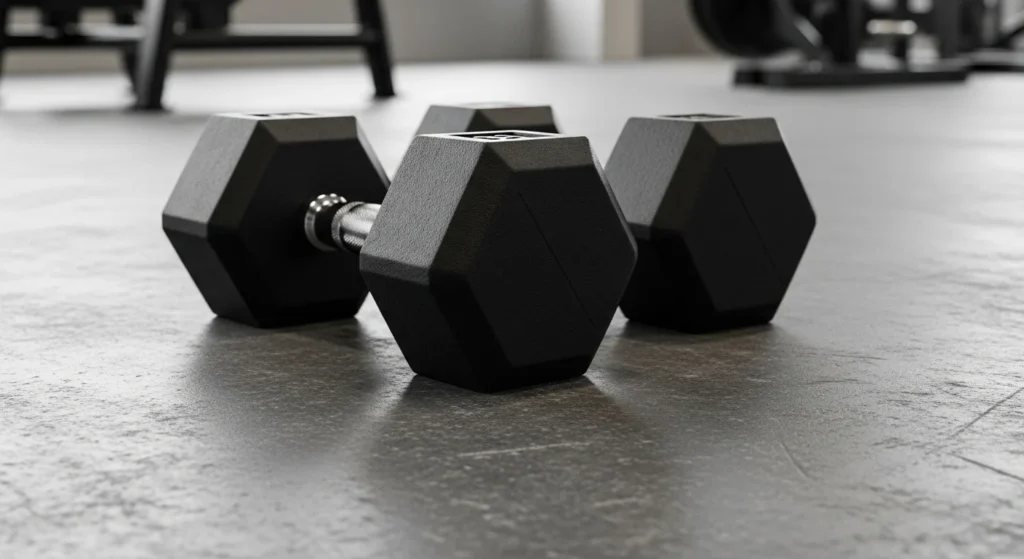
You’ve decided to build a home gym, and the first thing you see is a pair of 25-pound dumbbells priced like a small appliance. Another tab shows a full adjustable dumbbell set for what looks like a fraction of that, with reviews you can’t quite trust. Dumbbell prices swing wildly depending on where you shop, when you shop, and what kind you buy. Knowing where to buy dumbbells at a reasonable price can save you real money without sacrificing quality or safety. This guide covers the best places to look, how to judge a deal, and what to avoid.
Table of Contents
- Why Dumbbell Shopping Costs More Than It Should
- Signs You’re About to Overpay
- Common Reasons People Overpay
- Overpaying vs. Smart Buying
- How to Size Up a Deal Before You Commit
- Where to Buy Dumbbells at a Reasonable Price: 7 Places Worth Checking
- A Step-by-Step Buying Routine
- What Overpaying Costs You Later
- Adjustable or Fixed: Which Should You Buy?
- How Long Finding a Good Deal Takes
- What Drives Dumbbell Prices
- Habits That Keep You From Overpaying
- Advice for Small Spaces and Growing Lifters
- Frequently Asked Questions
- Final Takeaway
Why Dumbbell Shopping Costs More Than It Should
Iron is heavy, and heavy things are expensive to ship and store. That alone pushes dumbbell prices up, but the bigger issue is that the same weight can be sold in wildly different packages: a rubber-coated hex pair, a chrome-handled loadable set, a dial-based adjustable system. Shoppers compare them as if they were identical, and they aren’t.
The mild version of the problem is paying 20 or 30 percent more than necessary because you bought the first listing you saw. The more serious version is buying a cheap, poorly made set that loosens, rattles, or fails mid-rep, then replacing it a few months later. Both outcomes are avoidable with a little structure.
Dumbbells are also unusually easy to buy used, because they barely wear out. A pair of iron dumbbells from twenty years ago works exactly like a new one. That single fact opens up most of the savings on this list.
Signs You’re About to Overpay
- You’re comparing only the total price, not the cost per pound (the price divided by total weight you get)
- The listing has no weight tolerance, handle diameter, or locking mechanism described
- You feel rushed by a “limited-time” countdown that resets when you refresh
- Reviews are all five stars, posted within a few days of each other, and say almost nothing specific
- Shipping costs are hidden until the final checkout step
- You haven’t checked what the same set costs at two other stores
- You’re buying a full dumbbell weight set before knowing which weights you’ll actually use
If three or more of these apply, pause the purchase for a day and compare at least two more sources.
Common Reasons People Overpay
Buying everything at once: Many beginners grab a complete rack because it feels efficient. In practice, most people use the middle weights constantly and leave the heaviest and lightest pairs sitting untouched.
Ignoring secondhand options: Plenty of lifters assume used gear is risky. With solid iron or rubber hex dumbbells, there’s very little to go wrong, and cosmetic wear costs you nothing.
Falling for flashy adjustable designs: Some adjustable weight dumbbells are excellent. Others charge extra for a mechanism that jams or wobbles. In a small home gym, paying for the mechanism makes sense only if the build quality backs it up.
Skipping shipping math: A low sticker price with heavy freight charges often ends up costing more than a local purchase. Weight-based shipping is the usual culprit.
Shopping in peak season: Demand for home gym equipment spikes in January and during seasonal fitness pushes. Prices tend to follow, so buying in a slower stretch often helps.
Overpaying vs. Smart Buying
| Factor | Overpaying | Smart Buying |
|---|---|---|
| Price comparison | One store, one listing | At least three sources, cost per pound noted |
| Condition | Assumes new is always better | Accepts used if solid and undamaged |
| Weight selection | Full set on day one | Core weights first, add later |
| Shipping | Discovered at checkout | Calculated before choosing |
| Timing | Buys during rush periods | Watches for sales and off-season dips |
| Quality check | Trusts star ratings alone | Reads specific reviews, checks handles and locks |
How to Size Up a Deal Before You Commit
Start by deciding what you need. If you’re a beginner doing goblet squats, shoulder presses, rows, and curls, a handful of pairs in the light-to-moderate range will carry you for months. Someone training heavier for chest presses and lunges needs a wider spread, or an adjustable set that covers it.
Next, work out the cost per pound for each option, a simple division that cuts through marketing. Fixed dumbbells usually win on that number, while adjustable sets win on space and versatility. Then look at the details: handle grip, whether the ends are rounded or sharp, and how weights are secured on loadable designs. Finally, check return policies. A generous return window is worth more than a small discount, especially on items you can’t test in person. That order of operations will catch most bad deals before you spend anything.
Where to Buy Dumbbells at a Reasonable Price
1. Local classified apps and community marketplaces: This is often the cheapest route. People clear out garages and apartments constantly, and sellers frequently price dumbbells just to get them out the door. Bring a tape measure and check that handles aren’t cracked.
2. Secondhand and thrift stores: Stock is unpredictable, but when iron or rubber hex pairs turn up, they tend to be priced low. Check regularly rather than expecting a single visit to pay off.
3. Garage, estate, and moving sales: Fitness equipment is a common leftover at these. You can inspect the weight in person and negotiate on the spot.
4. Big-box sporting goods retailers: Prices on new gear aren’t always the lowest, but sales events, clearance racks, and in-store pickup (which dodges shipping) can make them competitive. Good for people who want a warranty and an easy return.
5. Warehouse clubs and general discount retailers: Some carry dumbbell weight sets or adjustable options in bulk-friendly packaging. Selection rotates, so it’s worth watching rather than counting on it.
6. Online fitness equipment retailers: Specialized sellers often stock the best adjustable dumbbells, top rated dumbbells in several styles, and set bundles. Compare shipping costs carefully and look for adjustable dumbbells sale periods tied to holidays or inventory turnover.
7. Closing gyms and commercial equipment liquidators: When a gym shuts down or upgrades, heavy-duty dumbbells can appear at steep discounts. Quality is typically high because commercial gear is built for daily abuse. If you’re searching for the best dumbbells near me, local liquidators are worth a phone call.
A Step-by-Step Buying Routine
- Define your weight range: Pick the three to five weights you’ll actually use for your first couple of months.
- Decide on fixed vs. adjustable: Space and budget usually settle this quickly.
- Check local options first: Classifieds, thrift stores, and liquidators save on shipping.
- Compare online prices: Note the cost per pound and the full delivered price.
- Inspect or read carefully: In person, test handle grip and look for cracks. Online, read the detailed reviews rather than the star average.
- Buy a core set, then expand: Add pairs later as strength builds.
What Overpaying Costs You Later
The obvious loss is money, but there’s a quieter one. A set that’s too heavy at the start discourages good form, and a set that’s too light gets outgrown within weeks. Either way, you end up buying twice.
Poor-quality adjustable weight dumbbells can also be a safety issue. If a locking mechanism slips during an overhead press, the result isn’t just annoying, it can hurt. Cheap isn’t the problem; unchecked quality is.
Adjustable or Fixed: Which Should You Buy?
If space is tight and you plan to train across a wide weight range, an adjustable dumbbell set is usually the better pick. One compact unit replaces a whole rack. If you have room and want the simplest, most durable option, fixed pairs win. They’re ready instantly, never jam, and often cost less per pound.
My straightforward advice: beginners with limited space should lean adjustable, as long as the mechanism has solid reviews and a return window. Everyone else should buy a few fixed pairs first and see how training evolves.
How Long Finding a Good Deal Takes
- Quick find (a few days): If you accept a standard new set from a retailer running a sale, you can be done almost immediately.
- Moderate search (one to three weeks): Watching local listings and thrift stores for used iron pairs typically turns something up within this window.
- Patient hunt (a month or more): Waiting for a gym closure, estate sale, or seasonal discount on a specific adjustable model takes longer but often saves the most.
What Drives Dumbbell Prices
Several factors shape what you pay, none of which are mysterious. Material matters: solid cast iron, rubber-coated heads, and chrome or knurled (textured) handles all cost different amounts to make. Weight range and increments affect price, since finer adjustments mean more engineering. Brand reputation and warranty coverage add cost, as does the packaging of the set itself. Shipping is heavy-item freight, so it can quietly become a large share of the total. Condition matters too: used pairs skip the markup that new retail carries. Understanding these helps you spot where a price is justified and where it’s padding.
Habits That Keep You From Overpaying
- Always calculate cost per pound before comparing
- Set price alerts or check listings on a regular schedule
- Buy off-season when demand cools
- Ask sellers whether they’d accept a lower offer, especially on used sets
- Verify the return policy before buying online
- Save room in your budget for a bench or storage, so the weights have somewhere to go
Advice for Small Spaces and Growing Lifters
If you’re working with a spare corner or apartment floor, prioritize compactness. A single adjustable set, or two or three fixed pairs stored under a bench, covers presses, rows, curls, and lunges without cluttering the room. Dumbbell sets for home gym use don’t need to fill a rack to be effective.
If you’re just starting, resist the urge to buy for the lifter you’ll be in a year. Start with weights you can control with clean form, and upgrade as you progress. Strength grows quickly early on, so plan to add heavier pairs rather than buying them upfront.
Frequently Asked Questions
Where can I buy dumbbells cheap?
Local classified listings, thrift stores, garage sales, and closing-gym liquidations usually offer the lowest prices, especially for used iron or rubber-coated pairs.
Are used dumbbells safe to buy?
Yes, if the handles aren’t cracked, the heads are secure, and no part is loose. Solid dumbbells rarely wear out.
Are adjustable dumbbells worth it?
For small spaces and people training across many weights, yes. Check the locking mechanism’s reviews before buying, since weak ones can slip.
When is the best time to buy dumbbells?
Off-peak periods, outside the January rush, often bring better prices. Holiday sales and inventory clearances can also help.
How much weight should a beginner buy?
Start with a few light-to-moderate pairs you can lift for around ten controlled reps, then add as you get stronger.
Final Takeaway
Knowing where to buy dumbbells at a reasonable price comes down to comparing sources, calculating cost per pound, and not rushing. Pick your core weights, check one local option and two online ones this week, and buy once you’ve found a deal that holds up.