If you have ever stood in a gym or browsed fitness equipment online, you have probably noticed that dumbbells show up everywhere. That is not a coincidence. These compact, two-ended weights have been a staple of physical training since ancient Greece, and they remain the most common piece of strength equipment in the world for reasons that go well beyond tradition.
The question most people actually want answered is not whether dumbbells work. It is what specifically they are best at. This guide answers that directly, with a breakdown of where dumbbells genuinely excel, where they fall short, and how to use them intelligently based on your actual goals.
What Makes Dumbbells Physically Different From Other Resistance Equipment
Before getting into specific use cases, it helps to understand what separates dumbbells from barbells and machines at a mechanical level — because the differences are not just about preference or convenience.
Freedom of Movement in Three Planes
A barbell locks your hands into a fixed relationship with each other. A cable machine or weight stack guides you along a predetermined arc. Dumbbells do neither. Each hand moves independently, which means your joints can settle into whatever angle suits your individual anatomy during a given movement.
Someone with a longer torso pressing a barbell at shoulder width might feel shoulder discomfort that disappears entirely when switching to dumbbells — simply because the grip width and forearm angle are no longer dictated by the bar. That adaptability matters more than most people realize. It is also why dumbbells can be used to create movement patterns that develop task-specific strength, something neither barbells locked in a fixed plane nor isolated machines replicate as well.
Independent Limb Loading
Each dumbbell carries its own weight with no mechanical assist from the opposite side. When you bench press a barbell, your stronger side can compensate for your weaker side without you ever noticing. Over months and years, that compensation builds into real asymmetry — one shoulder developed differently than the other, one hip more stable than the other, one arm noticeably bigger.
When each hand holds its own weight, left and right sides work without any shared load, making strength imbalances obvious almost immediately. That is not just an aesthetic issue. Uncorrected bilateral asymmetry is one of the most underappreciated injury risk factors in people who lift consistently.
Greater Range of Motion on Key Exercises
On a barbell bench press, your hands stop when the bar touches your chest. On a dumbbell press, your hands can travel past your torso on the way down, loading the pec across a longer stretch. Research consistently finds that muscles working through a greater range of motion under tension produce a stronger growth stimulus. This is partly why competitive bodybuilders — people whose profession is literally maximizing muscle size — have historically relied heavily on dumbbell variations even when barbells were freely available.
What Are Dumbbells Best For: The Core Use Cases
Building Muscle Mass
Dumbbells are genuinely effective tools for muscle growth, and the evidence is straightforward: training with free weights and machines produces similar increases in muscle mass and strength when volume and effort are equated. You do not need a barbell to build substantial muscle — dumbbells cover the same physiological territory, particularly for upper-body development.
The mechanisms are all there. Mechanical tension through progressive overload. Metabolic stress from sustained time under tension. Muscle damage during the eccentric, or lowering, phase. The dumbbell fly takes the pec through a lengthened stretch that a barbell press cannot replicate. The dumbbell Romanian deadlift loads the hamstrings across a full hip hinge without a bar pulling your center of mass forward. The single-arm row lets you brace harder and pull through a longer range than a barbell row typically allows.
For most muscle groups, a well-constructed dumbbell program is not a compromise. It is a different tool producing comparable results.
Correcting Muscle Imbalances
This is arguably where dumbbells have a real advantage over barbells. If your left arm is weaker than your right, a barbell lets the stronger side mask that during every working set. A dumbbell does not. Each arm has to produce enough force to complete its own repetition.
Single-arm and single-leg dumbbell variations push this further. Single-arm rows, single-leg Romanian deadlifts, alternating dumbbell presses — all force each limb to work in isolation under load, making strength gaps obvious and training them away deliberately. For athletes returning from injury on one side, or anyone who has noticed that one half of their body looks or performs differently, dumbbell unilateral training is the most direct correction available outside of a physical therapy setup.
Functional Strength and Real-World Application
Functional strength means the ability to apply force in positions and movement patterns that appear in actual daily life. Think about how you genuinely pick things up, carry objects, push open doors, or reach overhead. Almost none of those tasks happen with both arms in a perfectly symmetrical, mechanically guided path. They happen with one hand, at odd angles, while your core manages an unexpected load.
Dumbbell training mimics this. A standing single-arm dumbbell press builds your shoulder, pec, rotator cuff, obliques, and glutes simultaneously, because standing with an asymmetric load while pressing overhead is exactly what your nervous system needs to coordinate for real tasks. A chest press machine builds one thing. A standing dumbbell press builds several things at once — including the connections between them.
Core Strength and Joint Stability
Every dumbbell exercise performed outside of a machine recruits stabilizer muscles — the smaller muscles around your joints that machines deliberately remove from the equation to keep movement smooth and controlled. Training them is not optional if you want healthy joints over decades.
A dumbbell bench press demands more core activation than a machine chest press because you are controlling two independent weights rather than one guided bar. Loaded carries — walking with a heavy dumbbell in one hand — force your obliques to resist lateral flexion with every step. A goblet squat held at chest height forces you to brace deeply through the abdomen against the weight pulling you forward. These are not crunches. They build the kind of core strength that transfers to everything else.
Core-focused dumbbell training has been shown to reduce hamstring injuries in athletes by nearly half and improves body mechanics connected to ACL injury risk. That is not a minor footnote — it is a reason to take stabilizer training seriously, not just train for the muscles you can see in the mirror.
Fat Loss and Metabolic Conditioning
Dumbbells are not cardio equipment, but they are among the most effective tools for the kind of training that produces lasting fat loss. Ten weeks of resistance training can increase lean mass by around 1.4 kg, raise resting metabolic rate by 7%, and reduce fat mass by 1.8 kg. That resting metabolic rate increase is the part most people miss. Muscle tissue burns more calories at rest than fat tissue does. Adding lean mass raises your caloric floor — you burn more even on days you do not train.
A circuit of goblet squats, bent-over rows, push presses, and Romanian deadlifts performed with minimal rest between sets gets your heart rate into a cardiovascular training zone while building strength simultaneously. Machines can approximate this. The multi-joint, free-form nature of compound dumbbell circuits tends to drive higher caloric expenditure per unit of time simply because more muscle mass is involved in every movement.
Bone Density and Long-Term Skeletal Health
This is the use case that matters most for people in their 40s, 50s, and beyond, and it gets far less attention than it deserves. Osteoporosis is not a condition that appears suddenly — it is a decades-long process of gradual bone mineral loss that accelerates sharply without the mechanical stress that weight-bearing exercise provides.
A 12-month resistance training program has been shown to produce significant increases in bone mineral density in the lumbar spine and hip regions in postmenopausal women. A meta-analysis published in Healthcare found that resistance training produced a positive effect on bone mineral density at the hip and spine in older adults, with the effect described as preventive against the increasing risk of bone frailty regardless of the length of the intervention.
Dumbbells are particularly practical for older adults in this context. They allow incremental load progression starting at very light weights, require no spotter or complex setup, and can be used from a seated position when mobility is limited. The mechanical loading they provide — which is what signals bone to maintain and increase its mineral density — is the same biological stimulus regardless of age.
Rehabilitation and Injury Recovery
Physical therapists use dumbbells routinely because they allow precise, controlled loading at specific angles and limited ranges of motion. A shoulder rehabilitation protocol using light dumbbells can target the rotator cuff at exactly the positions required without the joint loading that a barbell or machine movement would impose.
Independent limb loading matters in rehabilitation as well. If you have a knee injury, you can load your healthy leg through unilateral dumbbell exercises while the injured side recovers. If you have a shoulder impingement, you can select the grip angle and range of motion that avoids the painful arc — something a barbell’s fixed geometry does not allow.
Strength training more broadly lowers the risk of cardiovascular events and improves metabolic markers, and the cumulative health benefit of returning to resistance training — with dumbbells often serving as the entry point — extends well beyond whatever injury initiated the break.
Home and Travel Training
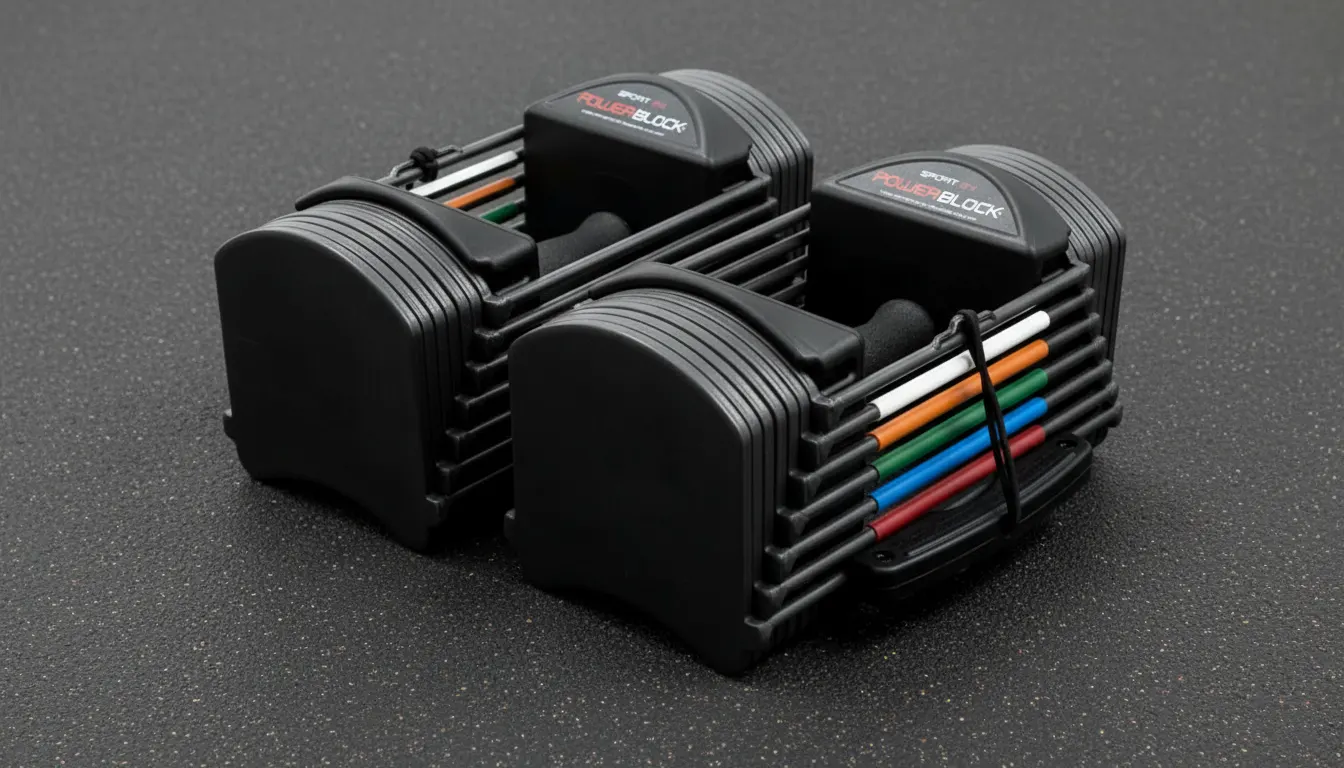
A barbell home gym requires substantial floor space, a rack, and a growing plate collection. A set of adjustable dumbbells requires about two square feet and a few seconds to change the weight. This is not a trivial difference.
The most effective training program is the one you actually execute consistently. For people who travel frequently, have limited space, or cannot access a commercial gym, a pair of dumbbells covering a useful weight range makes the difference between training and not training. A set of adjustable dumbbells from roughly 5 to 50 pounds covers the load range needed for almost every upper and lower body exercise for most people.
Every Major Muscle Group You Can Train With Dumbbells
A common assumption is that dumbbells are mainly for upper-body isolation work. That assumption is wrong.
Chest, Back, Shoulders, and Arms
The chest responds particularly well to dumbbell pressing and fly variations because of the extended range of motion available. Flat, incline, and decline dumbbell presses hit the pec at different angles. Dumbbell flyes lengthen the muscle under load, which barbell work cannot fully replicate.
For the back, single-arm rows, chest-supported rows, and renegade rows target the latissimus dorsi, rhomboids, and rear deltoids. The renegade row activates the upper back, front of the shoulder, biceps, triceps, and forearms while the core manages spinal stability throughout every rep.
Shoulder training with dumbbells covers all three deltoid heads: lateral raises for width, overhead presses for overall mass, rear delt flies for the posterior head, and front raises for the anterior. Bicep curls, hammer curls, and concentration curls each target slightly different portions of the biceps’ strength curve. Triceps kickbacks, overhead extensions, and close-grip floor presses train the triceps without needing specialized equipment.
Quads, Hamstrings, Glutes, and Calves
Goblet squats allow most people to reach greater squat depth than a barbell squat because the front-loaded weight acts as a counterbalance. This makes them a surprisingly effective quad and glute developer even at moderate loads.
Dumbbell Romanian deadlifts are among the best hamstring exercises available. Split squats, Bulgarian split squats, and walking lunges build the quads and glutes while simultaneously developing single-leg stability. Step-ups, hip thrusts holding dumbbells at the crease of the hips, and single-leg deadlifts round out a complete lower-body program that does not require a squat rack.
Core, Obliques, and Lower Back
Farmer’s carries, suitcase carries, and waiter’s walks are loaded carry variations that build anti-lateral-flexion strength through the obliques with every step. Woodchops develop rotational power. Dumbbell plank rows train anti-rotation. The goblet squat trains anti-flexion through the entire trunk. These are not accessories — they are functional core training that produces strength that transfers directly to sport and daily activity.
Where Dumbbells Are Not the Best Option
Dumbbells are not ideal for everything, and acknowledging that matters.
For maximum absolute strength in the lower body, heavy barbells are simply more efficient. Squatting 300 pounds requires a barbell and rack — you cannot replicate that loading with dumbbells. Studies have found that subjects can lift close to 20% more weight with a barbell bench press than with a dumbbell press, which has practical implications when maximum force output is the goal rather than hypertrophy or general conditioning.
For beginners who need guided, predictable movement paths to learn motor patterns safely before adding load, certain machines offer a genuinely useful starting point. A leg press machine, for example, lets a true beginner load their quads without the balance, coordination, and hip mobility demands of a goblet squat.
The honest framework is this: dumbbells are the right primary tool for muscle building, functional strength, imbalance correction, core training, fat loss conditioning, bone health, rehabilitation, and any context where barbell training is impractical. Barbells are better for maximum strength in heavy compound lower-body movements. Machines are useful for isolation work at the end of sessions or for highly controlled rehabilitation contexts.
Most experienced lifters end up using all three, often in the same session.
How to Select the Right Dumbbell Weight
Weight selection depends on your specific training goal.
| Goal | Rep Range | Load Relative to Max |
|---|---|---|
| Maximum strength | 1–5 reps | 85–100% |
| Hypertrophy (muscle growth) | 6–15 reps | 65–85% |
| Muscular endurance | 15–30 reps | 40–65% |
| Rehabilitation | 15–25 reps, pain-free | Light, as tolerated |
| Metabolic conditioning / fat loss | 10–20 reps, short rest | Moderate |
The practical rule: if you can complete more reps than the top of your target range with clean form, the weight is too light. If you cannot reach the lower end of the range without compensating your form, it is too heavy.
A Practical Dumbbell-Only Program Structure
Four training days per week on an upper/lower split covers almost every goal effectively.
Upper Day A (chest and triceps emphasis): Dumbbell bench press, incline press, single-arm row, dumbbell fly, overhead triceps extension, lateral raise.
Lower Day A (quad emphasis): Goblet squat, Bulgarian split squat, Romanian deadlift, step-up, calf raise.
Upper Day B (back and biceps emphasis): Single-arm row, chest-supported row, dumbbell shoulder press, hammer curl, rear delt fly, farmer’s carry.
Lower Day B (posterior chain emphasis): Romanian deadlift, hip thrust with dumbbells, single-leg deadlift, walking lunge, glute bridge.
Rest at least 48 hours between sessions targeting the same muscle groups. Progress by adding reps first, then increase weight when you consistently hit the top of your target rep range with clean technique.
Mistakes That Limit Progress With Dumbbells
Using the same weight for every exercise. Your back muscles are significantly stronger than your biceps. Your legs are stronger than your shoulders. One pair of dumbbells means something is always too light or too heavy. Use the appropriate load for each movement.
Rushing through the eccentric. The lowering phase of a rep is where significant muscle damage and hypertrophic stimulus occur. Dropping the weights quickly eliminates that stimulus. Lower with control — typically two to three seconds on the downward portion of each rep.
Neglecting posterior muscles. Chest and biceps attract attention. Rear deltoids, lower trapezius, rotator cuff, and hamstrings are equally important for joint health and long-term postural balance. Train the muscles you cannot see in the mirror with the same consistency.
Stopping progressive overload. The most common reason people plateau with dumbbells is not that they have outgrown the equipment — it is that they stopped adding reps or weight over time. Progressive overload is the mechanism of adaptation. Without it, the body maintains current capacity rather than improving.
Dumbbells for Specific Populations
Beginners
Dumbbells are the most appropriate starting point for most beginners. The learning curve is lower than a barbell, the injury risk is manageable at modest weights, and the exercise variety supports a complete full-body program from the first session. Begin with compound movements — goblet squats, dumbbell presses, rows — before layering isolation work.
Women
The persistent concern that heavy dumbbell training will produce excessive muscle mass in women is not supported by physiology. Women produce roughly 10 to 30 times less testosterone than men, and testosterone is the primary hormonal driver of muscle mass accumulation. What consistent dumbbell training does produce in women is lean muscle, improved bone density (particularly relevant given higher osteoporosis risk after menopause), better insulin sensitivity, and a leaner body composition over time.
Older Adults
For older adults, resistance training offers a positive effect on bone mineral density at the hip and spine regardless of the duration of the program, supporting a preventive effect against bone fragility. The practical priority is starting at a manageable weight, prioritizing form above all else, and training consistently over months. Seated dumbbell variations address the needs of those with balance concerns without removing the bone-loading benefit.
Athletes
Athletes in most sports benefit from unilateral dumbbell training because it builds stability specific to sport demands and corrects the asymmetries that repeated one-sided movements create over a career. A tennis player’s dominant arm develops differently from the non-dominant arm. A soccer player’s kicking leg develops differently from the plant leg. Dumbbell training addresses these gaps in ways that bilateral barbell work structurally cannot.
Frequently Asked Questions (FAQs)
Can I build serious muscle with only dumbbells?
Yes. Research comparing free-weight training to machine training finds similar increases in muscle mass when volume and effort are equated. Upper-body muscle groups respond particularly well to dumbbell training because of the freedom of movement and extended range of motion.
Are dumbbells better than barbells for beginners?
For most beginners, dumbbells are easier to learn and carry lower injury risk at low weights. Barbells become more efficient when heavier loads are required, especially in lower-body compound movements. Many coaches recommend learning movement patterns with dumbbells before transitioning to barbells for heavy squats and deadlifts.
How heavy should dumbbells be for fat loss?
Moderate weight in the 10–20 rep range with compound exercises and short rest periods produces meaningful caloric expenditure and hormonal response. The exact weight matters less than selecting loads that make the final few reps genuinely difficult. Easy final reps mean insufficient stimulus for adaptation.
Are dumbbells suitable for people with joint pain?
Often yes. Because you can adjust grip angle and range of motion to avoid painful positions, dumbbells offer flexibility that barbells and many machines do not. Many orthopedic physical therapists use dumbbell protocols for this reason. Consult a healthcare provider before starting resistance training if you have an existing joint condition.
Do dumbbells help with posture?
Directly. Rear delt flies, bent-over rows, and single-arm rows strengthen the muscles of the upper back that counteract the forward shoulder rounding that comes from prolonged sitting and desk work. Most postural problems trace back to weakness in the posterior shoulder and mid-back — which dumbbell training addresses effectively.
Can dumbbell training replace cardio for fat loss?
Not directly, but the combination outperforms either alone. Dumbbell circuit training raises heart rate into cardiovascular training zones while simultaneously building muscle that raises resting metabolic rate. A combination of consistent dumbbell strength training and moderate cardio — walking, cycling, or swimming — produces better long-term fat loss outcomes than either approach in isolation.
How many days per week should I train with dumbbells?
Three to four sessions per week, with at least 48 hours between sessions targeting the same muscle groups, is well supported by research for general strength and muscle building goals. Beginners typically do well starting with two or three full-body sessions weekly before progressing to a split structure.
Are adjustable dumbbells worth the investment?
For home training, yes. A quality adjustable set replaces an entire rack of fixed-weight dumbbells, takes minimal space, and allows load progression across years of training. For the number of exercise variations they unlock in a small footprint, they offer strong value relative to almost any other fitness equipment purchase.
What single dumbbell exercise produces the most overall benefit?
The goblet squat stands out. It trains the quads, glutes, hamstrings, core, and upper back simultaneously while teaching the hip hinge mechanics that transfer to nearly every other lower-body movement pattern. For upper-body compound training, the single-arm row and the dumbbell Romanian deadlift each recruit multiple major muscle groups with a single movement.
Are dumbbells safe to use without a spotter?
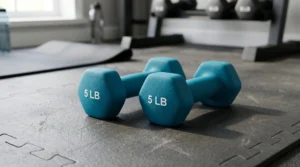
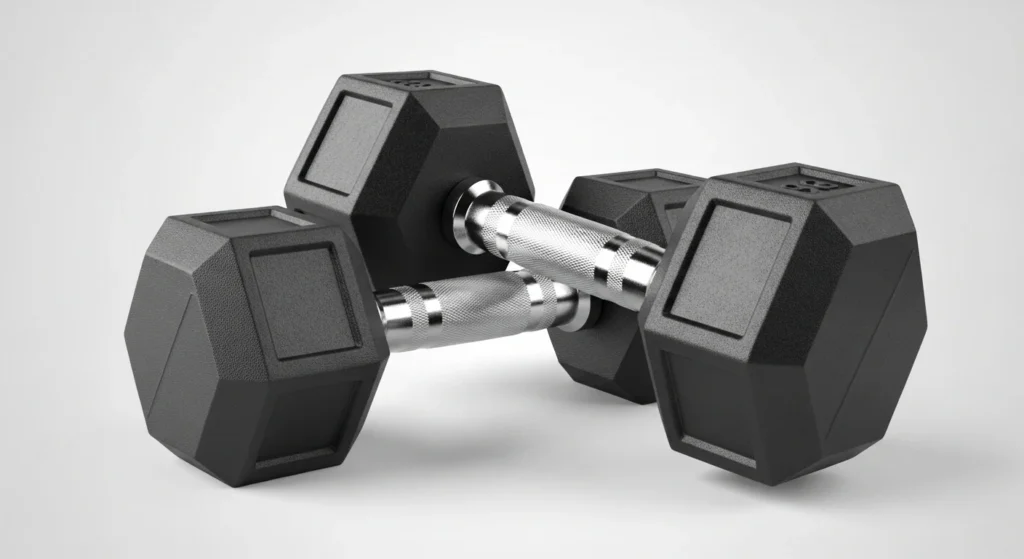
Generally yes. You can set them down or drop them to the sides if you fail a rep — unlike a barbell bench press where a failed rep can trap you under the bar. Use rubber hex dumbbells on a padded surface when training at home. Avoid training to complete muscular failure on heavy overhead movements without a safe surface to drop onto.
In conclusion
Dumbbells are best for building muscle across all major groups, correcting bilateral strength imbalances, developing functional strength through natural movement patterns, strengthening the core, supporting fat loss through metabolic conditioning, preserving bone density over decades, rehabilitating injuries at controlled loads, and training productively anywhere with minimal equipment. That covers the large majority of what most people actually need from a resistance training tool.
They do not replace barbells for maximum absolute strength in heavy compound lower-body movements. They are not identical to machines for highly guided isolation work. But for the widest range of real training needs across the widest population of people, dumbbells have earned their position through consistent performance across every context where they are applied.
Start with compound movements. Progress the load over time. Train both sides with equal attention. The results follow.
Looking to save money on your home gym setup? Check out Where to Buy Dumbbells at a Reasonable Price to discover the best places, smart buying tips, and how to get quality weights without overpaying.