Most people searching for fat loss advice get pointed straight to the treadmill. Run more. Walk more. Do cardio until your knees ache. What that advice misses is the smarter, more durable approach sitting in the corner of your room, a pair of dumbbells.
This guide covers the best dumbbell exercises for weight loss, explains why they work better than most people expect, and gives you the tools to build a real program at home.
Why Dumbbell Training Outperforms Cardio for Long-Term Fat Loss
Here is the honest comparison nobody leads with: a 30-minute jog burns more calories during the session than 30 minutes of dumbbell work. That part is true. But it is also only half the picture.
Strength training with dumbbells builds lean muscle tissue, and muscle is metabolically expensive to maintain. The more of it you carry, the more calories your body burns around the clock — not just during workouts, but while you sleep, sit, and go about your day. One study tracking participants over 24 weeks found that men who followed a resistance training program burned roughly 140 additional calories per day at rest, and women burned about 50 more daily. That compounds fast.
The second advantage is EPOC — excess post-exercise oxygen consumption, or what gym people call the “afterburn effect.” After an intense dumbbell session, your body spends hours restoring oxygen levels, repairing muscle fibers, and rebalancing hormones. At very high training intensities, this elevated metabolic state can persist for up to 48 hours. Cardio produces an afterburn too, but resistance training generates a more sustained recovery response.
Research shows that EPOC accounts for roughly 7 percent of total calorie expenditure from a given workout — so on a session where you burn 500 calories, you add about 35 more in the hours that follow. Small? Yes. Cumulative over months? Significant.
One six-month study found that just 11 minutes of strength training, done three times per week, increased participants’ resting metabolic rate by 7.4 percent — translating to an extra 125 calories burned per day. That kind of baseline shift is exactly what makes dumbbell training worth prioritizing alongside, or even instead of, long cardio sessions.
What Makes an Exercise Good for Weight Loss
Compound vs. Isolation Movements
Compound exercises move multiple joints simultaneously and recruit large muscle groups. A goblet squat works your quads, glutes, hamstrings, core, and upper back all at once. A bicep curl works one muscle. For fat loss, compound movements win every time — they produce more metabolic demand, burn more calories per minute, and drive more hormonal activity.
That does not mean isolation exercises have no place. But if weight loss is the priority, the bulk of your program should be built around compound lifts.
The Role of Intensity and Rest Periods
Exercise intensity is the most significant factor in driving post-exercise metabolism. A 2014 study examining runners at 60%, 70%, and 80% of their VO2 max found that the highest intensity workout produced the greatest afterburn. The same principle applies to dumbbell training: working closer to your limit, with shorter rest periods, generates a stronger EPOC response.
Practically, this means keeping rest intervals between 30 and 60 seconds for fat-loss-focused sessions, using supersets where possible, and choosing weights that make the last two or three reps genuinely difficult.
Training Frequency
The American Heart Association recommends strength training at least twice per week. For fat loss, three sessions per week tends to be the sweet spot — enough stimulus to drive muscle growth and metabolic adaptation, with enough recovery time to avoid breakdown. Going six days a week on minimal sleep and poor nutrition will stall your progress faster than going three days a week with solid sleep and a reasonable diet.
The 10 Best Dumbbell Exercises for Weight Loss at Home
1. Dumbbell Goblet Squat
Primary muscles: Quadriceps, glutes, hamstrings, core, upper back
The goblet squat is the single best lower-body exercise for people training with dumbbells at home. Holding the weight at chest height creates a natural counterbalance that keeps your torso upright, making it easier to squat to depth without the lower back strain that plagues traditional barbell squats.
How to do it:
- Hold one dumbbell vertically at chest height, gripping it by the top head with both hands
- Stand with feet shoulder-width apart, toes turned out 10-15 degrees
- Push your hips back and down, keeping your chest tall and knees tracking over your toes
- Lower until your thighs are at or below parallel, elbows brushing the insides of your knees at the bottom
- Drive through your heels to stand, squeezing your glutes fully at the top
Sets and reps for fat loss: 3-4 sets of 10-15 reps, rest 45 seconds between sets
Why it works: Squatting with load recruits the largest muscle groups in the body. More muscle activation means more calories burned and a stronger hormonal response, which drives fat metabolism.
2. Romanian Deadlift
Primary muscles: Hamstrings, glutes, lower back, core
The Romanian deadlift (RDL) is one of the most underused fat-loss tools in home training. It targets the posterior chain (your hamstrings and glutes) which are among the largest and most metabolically active muscles in the body. Getting these muscles firing hard in each session accelerates fat oxidation significantly.
How to do it:
- Stand with feet hip-width apart, holding a dumbbell in each hand in front of your thighs, palms facing your body
- Engage your core and pull your shoulder blades down and back
- Hinge at the hips, pushing them rearward while keeping a neutral spine throughout
- Lower the dumbbells close to your legs until you feel a deep stretch in your hamstrings — typically mid-shin level for most people
- Drive through your heels to return to standing, squeezing your glutes firmly at the top
Sets and reps for fat loss: 3 sets of 8-12 reps, rest 60 seconds
Common mistake to avoid: Bending at the waist rather than hinging at the hip. Think about pushing your hips backward toward the wall behind you — the forward lean of your torso follows from that hip hinge, not from rounding your back.
3. Dumbbell Push-Press
Primary muscles: Shoulders, triceps, quads, glutes, core
The push-press is where dumbbell training gets genuinely aerobic. By incorporating a leg drive to initiate the press, you turn a standard shoulder exercise into a full-body power movement that spikes heart rate quickly and keeps it there.
How to do it:
- Stand with feet hip-width apart, dumbbells held at shoulder height, palms facing inward
- Dip slightly by bending your knees — about a quarter squat
- Explosively drive through your legs while simultaneously pressing the dumbbells overhead
- Fully lock out your arms at the top, biceps near your ears
- Lower the weights back to shoulder height under control and repeat immediately
Sets and reps for fat loss: 3-4 sets of 10-15 reps, rest 45 seconds
Why it works: The leg drive component turns this into a lower and upper body exercise simultaneously. Your cardiovascular system has to work harder to supply blood to both regions at once, which is exactly the stimulus that raises EPOC.
4. Dumbbell Renegade Row
Primary muscles: Lats, rhomboids, rear deltoids, core, triceps
Few exercises challenge your entire posterior chain and core at the same time. The renegade row does both, and it does them hard. Maintaining a rigid plank position while rowing a dumbbell forces your core to resist rotation — a training demand that translates directly to better posture, reduced injury risk, and a stronger foundation for every other exercise.
How to do it:
- Start in a push-up position with both hands gripping dumbbells directly under your shoulders
- Keep your feet slightly wider than hip-width to create a stable base
- Brace your core and squeeze your glutes to prevent your hips from rotating
- Row one dumbbell to your ribcage by driving your elbow straight back
- Lower it under control and repeat on the other side — that is one rep
Sets and reps for fat loss: 3 sets of 8-10 reps per side, rest 60 seconds
Progression tip: Once you can do 10 reps per side with good form and no hip rotation, try adding a push-up between rows. That variation is called the renegade row push-up, and it substantially increases the metabolic demand.
5. Dumbbell Reverse Lunge
Primary muscles: Quads, glutes, hamstrings, core
The reverse lunge is safer on the knees than its forward counterpart because you step back into the movement rather than forward, reducing the shear force on the knee joint. For weight loss, lunges are exceptional because each leg works independently — you cannot compensate by shifting load to the stronger side the way you might during a bilateral squat.
How to do it:
- Stand tall with a dumbbell in each hand at your sides
- Step directly backward with one foot, landing on the ball of that foot
- Lower your back knee toward the floor, stopping just before it touches
- Both knees should form approximately 90-degree angles at the bottom
- Drive through your front heel to return to standing, then switch legs
Sets and reps for fat loss: 3 sets of 10-12 reps per leg, rest 45 seconds
Variation for intensity: Walking lunges covering a set distance — say, 10 meters and back — work well as a metabolic finisher at the end of a session.
6. Dumbbell Swing
Primary muscles: Glutes, hamstrings, lower back, shoulders, core
The dumbbell swing mimics the kettlebell swing and produces a similar metabolic effect. It is a hip hinge pattern performed explosively, which means your posterior chain absorbs a significant load in a short time and your cardiovascular system has to respond accordingly.
How to do it:
- Stand with feet slightly wider than shoulder-width, holding one dumbbell with both hands gripping the top head
- Hinge at the hips, letting the dumbbell swing back between your legs with straight arms
- Drive your hips forward explosively, allowing the momentum to carry the dumbbell up to chest or shoulder height
- Let it swing back between your legs and immediately repeat — the movement should feel rhythmic, not mechanical
Sets and reps for fat loss: 3-4 sets of 15-20 reps, rest 45 seconds
Important form note: The power comes from your hips, not your arms. If your shoulders are doing most of the work on the way up, you are using the dumbbell like a front raise rather than a swing.
7. Dumbbell Squat to Press (Thruster)
Primary muscles: Quads, glutes, shoulders, triceps, core
The thruster is a total-body compound exercise that flows directly from a squat into an overhead press. No rest between the two — you use the momentum from the upward drive of the squat to initiate the press. CrossFit popularized this movement, and for good reason: it burns an enormous number of calories per rep because it demands full-body coordination under load.
How to do it:
- Hold dumbbells at shoulder height, palms facing inward, feet shoulder-width apart
- Lower into a full squat, keeping your chest up and knees tracking your toes
- Explosively stand and, in one continuous motion, press the dumbbells directly overhead
- Lower them back to shoulder height as you descend into the next squat
Sets and reps for fat loss: 3 sets of 10-12 reps, rest 60 seconds
Programming note: This works best placed toward the end of a workout as a metabolic finisher — your heart rate will already be elevated, and the thruster will keep it there.
8. Dumbbell Turkish Get-Up
Primary muscles: Shoulders, core, glutes, hips, triceps — essentially everything
The Turkish get-up is unusual in that it is slow, deliberate, and still metabolically taxing. Moving from lying on the floor to standing upright while keeping a dumbbell locked overhead requires you to stabilize nearly every joint in your body in sequence. The movement develops full-body functional strength and stability, shoulder resilience, multi-planar core strength, and hip mobility — while exposing asymmetries before they become injuries.
How to do it:
- Lie on your back with a dumbbell pressed straight up over your right shoulder, arm fully locked
- Bend your right knee and plant that foot flat on the floor
- Roll onto your left forearm, then your left hand, keeping the right arm vertical throughout
- Lift your hips off the floor into a bridge
- Sweep your left leg beneath you into a half-kneeling position
- Stand fully upright, then reverse the sequence precisely back to the floor
Sets and reps for fat loss: 2-3 sets of 3-5 reps per side, rest 90 seconds
Why it is worth the complexity: Most exercises build muscle in one plane of motion. The get-up trains rotational strength, overhead stability, and hip mobility all at once. It also reveals weaknesses — one side will almost certainly feel harder than the other.
9. Dumbbell Step-Up
Primary muscles: Quads, glutes, hamstrings, calves
Step-ups are deceptively hard. Using a sturdy chair or low bench, holding dumbbells at your sides, and driving one leg at a time through the movement builds quad and glute strength in a way that also trains balance and proprioception. Because step-ups require strength and stability in each leg individually, they are effective at correcting muscle imbalances that often develop when one side compensates during bilateral exercises.
How to do it:
- Stand in front of a stable surface — a sturdy chair, stair, or low bench works fine
- Hold a dumbbell in each hand at your sides
- Step onto the surface with one foot and drive through that heel to lift your entire body upward
- Bring your trailing foot up to meet the first, stand fully upright on the surface
- Step back down under control and repeat, alternating the leading leg
Sets and reps for fat loss: 3 sets of 12 reps per leg, rest 45 seconds
10. Dumbbell Bent-Over Row
Primary muscles: Lats, rhomboids, rear deltoids, biceps, erector spinae
Most home training programs are push-heavy — lots of pressing, fewer pulls. That imbalance leads to rounded shoulders and a weak upper back over time. The bent-over row fixes it. Strong lats and rhomboids also stabilize your spine during every other exercise, so improving this pattern has cascading benefits throughout your whole program.
How to do it:
- Stand with feet hip-width apart, holding a dumbbell in each hand
- Hinge forward at the hips until your torso is roughly parallel to the floor, keeping a neutral spine
- Let the dumbbells hang directly below your chest with straight arms
- Row both dumbbells to your lower ribcage, pulling your elbows straight back and squeezing your shoulder blades together at the top
- Lower under control and repeat
Sets and reps for fat loss: 3-4 sets of 8-12 reps, rest 60 seconds
Choosing the Right Dumbbell Weight
One of the most common training mistakes is using weights that are too light. Light dumbbells do not generate enough tension to drive muscle growth or hormonal response. Weights that are too heavy compromise form and increase injury risk.
A practical rule: the last 2-3 reps of each set should require genuine effort. If you finish the set feeling like you had 5 reps left, the weight is too light. If your form breaks down on rep 6, the weight is too heavy.
Progressive Overload
Continuous Fat Loss
Progress stalls when training stops challenging the body. Progressive overload is the practice of systematically increasing training demand over time. For dumbbell training at home, it works like this:
Adding repetitions is the most accessible first step — if the program calls for 3 sets of 10, work toward 3 sets of 12 before increasing weight. Once you hit the top of the rep range comfortably, add weight and drop back to the lower end of the range. Shortening rest periods, adding an extra set, or switching to a more demanding variation are also valid ways to progress without needing heavier dumbbells.
The body adapts to the stress you give it. If the stress stays constant, the adaptation stops — and so does the fat loss.
Nutrition Principles That Actually Support Dumbbell Training
No training program outworks a consistently poor diet. Fat loss happens when your body burns more energy than it consumes over time. Dumbbell training accelerates that process by raising your metabolic rate, but the dietary side still matters.
A few evidence-based principles worth following:
Protein intake: Aim for roughly 1.6 to 2.2 grams of protein per kilogram of body weight daily. Adequate protein preserves muscle mass during a caloric deficit, which keeps your metabolic rate from dropping as you lose weight.
Caloric deficit: A deficit of 300-500 calories per day produces sustainable fat loss of roughly 0.5 to 1 kilogram per week without compromising muscle tissue or energy levels.
Meal timing around training: Eating a mixed meal with protein and carbohydrates 1-2 hours before a session provides enough fuel for high-intensity work. Post-workout protein consumption within a couple of hours supports muscle recovery.
Hydration: Even mild dehydration impairs strength output and training intensity. Drink water consistently throughout the day, not just during workouts.
Common Mistakes That Undermine Dumbbell Weight Loss Results
Using the same weight for every session. The body adapts quickly. Without progressive overload, training becomes maintenance rather than improvement.
Skipping the posterior chain. Most people default to chest and shoulder exercises because they are visible in the mirror. Neglecting deadlifts, rows, and swings leaves the largest muscle groups undertrained.
Resting too long. Three-minute rest periods are appropriate for maximal strength training. For fat loss, keeping rests between 30 and 90 seconds maintains the metabolic stimulus.
Training at too low an intensity. Higher-intensity exercises, particularly those approaching maximal effort, result in a greater EPOC effect and more calorie burn post-exercise. Comfortable training produces comfortable results.
Ignoring sleep and recovery. Fat loss hormones — particularly growth hormone — are secreted primarily during deep sleep. Consistently sleeping fewer than 7 hours suppresses these hormones and increases cortisol, which promotes fat storage.
Frequently Asked Questions (FAQs)
Can you actually lose significant weight using only dumbbell exercises at home?
Yes, with consistency and progressive overload. Muscle tissue is more metabolically active than fat tissue — as you build lean muscle through consistent dumbbell training, your resting metabolic rate increases, meaning your body burns more calories at rest over time. This makes dumbbell-based strength training more effective for long-term weight management than steady-state cardio alone.
How many days per week should I train with dumbbells to lose weight?
Three full-body sessions per week is the evidence-supported recommendation for most people. Aim to perform dumbbell exercises at least twice per week, ensuring rest days between sessions to allow for muscle recovery. Going from two to three days per week tends to produce noticeably better results without meaningfully increasing injury risk.
Will dumbbell training make women bulky?
No. Building significant muscle mass requires years of progressive training, very high caloric intake, and in many cases, hormonal assistance. Women produce roughly 10-15 times less testosterone than men, which limits hypertrophy substantially. Dumbbell training for most women produces a leaner, more defined physique rather than added bulk.
How heavy should my dumbbells be to lose weight?
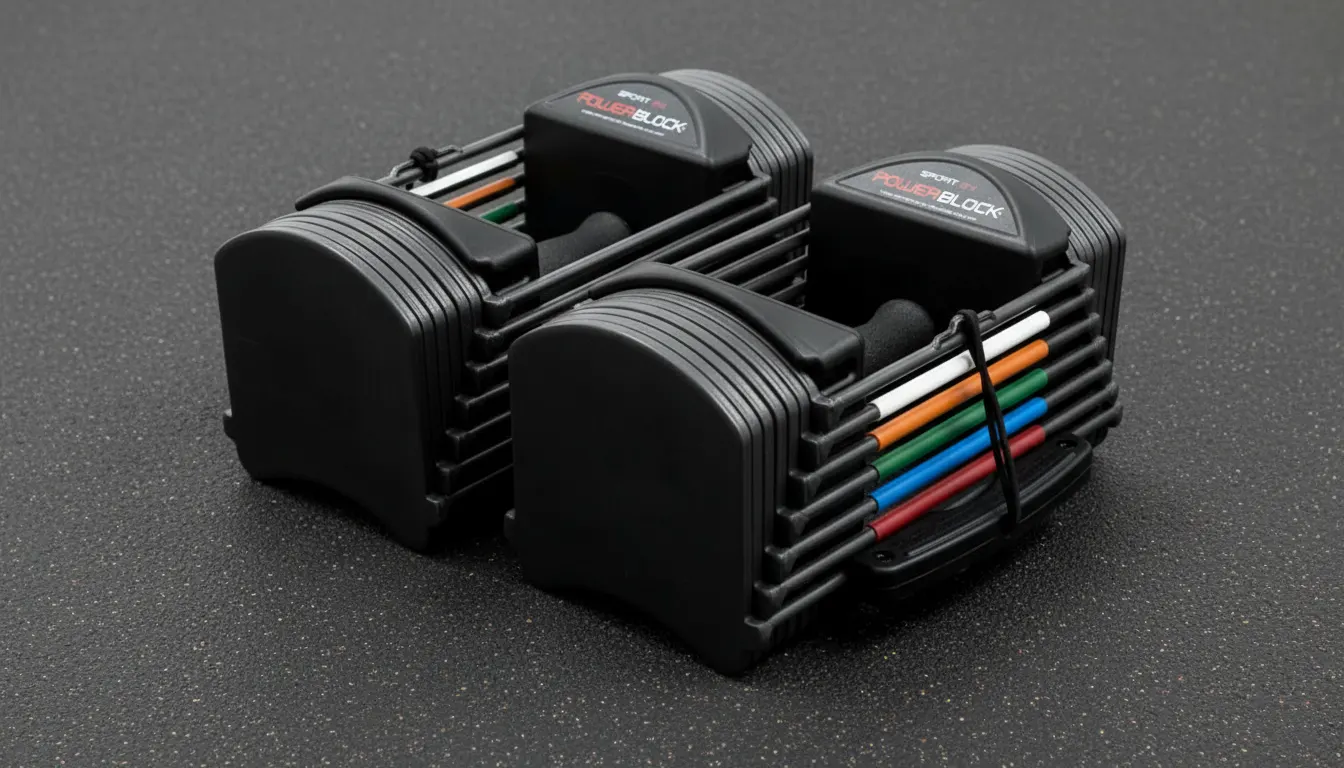
Heavy enough to make the last 2-3 reps of each set genuinely challenging while maintaining correct form. Using weights that are too light limits calorie burn and muscle stimulation; weights that are too heavy compromise form and increase injury risk. Most beginners find that a pair of adjustable dumbbells covering a range of 5-25 kg handles almost every exercise in a home program.
Is it better to do high reps with light weight or low reps with heavy weight for fat loss?
Both work, but neither is clearly superior in isolation. The most effective approach combines moderate weight (60-75% of your one-rep max) in the 8-15 rep range with short rest periods. That combination maximizes both muscle recruitment and cardiovascular demand. Very high rep, very light work produces mostly muscular endurance with limited metabolic benefit.
How long before I see visible fat loss results from dumbbell training?
Body composition changes typically become visually noticeable after 6-8 weeks of consistent training combined with a caloric deficit. Strength and endurance improvements tend to appear within 2-3 weeks. The timeline depends heavily on training consistency, diet quality, sleep, and starting body composition.
Do I need to do any cardio if I am already doing dumbbell workouts?
Not necessarily. Structured dumbbell sessions with compound movements, short rest periods, and adequate intensity produce meaningful cardiovascular adaptation and caloric expenditure. That said, adding 1-2 sessions of moderate cardiovascular activity per week — walking, cycling, or swimming — can accelerate fat loss and support heart health without impairing dumbbell training.
Can beginners follow these exercises safely?
Yes, with appropriate weight selection and attention to form. Start lighter than you think you need to, focus on movement quality before adding load, and progress gradually. The Turkish get-up and renegade row require more practice than the others — it is worth spending a few sessions with very light weights learning the pattern before pushing intensity.
What if I only own one pair of fixed dumbbells?
Single-weight training is workable. Adjust intensity through rep ranges, rest periods, tempo, and exercise selection rather than load. Slowing down the lowering phase of a squat or row — taking 3-4 seconds on the way down — dramatically increases muscle tension without requiring heavier weight.
Does the order of exercises in a workout session matter for fat loss?
Yes. Compound, multi-joint exercises should come first when energy and concentration are highest. Metabolic finishers — swings, thrusters, step-ups — work best at the end of a session. Placing an isolation exercise like a bicep curl first in a fat-loss workout is a poor use of limited training time.
In conclusion
Dumbbell training is not a compromise for people who cannot get to a gym. For fat loss specifically, it is arguably the best tool available for home training because it builds muscle that raises your resting metabolism, drives an afterburn effect that extends calorie burning past the workout, and can be structured to keep your heart rate elevated throughout an entire session.
The exercises above cover every major muscle group and every metabolic demand relevant to fat loss. Use them consistently, add weight over time, eat in a moderate caloric deficit, and sleep well. That combination produces real, durable results.
The dumbbells do not need to be fancy. They just need to be picked up.
Want to build a stronger, more defined lower chest? Check out The Best Lower Chest Exercises with Dumbbells for the most effective movements, proper form tips, and ways to maximize muscle growth.