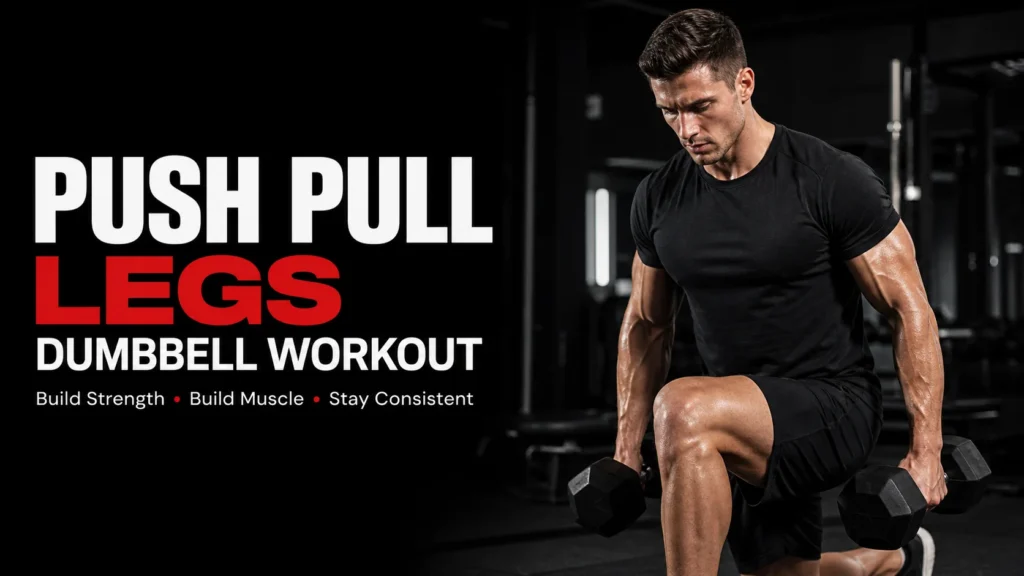
Most people who train at home eventually hit the same wall. They do a few push-up variations, maybe some curls, and after a month or two the progress stops cold. The problem isn’t the equipment. A pair of adjustable dumbbells can build a serious physique.
The push pull legs split, or PPL, solves this. It’s one of the oldest and most tested training frameworks in strength and conditioning, and for good reason: it groups muscles that naturally work together, trains each group with enough frequency to drive growth, and gives everything adequate time to recover before the next session. When applied with dumbbells only, it becomes one of the most accessible and effective training systems available to anyone.
What Is the Push Pull Legs Split?
The push pull legs split organizes your training around three movement categories rather than individual muscle groups. Each category gets its own dedicated training session, and you rotate through all three before repeating.
The Three Training Days Explained
Push Day: Chest, Shoulders, Triceps
On push day, you train every muscle involved in pushing a load away from your body. That means the chest (pectorals), the front and lateral heads of the deltoids, and the triceps. These three muscle groups overlap significantly in their function — when you press a dumbbell off your chest, your triceps and front delts are working alongside your pecs. Training them together means each compound press is reinforced by multiple secondary muscles, creating better stimulus and less wasted effort.
Pull Day: Back, Biceps, Rear Delts
Pull day covers every muscle responsible for drawing a load toward your body or retracting your shoulder blades. The lats, rhomboids, rear deltoids, traps, and biceps all fall under this umbrella. Row variations and pulldowns form the backbone of pull sessions, with bicep curls and rear delt work rounding things out. Training the posterior chain this way creates a natural balance against the pressing done on push day — something most bro-split programs completely ignore.
Leg Day: Quads, Hamstrings, Glutes, Calves
Leg day hits the entire lower body. Squats and their variations build the quads; Romanian deadlifts and leg curls develop the hamstrings; hip thrusts and lunges hit the glutes; calf raises close it out. The legs are the largest muscle group in the body and respond well to focused, high-volume sessions rather than being tacked onto other workouts as an afterthought.
How the Rotation Works
The three sessions are arranged in a repeating cycle: Push, Pull, Legs. Rest days are inserted based on your schedule and recovery. A 3-day-per-week version runs each session once weekly, which works fine for beginners. A 6-day version runs the cycle twice per week, hitting each muscle group two times — the sweet spot for muscle growth according to current exercise science research.
| Monday | Tuesday | Wednesday | Thursday | Friday | Saturday |
| Push | Pull | Legs | Rest | Push | Pull |
| Legs | Rest | Push | Pull | Legs | Rest |
Why Dumbbells Work Better Than Most People Think
There’s a persistent belief in lifting communities that dumbbells are a secondary option — something you use when the barbell isn’t available. That’s wrong, and the reasons are worth understanding before you build your program.
Greater Range of Motion
A barbell locks your hands into a fixed position. During a flat bench press, your hands stop at chest level because the bar hits your chest. With dumbbells, you can lower the weight several inches further, stretching the pectorals more deeply through the full range. Research consistently shows that training muscles through a greater range of motion produces more growth stimulus — and dumbbells naturally provide that.
Joint-Friendly Loading
Pressing and rowing with a barbell places your shoulders and wrists in a fixed anatomical position with no room to adjust. Dumbbells allow micro-adjustments throughout the movement, meaning you can angle your wrists or shift your grip path to find what feels natural for your structure. For lifters with any history of shoulder or elbow discomfort, this flexibility makes it possible to train hard without aggravating old injuries.
Unilateral Training Built In
Single-arm dumbbell exercises — rows, presses, curls, Bulgarian split squats — force each side of your body to work independently. This surfaces and corrects strength imbalances that bilateral barbell work hides. Most people have a dominant side that compensates during bilateral movements; dumbbells make those differences impossible to ignore.
Safety When Training Alone
Dropping a pair of dumbbells when you’ve hit failure is far less dangerous than getting pinned under a loaded barbell with no spotter. For home lifters who train solo — which is most people — this matters practically and psychologically. You can push harder when you’re not worried about a catastrophic miss.
What Equipment You Actually Need
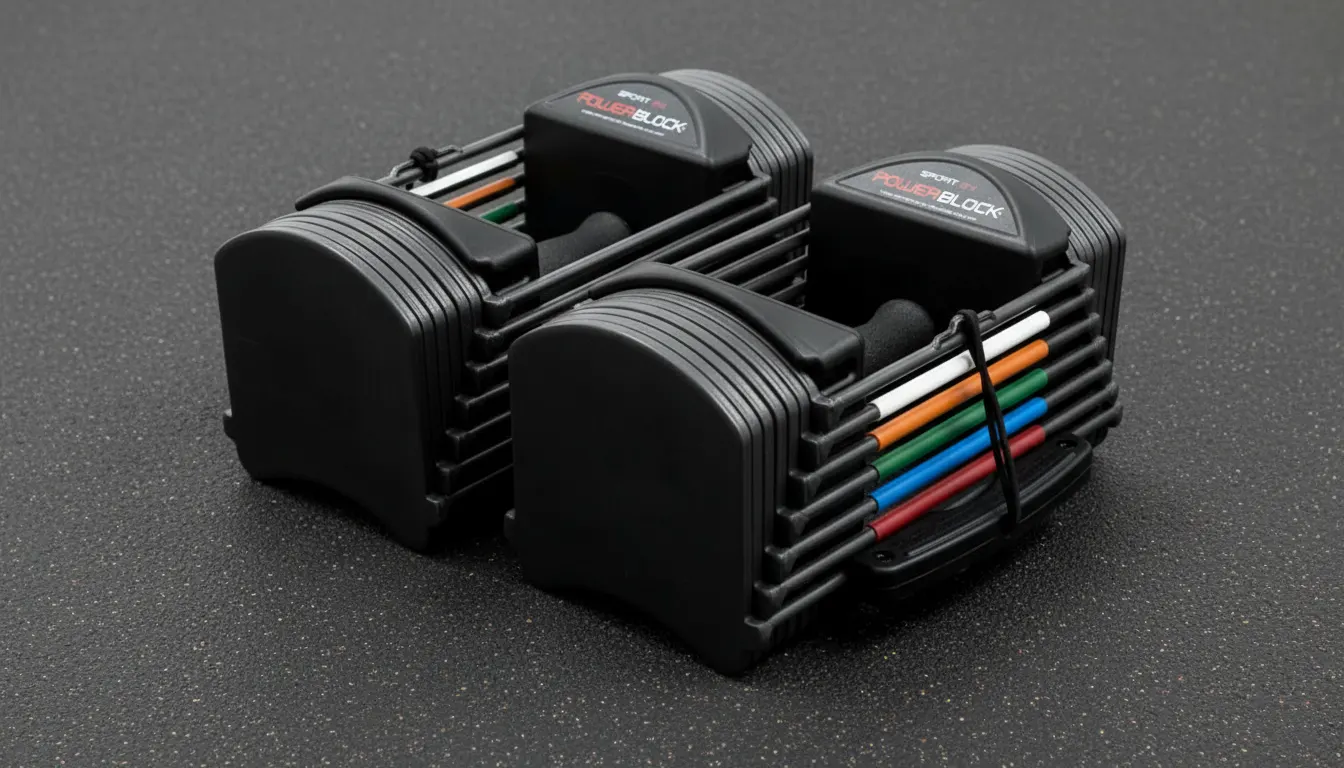
You don’t need much, but you do need adjustable dumbbells. A single fixed pair limits you immediately because the load that challenges your chest in a flat press is nowhere near heavy enough for a goblet squat, and far too heavy for lateral raises. Adjustable dumbbells — either selectorized or spinlock plates — solve this. A flat bench is useful but not strictly necessary; floor presses and floor rows work fine if you don’t have one.
The Science Behind PPL: Why It Produces Results
Training Frequency and Muscle Protein Synthesis
When you train a muscle, protein synthesis in that muscle elevates for roughly 24 to 48 hours before returning to baseline. Training each muscle group twice per week — which a 6-day PPL schedule delivers — catches that elevated synthesis window twice, compared to once per week in a traditional bro split. Meta-analyses on resistance training frequency consistently favor twice-weekly training over once-weekly for hypertrophy when total volume is equal.
Muscle Group Synergy and Overlap
Compound pushing exercises like the dumbbell bench press recruit the chest, front deltoids, and triceps simultaneously. Training all three in the same session maximizes the overlap between these muscles — each compound lift essentially pre-fatigues the secondary muscles so that isolation work later in the session is even more effective. The same principle applies to pull day, where row variations heavily involve the biceps before dedicated curl work begins.
Recovery Between Sessions
Because push muscles and pull muscles don’t share major overlapping functions, training pull day after push day allows push muscles to recover while you’re still productive in the gym. This gives each muscle group 48 to 72 hours of rest before it’s stressed again — the window exercise scientists identify as optimal for recovery and adaptation.
Progressive Overload as the Engine
No program works without progressive overload — the principle that you must regularly increase the demand placed on your muscles to force continued adaptation. A 2022 study published in PeerJ found that both load progression (adding weight) and rep progression (adding reps at the same weight) produced similar muscle growth, meaning you have two valid tools to apply in a dumbbell context where weight jumps can be large and awkward. Every session, your goal should be to either add a rep to a set, complete a set you failed last time, or move up a weight increment.
The Complete Dumbbell PPL Workout Program
What follows is a full 6-day program using dumbbells only. It’s written with a bench available, but floor press alternatives are noted where relevant. Each workout targets its muscle groups through a compound movement first, followed by isolation work. Rest periods of 90 seconds between sets work for most exercises; compound movements can use up to 2 minutes.
Push Day A: Chest and Shoulder Focus
| Exercise | Sets | Reps | Notes |
| Dumbbell Flat Bench Press | 4 | 8-10 | Lower to full stretch |
| Incline Dumbbell Press | 3 | 10-12 | 30-45 degree angle |
| Standing Dumbbell Shoulder Press | 3 | 10-15 | Standing activates more delt |
| Dumbbell Lateral Raise | 3 | 12-15 | Slight elbow bend |
| Incline Dumbbell Overhead Tricep Ext. | 3 | 10-15 | Targets long head |
| Dumbbell Chest Fly | 2 | 12-15 | Full stretch at bottom |
Push Day B: Shoulder and Upper Chest Focus
| Exercise | Sets | Reps | Notes |
| Arnold Press | 4 | 10-12 | Rotates through full ROM |
| Decline Dumbbell Press | 3 | 10-12 | Floor press works here too |
| Dumbbell Front Raise | 2 | 12-15 | Alternate arms |
| Dumbbell Lateral Raise | 3 | 12-15 | Lean-away variation |
| Close-Grip Dumbbell Press | 3 | 10-12 | Elbows tucked for triceps |
| One-Arm Dumbbell Kickback | 3 | 12-15 | Full extension at top |
Pull Day A: Back Width and Bicep Focus
| Exercise | Sets | Reps | Notes |
| Single-Arm Dumbbell Row | 4 | 8-10 | Full ROM, chest supported |
| Dumbbell Chest-Supported Row | 3 | 10-12 | Removes lower back fatigue |
| Dumbbell Pullover | 3 | 10-12 | Hits lats and serratus |
| Dumbbell Hammer Curl | 3 | 10-12 | Brachialis emphasis |
| Dumbbell Bicep Curl | 3 | 10-12 | Supinate at top |
| Dumbbell High Pull | 3 | 10-15 | Rear delt and upper trap |
Pull Day B: Back Thickness and Rear Delt Focus
| Exercise | Sets | Reps | Notes |
| Bent-Over Dumbbell Row | 4 | 8-10 | Hinge at hip, neutral spine |
| Dumbbell Bent-Over Rear Delt Fly | 3 | 12-15 | Control the descent |
| Incline Dumbbell Curl | 3 | 10-12 | Stretch position for biceps |
| Dumbbell Shrug | 3 | 12-15 | Hold at top 1 second |
| Dumbbell Face Pull (band alt.) | 3 | 12-15 | Crucial for shoulder health |
| Reverse Dumbbell Curl | 2 | 12-15 | Trains brachioradialis |
Leg Day A: Quad and Glute Focus
| Exercise | Sets | Reps | Notes |
| Dumbbell Goblet Squat | 4 | 10-12 | Heels elevated option |
| Bulgarian Split Squat | 3 | 10-12 | Per leg; rear foot elevated |
| Dumbbell Romanian Deadlift | 3 | 10-12 | Hip hinge, flat back |
| Dumbbell Reverse Lunge | 3 | 10-12 | Per leg; step back |
| Dumbbell Hip Thrust | 3 | 12-15 | Upper back on bench/chair |
| Dumbbell Standing Calf Raise | 4 | 15-20 | Full ROM at ankle |
Leg Day B: Hamstring and Posterior Chain Focus
| Exercise | Sets | Reps | Notes |
| Dumbbell Sumo Squat | 4 | 10-12 | Wide stance, toes out |
| Dumbbell Single-Leg RDL | 3 | 10-12 | Per leg; excellent balance |
| Dumbbell Walking Lunge | 3 | 10-12 | 12 steps per set |
| Dumbbell Stiff-Leg Deadlift | 3 | 10-12 | Hamstring stretch focus |
| Dumbbell Step-Up | 3 | 10-12 | Per leg; use a sturdy bench |
| Dumbbell Seated Calf Raise | 4 | 15-20 | Plate on knee for load |
How to Progress: The Most Important Thing You’ll Read Here
The workouts above will produce zero results if you do them with the same weights month after month. Progressive overload isn’t optional — it’s the mechanism behind every pound of muscle you’ll ever build. Here’s how to apply it practically with dumbbells.
The Double Progression Method
Pick a rep range for each exercise, say 8 to 12 reps. Start at the bottom of that range. Each session, try to add one or two reps to your sets. Once you can hit the top of the range across all sets with good form, move to the next available dumbbell weight and drop back to the bottom of the range. This is the most reliable method for home lifters where weight jumps are often substantial.
Rep Progression vs. Load Progression
The PeerJ study from 2022, which directly compared rep progression to load progression in trained individuals, found comparable hypertrophy outcomes from both methods. This matters for dumbbell training because jumping from 20 pounds to 25 pounds is a 25% increase — sometimes too large a jump to manage gracefully. Adding reps at the current weight until you’re ready for the next increment is not a consolation approach; it’s science-backed programming.
Deloading When Progress Stalls
If you train an exercise for three consecutive sessions without adding a rep or moving up in weight, take a deload week. Drop the weight by roughly 10 percent and rebuild your way back up. Stalls are normal, especially after 6 to 8 weeks of consistent progress. Forcing more weight onto a stalled lift rarely works and often leads to form breakdown or injury.
Which PPL Schedule Is Right for You?
| Schedule | Training Days/Week | Best For |
| 3-Day PPL | 3 | Beginners, limited time |
| 4-Day PPL | 4 | Intermediates, moderate schedule |
| 5-Day PPL | 5 | Intermediates with good recovery |
| 6-Day PPL | 6 | Dedicated lifters, faster results |
Beginners: Start with 3 Days
If you haven’t been training consistently for at least 6 months, the 3-day version is the right starting point. Three sessions per week allow plenty of recovery, help you build technical proficiency on each movement, and still produce excellent muscle gains because your nervous system is highly responsive to new training stimulus. Stick with the 3-day schedule for at least 12 weeks before considering more frequency.
Intermediate Lifters: 4 to 5 Days
Once you’ve established the movement patterns and your recovery is solid, shifting to 4 or 5 days per week hits each muscle group nearly twice weekly and substantially increases total training volume. This is the range where most intermediate lifters see their best rate of progress. The 5-day rotating schedule — with the sixth workout starting the next week — is popular because no single session gets an undue advantage from always landing on the same recovery day.
Advanced Lifters: 6 Days
Six days per week is a genuine commitment. It works well for experienced lifters who have mastered recovery through sleep, nutrition, and stress management. At this frequency, session intensity should be dialed back slightly — you’re distributing a higher total weekly volume across more sessions rather than cramming maximum intensity into fewer. Each workout should leave you tired but not destroyed.
Common Mistakes That Kill Progress
Skipping Leg Day
Leg day hurts. That’s exactly why skipping it is tempting and exactly why it’s a mistake. The lower body houses the largest muscle groups in the body — trained legs drive up total anabolic hormone response, improve whole-body strength capacity, and prevent the awkward top-heavy appearance that comes from ignoring the lower half. Missing one third of your PPL cycle means each muscle group only gets trained once per week, not twice.
Ignoring the Rear Delts and Upper Back
Most people prioritize chest and biceps and underemphasize the posterior shoulder and upper back. Over time, this creates rounded shoulders, poor posture, and significantly elevated injury risk. Rear delt flies, face pulls, and chest-supported rows should get the same attention as your pressing movements. The back is bigger than the chest; it deserves more volume, not less.
Never Changing the Rep Range
Training exclusively in one rep range — say, always 3 sets of 10 — leaves gains on the table. Different rep ranges stress the muscle through different mechanisms. Heavier sets of 5 to 8 build mechanical tension and relative strength; lighter sets of 12 to 20 drive metabolic stress and volume. Alternating between your A and B workout variants, as this program does, naturally provides that variation.
Not Warming Up Properly
Cold muscles and joints perform worse and injure more easily. Before each session, spend 5 to 10 minutes elevating your heart rate, then perform 2 to 3 warm-up sets of the first exercise at 40 to 60 percent of your working weight. This primes the motor patterns and reduces injury risk without accumulating fatigue that detracts from your working sets.
Treating Nutrition as an Afterthought
No training program overcomes a chronically poor diet. Muscle is built from protein — consuming 0.7 to 1 gram per pound of bodyweight daily provides the amino acid pool your muscles need to repair and grow. Caloric intake drives whether you’re in a building or cutting phase. Training hard while chronically under-eating produces frustrating results no matter how well-designed the program is.
Nutrition Fundamentals for PPL Success
Protein: The Non-Negotiable
Every expert source agrees on this: protein intake is the single most important nutritional variable for muscle building. Chicken breast, eggs, Greek yogurt, legumes, cottage cheese, and fish are all reliable sources. Spread your intake across 3 to 5 meals to maintain elevated blood amino acid levels throughout the day rather than front-loading it all at breakfast.
Caloric Surplus vs. Deficit
To build muscle, your body needs the raw material of excess calories. A modest surplus of 200 to 300 calories above your maintenance level minimizes fat gain while supporting muscle growth. If your goal is fat loss, a moderate deficit of 300 to 500 calories below maintenance allows you to preserve (and sometimes build) muscle while losing fat, though progress is slower. Either goal requires tracking your intake honestly, at least initially, to understand where you actually are.
Carbohydrates for Training Performance
Carbohydrates are the primary fuel for resistance training. Glycogen-depleted muscles perform poorly — your rep counts drop, your technique deteriorates, and your recovery suffers. Complex carbohydrates like oats, rice, and sweet potatoes eaten in the hours before and after training replenish glycogen and support recovery. This isn’t a recommendation to eat carelessly; it’s a recognition that performance depends on adequate fuel.
Sleep: The Overlooked Variable
Growth hormone secretion peaks during deep sleep, and protein synthesis is elevated in the recovery hours following training. Chronic sleep deprivation of under 7 hours per night significantly impairs both muscle recovery and fat loss. No supplement, training modification, or nutritional intervention compensates for consistently poor sleep. If your results plateau and your training and nutrition are solid, examining your sleep quality is the first place to look.
Frequently Asked Questions (FAQs)
Can you build significant muscle with dumbbells only?
Yes. The mechanism of muscle growth is mechanical tension applied to the muscle through its range of motion — dumbbells produce this just as effectively as barbells when load and volume are managed correctly. Thousands of lifters have built impressive physiques using nothing but adjustable dumbbells, and research on free weight versus machine resistance consistently finds similar hypertrophy outcomes when effort and volume are equated.
How heavy do my dumbbells need to be?
That depends on your current strength level and how long you’ve been training. A beginner might get a year of productive training from a set ranging up to 50 pounds per hand. An intermediate lifter pressing seriously needs dumbbells up to 70 or 80 pounds. For leg work, you’ll likely outgrow lighter sets faster than you’d expect. Adjustable sets with a wide range are the most economical solution.
Is PPL good for fat loss?
PPL is a strength training split, not a fat loss protocol specifically. But training with PPL while eating in a caloric deficit absolutely produces fat loss. Resistance training preserves muscle mass during a cut, meaning the weight you lose comes from fat rather than from muscle. A 4-day PPL schedule works well during a cut because it balances training stimulus with the reduced recovery capacity that comes with eating less.
Do I need a bench for this program?
A bench makes push day exercises like the flat press and incline press significantly more effective and adds useful options for pull day support. That said, the floor press is a legitimate replacement for the flat bench press — it just limits your range of motion at the bottom. For incline movements, a chair or household surface can substitute if it’s stable. Leg day requires no bench at all. A bench is worth the investment if you’re training seriously, but the program works without one.
How long before I see results?
Noticeable strength improvements typically appear within 2 to 4 weeks, driven largely by neural adaptations rather than new muscle tissue. Visible muscle changes in the mirror generally take 6 to 12 weeks of consistent training and adequate protein intake. Meaningful body composition changes that others notice can take 3 to 6 months. The people who see the best results are rarely the ones who trained hardest for 8 weeks.
What’s the difference between PPL and a bro split?
A bro split assigns one muscle group per training day — chest Monday, back Tuesday, legs Wednesday, and so on. This means each muscle gets trained once per week. A PPL split trains each muscle group twice per week on a 6-day schedule, which research suggests is superior for hypertrophy when total volume is equal.
Should I do cardio alongside PPL?
Light to moderate cardio complements PPL without significantly impairing recovery. High-intensity cardio several days per week, however, competes with the adaptation you’re trying to drive from strength training and can impair recovery, particularly on a 6-day schedule. If fat loss is your goal, adjusting caloric intake is more effective and less stressful on recovery than adding a heavy cardio workload on top of 5 or 6 lifting sessions.
How do I handle muscle soreness between sessions?
Some degree of delayed-onset muscle soreness after starting a new program or significantly increasing training volume is normal. Training through mild soreness is generally fine and often preferable — light movement actually increases blood flow and speeds recovery. Severe soreness that affects your range of motion or technique is a signal to reduce volume or intensity temporarily. Soreness is not a reliable indicator of training quality; the absence of it doesn’t mean you didn’t train effectively.
Can beginners do the 6-day PPL schedule?
Technically yes, but practically it’s harder than it sounds. Beginners accumulate fatigue and soreness more heavily per session because everything is new stimulus. Starting with 3 or 4 days per week allows you to learn the movements, develop body awareness, and build your recovery capacity before adding more sessions. Jumping straight into 6 days often leads to excessive soreness, form breakdown, and eventually quitting. Patience in the early phase pays off.
What if I only have one pair of fixed-weight dumbbells?
One fixed pair is a genuine limitation for PPL because the correct load varies significantly between exercises. You can work around it by adjusting rep ranges — using 20 reps for exercises where the weight is too light and 5 to 6 reps for exercises where it’s about right. Body tempo manipulation also increases the challenge without requiring more weight. That said, if you’re serious about progress, adjustable dumbbells are worth the investment. The versatility they provide is foundational to the program.
In conclusion
The push pull legs split built with dumbbells is not a compromise training system. It’s a genuinely effective framework that works because of sound physiology: trained muscle groups recover while other muscle groups are being worked, each muscle gets hit with the frequency research says drives optimal growth, and the free-weight nature of dumbbell training builds the kind of functional, balanced strength that fixed machines never quite replicate.
The program in this guide will work for a beginner picking up dumbbells for the first time, an intermediate lifter who needs structure after months of improvised training, and an advanced lifter who wants a smart home program they can commit to for a full year. The principles don’t change with experience level; the weights do.
Pick the schedule that fits your life, get a pair of adjustable dumbbells, and start the push day. After six months of honest, progressive training and adequate protein, you’ll understand why PPL has remained one of the most recommended training frameworks in strength communities for decades.
Not sure which press is better for your goals? Check out Dumbbell Bench Press vs Barbell Bench Press to compare muscle activation, strength gains, and which option fits your training style best.