
Most people training at home have a pair of dumbbells and a floor. That’s genuinely enough to build a strong, functional core, but not if you spend all your time doing crunches and calling it done.
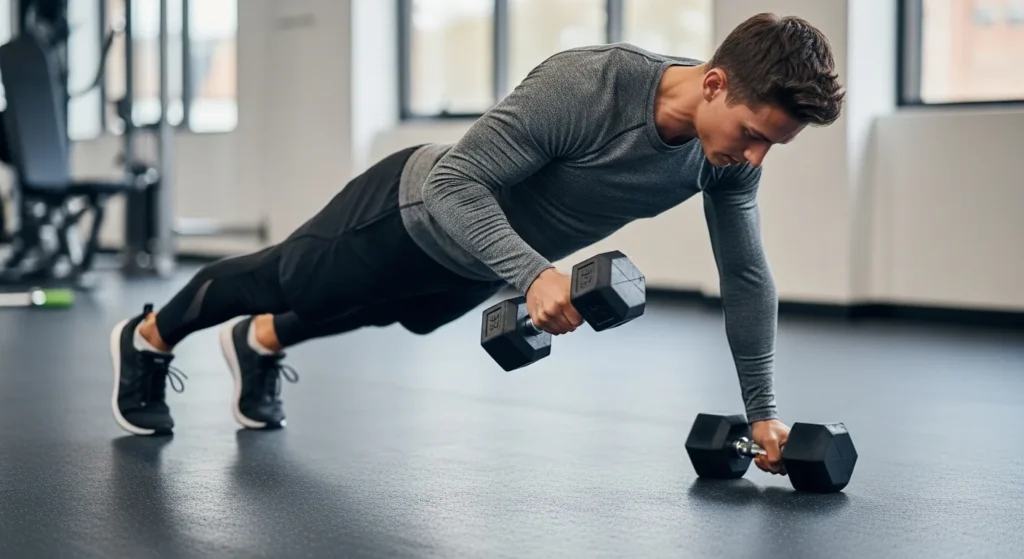
Core workouts with dumbbells are underrated specifically because the added load forces your stabilizers to work harder than bodyweight alone. A standard plank is easy to get lazy on. A dumbbell plank row is not. The feedback is immediate and honest.
This guide covers the exercises worth doing, the ones most beginners mess up, how to build progression over time, and why a lot of popular “core content” online misses the point entirely. If you’re training at home with fixed or adjustable dumbbells, this is written for your actual situation.
What Is a Dumbbell Core Workout?
A dumbbell core workout uses free weights to add resistance and instability to core exercises, forcing your trunk muscles to work harder than they would unloaded.
The difference matters. Bodyweight core work is great for learning movement patterns. But once you can hold a plank for 60 seconds without shaking, the adaptation slows down. Loading the same positions restarts that process.
At home specifically, dumbbells are often the only loading tool available. No cable machine for Pallof presses. No ab wheel for rollouts. What you have is a pair of dumbbells and gravity, which is more than enough.
How the Core Actually Works
The most important core function in real life and in training is resisting unwanted movement, preventing your spine from rotating, bending sideways, or extending when it shouldn’t. This is called anti-rotation, anti-lateral flexion, and anti-extension. Crunches train flexion. The exercises that actually carry over to strength and injury prevention mostly train resistance to movement.
Four functions to train:
- Anti-extension — resisting spine extension (planks, rollouts)
- Anti-rotation — resisting trunk rotation (renegade rows, single-arm carries)
- Anti-lateral flexion — resisting side-bending (suitcase carries, single-arm overhead press)
- Flexion/rotation — the traditional crunch-type movement (Russian twists, weighted crunches)
The Best Dumbbell Core Exercises
1. Dumbbell Plank Row
What it trains: Anti-rotation, anti-extension, scapular stability
How to do it:
- Start in a high plank with each hand gripping a dumbbell (flat-sided hex dumbbells work best — round dumbbells wobble)
- Keep feet slightly wider than hip-width for stability
- Row one dumbbell toward your hip, keeping your hips square to the floor
- Lower it down, then repeat on the other side
Coaching cues: The rep is in the hip square, not the row. If your hips are rotating, the weight is too heavy, or your feet are too close together. Most beginners rush the pull. Slow it down and feel the obliques resist.
Common mistake: Letting the hips rock like a seesaw. This defeats the anti-rotation purpose entirely. Use a lighter dumbbell and nail the position first.
Beginner weight: 10–15 lbs per hand. Intermediate: 20–30 lbs.
2. Dumbbell Suitcase Carry
What it trains: Anti-lateral flexion, obliques, grip, posture
How to do it:
- Hold a single dumbbell in one hand at your side
- Walk for a set distance (10–20 meters) or time (30–45 seconds) while staying completely upright
- Do not lean toward the weight side or away from it
Coaching cues: Imagine a string pulling the top of your head toward the ceiling. The point is to not lean — the load is fighting your lateral stability the whole time.
At-home reality: In a small space, you can do laps or turn around every few steps. It’s awkward, but it works. The loaded side challenges your obliques; switch sides for balance.
Why this is underrated: It trains the obliques in a way Russian twists never can, because the load is sustained, positional, and progressive. Add more weight over time or increase duration.
3. Dead Bug with Dumbbell Press
What it trains: Anti-extension, deep core (transverse abdominis), coordination
How to do it:
- Lie on your back with arms pointing toward the ceiling, holding one dumbbell with both hands
- Knees bent at 90°, shins parallel to the floor
- Slowly lower one leg toward the floor while keeping your lower back flat against the ground
- Return and repeat on the other side
Coaching cues: The lower back cannot lift off the floor. That’s the entire point of the exercise — maintaining pressure between your back and the ground as your limbs move. The dumbbell adds anterior load that makes this significantly harder.
Who this is for: Great for beginners who need to learn core bracing before loading heavier exercises. Also useful for anyone with lower back discomfort from other core work.
4. Russian Twist with Dumbbell
What it trains: Rotational core, obliques
How to do it:
- Sit on the floor, lean back slightly, feet either on the floor (easier) or raised (harder)
- Hold one dumbbell with both hands at chest height
- Rotate your torso from side to side, touching the dumbbell toward the floor on each side
Coaching cues: The rotation should come from your torso, not your arms. Your chest should face the direction you’re twisting. Moving just the dumbbell while your chest stays forward defeats the purpose.
Common mistake: Going too fast and losing control. Slow, deliberate rotations beat rapid, sloppy ones every time.
Honest limitation: Russian twists are overused. They’re a decent rotational exercise, but they have a high injury risk for beginners with weak lower back muscles if done aggressively. Keep range moderate and avoid rounding forward at the lumbar spine.
5. Dumbbell Pallof Press
Without a cable machine, a traditional Pallof press isn’t possible. A reasonable substitute:
Dumbbell Half-Kneeling Chop:
- Kneel on one knee (right knee down, left foot forward)
- Hold one dumbbell with both hands at your right hip
- Chop it diagonally upward to the left, rotating through the trunk
- Control it back down
This trains anti-rotation and rotational power in a pattern that’s actually specific to how the core works in real movement.
6. Dumbbell Side Bend
What it trains: Lateral flexion (obliques), but proceed with caution
How to do it:
- Stand with a dumbbell in one hand at your side
- Bend laterally toward the weighted side, then return to upright
Honest coaching note: Side bends are controversial. They do hit the obliques in lateral flexion, but they can build bulk in the obliques if done heavily, which some trainees find aesthetically undesirable. If you’re training for function and strength, they’re fine. If you’re training primarily for a leaner waist appearance, the suitcase carry is a better choice — it challenges anti-lateral flexion without loading the movement itself.
7. Dumbbell Goblet Squat Hold
What it trains: Anterior core under load, upper back posture
How to do it:
- Hold a dumbbell at chest height with both hands (goblet grip)
- Sit into a deep squat and hold the bottom position for 20–40 seconds
This is one of the most underrated core exercises in home training. Holding a weight in the goblet position while maintaining an upright torso challenges your anterior core in a way that translates directly to loaded carries, deadlifts, and pressing.
8. Single-Arm Dumbbell Overhead Carry
What it trains: Anti-lateral flexion, shoulder stability, overhead control
How to do it:
- Press a dumbbell overhead with a locked-out arm
- Walk (or stand and hold) while keeping the weight directly overhead and your torso upright
At-home context: This requires ceiling height clearance — check yours. With adjustable dumbbells, watch for balance issues at the top. Start light.
What most people miss: This is simultaneously a shoulder stability exercise and an oblique exercise. Your core is working hard to prevent the loaded side from collapsing your spine sideways. It’s one of the best single-movement investments in a home routine.
9. Dumbbell Weighted Sit-Up
What it trains: Rectus abdominis (flexion)
How to do it:
- Lie flat with knees bent, holding a dumbbell at chest or overhead
- Perform a controlled sit-up, keeping the weight steady
- Lower slowly — the eccentric matters here
Coaching cues: Overhead hold increases the lever arm and makes the exercise significantly harder with the same weight. If overhead feel unstable, hold at chest first.
Who this is for: Intermediate trainees who’ve outgrown bodyweight sit-ups. Beginners should build basic unloaded sit-up strength first.
10. Dumbbell Hollow Body Hold
What it trains: Deep core, anti-extension
How to do it:
- Lie on your back, arms extended overhead, holding one light dumbbell
- Tuck your ribs down, flatten your lower back
- Lift legs and shoulders slightly off the floor
The dumbbell overhead increases the challenge. Your job is to not let your lower back arch off the floor despite the weight pulling you into extension.
11. Dumbbell Farmer’s Carry
What it trains: Full-body stability, grip, posture, core bracing under sustained load
How to do it:
- Hold a dumbbell in each hand at your sides
- Walk with a tall posture for distance or time
The bilateral version is less of an anti-lateral challenge than the single-arm suitcase carry, but it’s a powerful total-body bracing drill. Your entire core has to remain rigid for the duration of the carry.
12. Dumbbell Romanian Deadlift
What it trains: Anti-extension, posterior chain, core under hip-hinge load
This isn’t thought of as a “core exercise” by most people, but in real training, the RDL is one of the best loaded core exercises you can do. Your erectors, obliques, and deep stabilizers work hard to keep your spine neutral during the hinge.
How to do it:
- Hold dumbbells in front of your thighs
- Hinge at the hips, pushing them backward, while keeping your back flat
- Lower until you feel a strong hamstring stretch, then drive your hips forward to stand
The core is not passive here. It’s actively bracing throughout. If you’ve been doing core exercises only in isolation and your lower back still aches in daily life, adding loaded hip hinges often fixes that.
Core Workouts with Dumbbells for Beginners: What to Know First
Start lighter than you think. Most beginner mistakes in dumbbell core work come from loading too heavily before the pattern is established. A 15 lb dumbbell for a renegade row will expose weaknesses that a 10 lb won’t hide. Add weight only when the form is consistent.
Breathing matters more than most guides mention. Exhale on the effort — when you row, when you rotate, when you sit up. Inhale during the eccentric. Holding your breath through core exercises is a common reflex that reduces core activation and spikes intra-abdominal pressure unnecessarily.
You don’t need to feel a “burn” to be training effectively. Anti-rotation and carry exercises often feel like nothing is happening — until the next day. The absence of burn doesn’t mean the absence of stimulus.
Frequency over volume. Three shorter sessions per week are more effective than one long core session. Core muscles recover quickly and respond well to frequent training.
Benefits of Dumbbell Core Workouts
Progressive overload is possible. Unlike most bodyweight core work, dumbbells allow you to add load incrementally. This is the only way to keep improving long-term.
Carry-over to other lifts. A stronger, more stable core directly improves your dumbbell press, row, squat, and deadlift. These aren’t isolated improvements.
Home gym friendly. No machine required. One pair of dumbbells and a few square meters of floor space are enough.
Better posture under load. Loaded carries and anti-lateral work improve the kind of postural strength that actually shows up in daily life.
Honest limitation: Dumbbells don’t replicate everything. If you have access to a cable machine, Pallof presses, and cable chops are genuinely more effective for anti-rotation work than most dumbbell alternatives. Dumbbells are excellent, not magic.
Equipment Notes for Home Training
Hex dumbbells vs round dumbbells: For plank-based exercises like renegade rows, hex dumbbells are significantly more stable. Round dumbbells roll. If you’re buying for a home gym and plan to do floor-based core work, hex heads are worth prioritizing.
Adjustable dumbbells: Work well for most core exercises. The main limitation is switching weight between exercises mid-session, which adds time. Structure your workout to minimize weight changes (e.g., do all your carry work at one weight before switching to plank rows at a different weight).
Space: Carriers require walking space. 5–6 meters is enough for a practical suitcase or farmer’s carry. In smaller spaces, you can turn every few steps. It works; it’s just slightly awkward.
Common Mistakes in Dumbbell Core Training
Training only flexion. Crunches and sit-ups aren’t wrong, but if they’re 80% of your core work, you’re undertrained in the areas that matter most.
Ignoring the posterior chain. The lower back, glutes, and erectors are part of the core system. People who train “core” but never deadlift or hinge often still have a weak midsection under load.
Progressing weight too fast. Core stability is earned. Jumping to heavy renegade rows before you can maintain a rigid plank leads to compensated reps that don’t build anything useful.
Training core in isolation only. The core works hardest during compound movements. If you only do core exercises but skip loaded carries, hinges, and presses, you’re leaving a lot of development on the table.
Skipping the anti-rotation category. Most online core programs are 90% flexion. Anti-rotation work (renegade rows, chops, carries) is where real functional strength is built.
Frequently Asked Questions (FAQs)
How often should I do core workouts with dumbbells?
Two to four times per week is a practical range. Core muscles recover faster than larger muscle groups. Three 15–20-minute sessions per week are more effective than one long session.
Can beginners do dumbbell core exercises?
Yes, but start with lighter loads and easier variations. Dead bugs, suitcase carries, and light-weighted sit-ups are beginner-appropriate. Renegade rows and loaded carries are better once you have basic stability established.
What weight should I use for dumbbell core exercises?
It depends heavily on the exercise. Carries: start with 20–30% of your bodyweight per hand. Plank rows: start with 10–15 lbs and focus on hip position. Weighted sit-ups: 10–20 lbs is sufficient for most beginners. The rule: if your form breaks, the weight is too heavy.
Are dumbbell core workouts better than bodyweight?
Yes. Bodyweight core work has a ceiling. Dumbbell work doesn’t. That said, if you’re new, bodyweight is the right starting point.
Will dumbbell core exercises reduce belly fat?
No exercise targets fat in a specific area. Dumbbell core exercises build muscle and burn calories, both of which support fat loss in combination with a caloric deficit. Spot reduction isn’t real.
Can I train core every day?
You can, but it’s usually not necessary or optimal. Lighter, anti-rotation-focused work (carries, isometrics) can be done daily without significant recovery cost. Heavy-loaded core work (weighted sit-ups, heavy renegade rows) needs 48 hours of recovery like any other trained muscle group.
Do I need a gym to do effective core workouts?
No. A pair of dumbbells and floor space are enough for comprehensive core training. The exercises in this guide require nothing else.
Conclusion
Core workouts with dumbbells work well when they’re built around the full spectrum of core function. The most important shift is understanding that the core’s main job is to resist movement, not just produce it. Carries, anti-rotation work, and loaded planks should make up the majority of your training.
Start light, nail the positions, and add load only when form is consistent. The feedback from dumbbell core training is honest; you’ll immediately feel if something is off.
Want to build stronger legs with perfect squat form? Check out How to Do a Dumbbell Goblet Squat for a step-by-step guide, common mistakes to avoid, and tips for better results.


