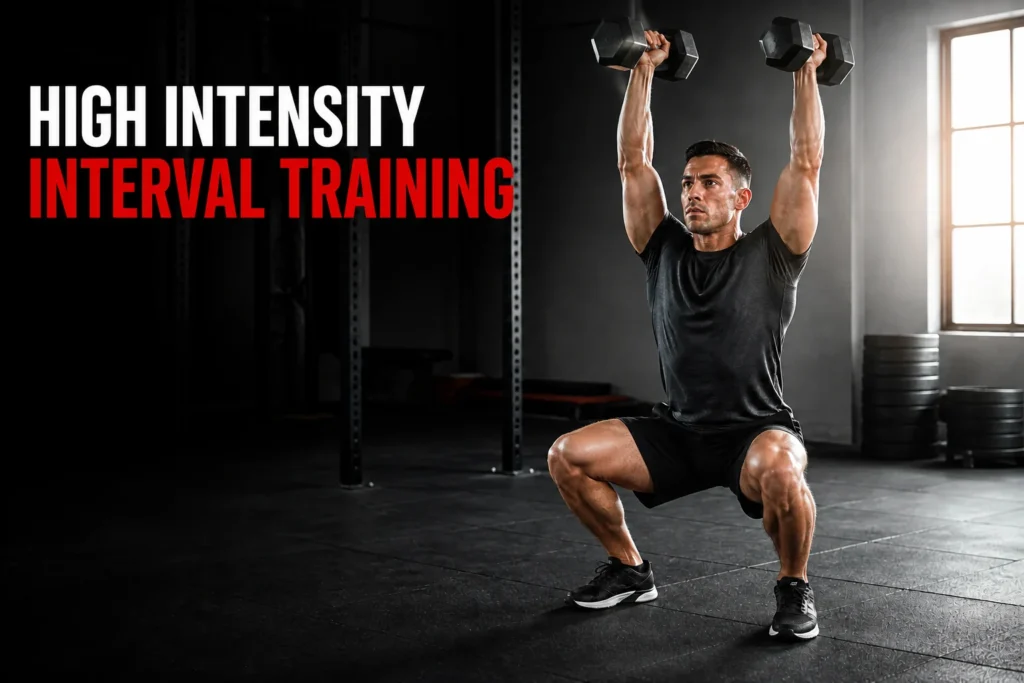
You already know HIIT burns calories fast. You’ve heard it a hundred times. What most gym content doesn’t mention is the version where you actually pick up two dumbbells and turn a 25-minute session into something that builds real muscle, spikes your metabolism, and keeps your body burning fat for hours after you’ve showered and sat down.
High intensity interval training workouts with dumbbells are not just cardio with weights thrown in. The combination triggers two distinct physiological processes at once: the acute metabolic demand of explosive effort, and the structural muscle damage that forces your body to rebuild. That rebuilding process burns calories even while you sleep.
The most common failure mode here is treating dumbbell HIIT as cardio with props. People grab light weights, move fast, and after three weeks, nothing has changed. The format only works when the weight is heavy enough to genuinely challenge you in the final seconds of each interval.
This guide covers seven specific dumbbell HIIT workouts, from a 15-minute beginner circuit to a 45-minute advanced program, with the science, the sets, the rest protocols, and the form cues that most articles skip.
The 7 Best High Intensity Interval Training Workouts With Dumbbells
Workout 1: The 15-Minute Beginner HIIT Circuit
Level: Beginner
Duration: 15 minutes
Format: 30 seconds work / 30 seconds rest
Rounds: 3 rounds of 4 exercises
Rest between rounds: 90 seconds
Estimated calorie burn: 120–150 calories
This workout is designed for people who are new to resistance training, returning from a break, or testing whether dumbbell HIIT suits them. The 1:1 work-to-rest ratio gives your cardiovascular system time to recover between efforts, so each interval can be genuinely intense rather than a slow grind through fatigue.
Exercises
1. Dumbbell Goblet Squat
Hold one dumbbell vertically at your chest with both hands. Feet are shoulder-width apart, toes turned out slightly. Sit your hips back and down until your thighs are parallel to the floor, keeping your chest tall. Drive through your heels to stand. This is the foundational lower-body movement for dumbbell HIIT — it loads the quads, glutes, and hamstrings while forcing your core to stabilize the load.
2. Dumbbell Shoulder Press
Hold a dumbbell in each hand at shoulder height, palms facing forward. Press both overhead until your arms are fully extended, then lower with control. Your core should stay braced — this isn’t a standing exercise where your lower back arches to compensate.
3. Dumbbell Romanian Deadlift
Hold dumbbells in front of your thighs. With a soft bend in your knees, hinge at the hips and push them backward as you lower the weights down your legs. When you feel a strong pull through your hamstrings, drive your hips forward to return to standing. This teaches hip hinge mechanics that are essential for every advanced movement in the workouts ahead.
4. Dumbbell Bent-Over Row
With a dumbbell in each hand, hinge forward until your torso is roughly 45 degrees. Pull both dumbbells toward your ribcage, driving your elbows back and squeezing your shoulder blades together. This directly addresses the upper and mid-back, which most beginner HIIT programs neglect entirely.
Workout 2: The 20-Minute Intermediate Full-Body Dumbbell HIIT
Level: Intermediate
Duration: 20 minutes
Format: 40 seconds work / 15 seconds rest
Rounds: 3 rounds of 5 exercises
Rest between rounds: 60 seconds
Estimated calorie burn: 200–270 calories
The ratio shifts here. Forty seconds of work with only 15 seconds to transition keeps your heart rate elevated for longer stretches, which is where cardiovascular adaptation actually happens. At this point, the weight selection matters more — if you can coast through 40 seconds, you need heavier dumbbells.
Exercises
1. Dumbbell Thruster
This is the exercise that separates HIIT circuits from weight training sessions. Hold dumbbells at shoulder height, squat to parallel, then drive up explosively and press both dumbbells overhead in one continuous movement. The thruster recruits the quads, glutes, core, shoulders, and triceps in a single rep. There’s very little in dumbbell training that matches it for metabolic cost per movement.
2. Dumbbell Renegade Row
Start in a push-up position with a dumbbell in each hand on the floor. Keeping your hips level, row one dumbbell to your side, lower it, then row the other. This forces your core to resist rotation under load — an anti-rotation demand that builds functional core stability faster than most dedicated core exercises.
3. Dumbbell Reverse Lunge
Hold dumbbells at your sides. Step one foot back and lower your rear knee toward the floor, keeping your front shin vertical. Push through your front heel to return to standing. Step-back lunges are easier on the knee joint than forward lunges and safer during HIIT when fatigue affects coordination.
4. Dumbbell Curl to Press
Stand with dumbbells at your sides, curl them to shoulder height with a controlled supination, then press overhead. This two-phase movement keeps both biceps and shoulders under load in a single interval, making it efficient when circuit time is limited.
5. Dumbbell Swing
Hold one dumbbell with both hands. Hinge at the hips with a slight knee bend and swing the dumbbell back between your legs. Drive your hips forward explosively and let the momentum carry the weight to chest height. The swing trains hip extension power — the same mechanism used in jumping, sprinting, and every explosive athletic movement. It also raises heart rate faster than almost any other dumbbell exercise.
Workout 3: The 30-Minute Strength-HIIT Superset
Level: Intermediate
Duration: 30 minutes
Format: Superset pairs, 45 seconds each / 15 seconds transition
Rounds: 4 rounds of 3 supersets
Rest between rounds: 90 seconds
Estimated calorie burn: 300–400 calories
Supersets pair two exercises back-to-back with no rest between them, then allow recovery before the next pair. The advantage is that you can use heavier weights for each exercise — because while one muscle group works, the other recovers. This format builds more lean muscle mass than standard circuits while maintaining the cardiovascular demand that makes HIIT effective for fat loss.
Superset Pairs
Pair A: Goblet Squat + Overhead Press
Lower body strength followed by upper body push. These two movements use different muscle groups, so the fatigue doesn’t compound between exercises.
Pair B: Romanian Deadlift + Bent-Over Row
Both are hip-hinge patterns, but the deadlift loads the posterior chain while the row targets the upper back pull. Your lower back fatigue will be real here — keep the weight honest rather than sacrificing spinal position.
Pair C: Dumbbell Thruster + Renegade Row
The hardest pairing in this workout. Thrusters produce systemic fatigue, and following them with renegade rows while your core is already taxed tests your ability to maintain position under pressure.
Workout 4: The 25-Minute Tabata Dumbbell Circuit
Level: Intermediate to Advanced
Duration: 25 minutes
Format: 20 seconds work / 10 seconds rest
Rounds: 8 rounds per exercise (4 minutes per station), 5 stations
Rest between stations: 1 minute
Estimated calorie burn: 250–350 calories
Tabata intervals were originally developed by Japanese researcher Izumi Tabata and tested on speed skaters in 1996. The 20:10 ratio was designed to push both aerobic and anaerobic systems simultaneously, and subsequent research confirmed that eight rounds of Tabata-format work produces superior VO2 max improvements compared to moderate-intensity continuous training. When you load these intervals with dumbbells, you add resistance to the equation.
The critical caveat: true Tabata requires maximal effort for all 20 seconds. Most people slow down by round five. Choosing a weight that allows you to maintain explosive output through all eight rounds is more important here than choosing the heaviest possible option.
Stations
Station 1: Dumbbell Swing
Station 2: Dumbbell Push Press
Station 3: Goblet Squat
Station 4: Alternating Dumbbell Snatch
Station 5: Dumbbell Burpee (hold a dumbbell in each hand, perform a push-up at the bottom, clean to shoulders, press overhead)
The dumbbell burpee in Station 5 is the most technically demanding exercise here. If your form degrades under fatigue, remove the overhead press and simply perform the push-up and clean.
Workout 5: The 35-Minute Time-Drop Dumbbell Workout
Level: Intermediate to Advanced
Duration: 35 minutes
Format: Time-drop — Set 1: 45s work/20s rest; Set 2: 40s work/15s rest; Set 3: 30s work/10s rest
Exercises: 8 exercises, 3 sets each
Estimated calorie burn: 350–450 calories
The time-drop format is one of the most effective structures for dumbbell HIIT because it mirrors how real performance works — you start with more recovery and progressively demand more output with less rest. By the third set, you’re doing less total work time but the reduced recovery makes it harder, not easier.
Exercise List
- Dumbbell Squat to Curl
- Single-Arm Dumbbell Row (alternate sides each set)
- Dumbbell Reverse Lunge with Rotation
- Alternating Dumbbell Press
- Dumbbell Deadlift
- Push-Up with Dumbbell Row
- Dumbbell Lateral Lunge
- Dumbbell Swing
The dumbbell reverse lunge with rotation is worth explaining in more detail. As you lower into the lunge, rotate your torso toward your front leg, holding one dumbbell at chest level. This adds a rotational core challenge that the standard lunge misses entirely, and it trains the obliques under a loaded, functional pattern.
Workout 6: The 40-Minute Pyramid Dumbbell HIIT
Level: Advanced
Duration: 40 minutes
Format: Stack-on pyramid — work intervals increase as exercises are added, then decrease as they’re removed
Rest: 30 seconds between sets
Estimated calorie burn: 400–500 calories
Pyramid workouts are deliberately structured to become harder as your energy reserves deplete. You start with one exercise, add an exercise each round while repeating the previous ones, peak at the top of the pyramid with the full circuit, then work back down by removing exercises. The cumulative fatigue by the top of the pyramid is significant.
Pyramid Structure (6 exercises)
Set 1: Goblet Squat (30s work, 30s rest)
Set 2: Goblet Squat + Push Press (30s each, 30s rest)
Set 3: Goblet Squat + Push Press + Bent-Over Row (30s each, 30s rest)
Set 4: Add Dumbbell Swing
Set 5: Add Renegade Row
Set 6: Add Dumbbell Thruster (peak — all 6 exercises)
Set 7: Remove Thruster
Set 8: Remove Renegade Row
Set 9: Remove Swing
Set 10: Remove Row
Set 11: Goblet Squat only (back to start)
The pyramid format naturally builds in progressive overload without changing the weight or the exercises. By the time you hit the peak at Set 6, the goblet squat feels nothing like it did in Set 1.
Workout 7: The 45-Minute Advanced Athletic Dumbbell HIIT
Level: Advanced
Duration: 45 minutes
Format: 4 rounds of 10 minutes each / 2 minutes rest between rounds
Work interval: 20–30 seconds per exercise
Rest: 30–40 seconds
Estimated calorie burn: 450–550 calories
This workout is built around Olympic-inspired dumbbell movements — the clean, the snatch, the clean and press — combined with loaded plyometrics and heavy compound lifts. It’s designed for people who have solid experience with dumbbell training and want to test their athletic capacity, not just their endurance.
Round Structure
Round 1 (Power): Dumbbell Clean and Press + Jump Squat Holding Dumbbells + Alternating Dumbbell Snatch
Round 2 (Strength): Heavy Romanian Deadlift + Dumbbell Push Press + Bent-Over Row
Round 3 (Conditioning): Dumbbell Thruster + Renegade Row + Dumbbell Swing
Round 4 (Finisher): Dumbbell Burpee Complex + Single-Leg Romanian Deadlift + Overhead Carry (walk 20 meters with dumbbells pressed overhead)
The overhead carry in Round 4 is not a typical HIIT exercise, but it’s deliberately placed at the end of a taxing session because it demands shoulder stability, thoracic extension, and core bracing when all three are already fatigued. That challenge is the point.
Common Mistakes That Kill Your Results
Using the same weight for every exercise. A weight that challenges your legs for goblet squats is usually too heavy for shoulder presses and too light for deadlifts. Adjusting weight between exercises isn’t a sign of weakness.
Ignoring core engagement. Every exercise in this guide requires your core to be actively braced, not just passively along for the ride. A disengaged core during dumbbell rows leads to back compensation and, eventually, back pain. Contract your abs deliberately before each rep.
Sacrificing form for speed. HIIT requires intensity, but intensity means effort, not sloppiness. An explosive goblet squat with full depth beats a fast quarter-rep every time, both for muscle development and injury prevention.
Skipping the warm-up. Five minutes of dynamic movement — leg swings, arm circles, bodyweight squats, hip hinges — before picking up a dumbbell is not optional. Cold muscles under HIIT-level load are how soft tissue injuries happen.
Overtraining. Doing HIIT seven days a week is not dedication. It’s a fast route to elevated resting heart rate, disrupted sleep, persistent soreness, and plateau. Rest days are when adaptation actually occurs.
Nutrition and Recovery for Dumbbell HIIT
Training creates the stimulus. Nutrition and sleep determine whether your body responds to it.
Protein intake matters more than most people prioritize. The current evidence supports 0.7–1.0 grams of protein per pound of body weight per day for people combining resistance training with HIIT. For a 170-pound person, that’s roughly 120–170 grams daily. Distributing that intake across meals rather than concentrating it in one meal improves muscle protein synthesis throughout the day.
Post-workout nutrition timing is less critical than total daily intake, but eating a meal containing 20–40 grams of protein within two hours of training does support recovery — particularly after sessions like Workouts 5, 6, and 7 where muscle damage is significant.
Sleep is the most underrated variable in any training program. During slow-wave sleep, growth hormone release peaks, muscle protein synthesis accelerates, and glycogen stores replenish. Seven to nine hours isn’t a luxury — it’s when the workout you just did actually changes your body.
Frequently Asked Questions (FAQs)
How many times per week should I do HIIT workouts with dumbbells?
Two to three sessions per week is the most effective range for the majority of people. This allows adequate recovery between sessions while providing enough training stimulus to drive adaptation. Spacing sessions at least 48 hours apart reduces cumulative fatigue and the risk of overtraining.
Can dumbbell HIIT workouts build muscle, or are they only for fat loss?
They do both, and the ratio depends heavily on weight selection and rest periods. Longer rest intervals (60–90 seconds) and heavier weights shift the stimulus toward hypertrophy. Shorter rest periods (10–20 seconds) and moderate weights shift it toward metabolic conditioning. The workouts in this guide are structured to develop both simultaneously.
What dumbbell weight should a beginner start with for HIIT?
A common starting point is 8–12 lbs per dumbbell for upper body movements and 15–20 lbs for lower body. The right weight is one where your form stays clean but the last 10 seconds of each interval actually challenges you. If you can finish comfortably, go heavier next session.
Is dumbbell HIIT effective for weight loss without changing diet?
Exercise alone produces modest fat loss results without dietary support. A 30-minute dumbbell HIIT session burns 250–400 calories depending on intensity and body weight, and the EPOC effect can extend calorie burning for hours afterward. But weight loss at a meaningful rate requires creating a caloric deficit, which typically means some attention to food intake alongside training.
How long should a dumbbell HIIT session be?
Between 15 and 45 minutes is the practical range. Sessions beyond 45 minutes at true high intensity become difficult to sustain without dropping effort levels — at which point it’s no longer really HIIT. Beginners can get excellent results from 15–20 minutes. More experienced athletes can work productively for 35–45 minutes.
Can I do dumbbell HIIT workouts at home?
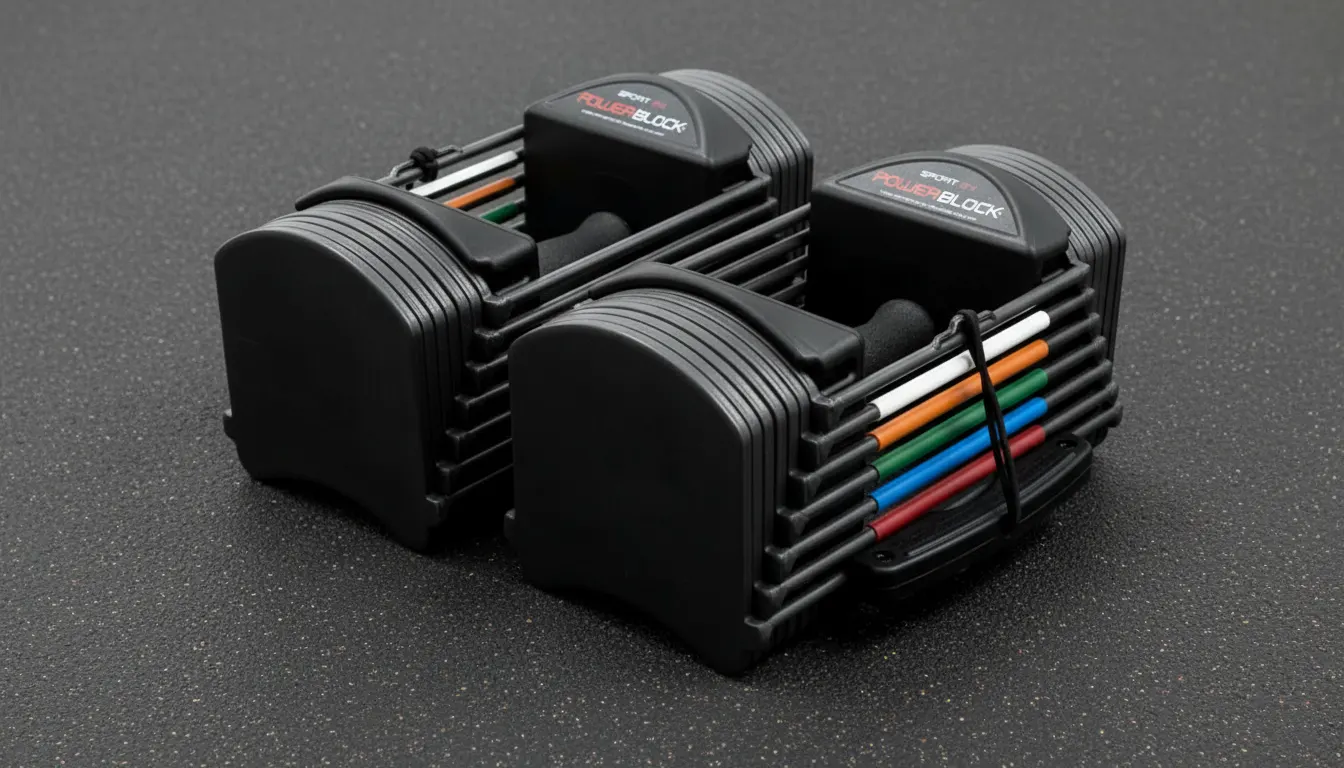
Yes. All seven workouts in this guide require only a pair of dumbbells and enough floor space to perform a lunge. Adjustable dumbbells are the most practical option for home training because they allow you to change weight between exercises without needing a full rack.
What is the EPOC effect, and how does it relate to dumbbell HIIT?
EPOC stands for excess post-exercise oxygen consumption. After high-intensity training, your body continues consuming more oxygen than at rest as it restores oxygen levels in the blood and muscles, removes metabolic byproducts, and repairs muscle tissue. This elevated metabolic state results in continued calorie burning for hours after the workout ends. Research consistently shows that HIIT produces greater EPOC than moderate-intensity continuous training.
Should I do dumbbell HIIT on an empty stomach?
Training fasted is not inherently more effective for fat loss than training fed, despite popular belief. What matters far more is total daily caloric intake and training quality. Training without eating may reduce your performance capacity, which limits the intensity you can sustain and therefore reduces the training benefit.
Can dumbbell HIIT replace traditional strength training entirely?
It depends on your goals. For general fitness, body composition, and cardiovascular health, dumbbell HIIT is highly effective and can serve as a complete training system. For people specifically targeting maximum muscle mass or powerlifting-type strength, it works better as a complement to dedicated progressive overload training rather than a full replacement.
How do I progress in dumbbell HIIT over time to avoid plateauing?
Four mechanisms drive progressive overload in dumbbell HIIT: increasing the weight used, reducing rest periods, adding rounds, or selecting more technically demanding exercises. The time-drop and pyramid formats in this guide build overload into the session structure itself. Tracking your weights and rest periods between sessions gives you a concrete benchmark to measure improvement against.
In conclusion
High intensity interval training workouts with dumbbells occupy a genuinely useful position in the fitness landscape — they develop strength and cardiovascular capacity together, in sessions short enough to fit realistic schedules, with equipment that works equally well at home or in a gym. The seven workouts in this guide progress from a 15-minute beginner circuit through to a 45-minute advanced program that will test your capacity even if you’ve been training for years.
HIIT only works when the work periods are genuinely hard. A moderate shuffle through 45-second intervals produces a moderate result. Pushing to the point where the last 10 seconds require actual concentration produces something different. Choose weights that demand something from you, rest enough to produce real effort on the next interval, and train consistently over weeks rather than cramming sessions.
Two to three times per week, honest weights, enough protein, and enough sleep. Everything else is details.
Not sure which curl variation is better for growth? Check out Barbell Curl vs Dumbbell Curl to compare muscle activation, strength gains, and which option best fits your training goals.