The Dumbbell Arnold Press is one of the most effective shoulder-building exercises used in modern strength training programs, popularized by bodybuilding legend Arnold Schwarzenegger.
This exercise is widely used in bodybuilding, athletic conditioning, and general fitness routines because it develops balanced shoulder size, strength, and mobility. When performed correctly, it targets all three heads of the deltoid muscle while improving joint control and upper-body coordination.
What Is the Dumbbell Arnold Press?
The Dumbbell Arnold Press is a variation of the traditional overhead press that combines pressing and rotational movement in a single motion.
Instead of starting with palms facing forward, you begin with palms facing inward toward your body, then rotate them outward as you press the weights overhead.
According to exercise biomechanics, this rotation increases range of motion and improves deltoid engagement compared to a standard press .
Why It Matters in Fitness Training
The Dumbbell Arnold Press is more than just a shoulder exercise. It is a compound movement that enhances:
- Shoulder hypertrophy (muscle growth)
- Functional upper-body strength
- Joint mobility and stability
- Muscle coordination under load
It is especially valuable for athletes and lifters who want 3D shoulder development instead of flat or unbalanced deltoid growth.
Muscles Worked in Dumbbell Arnold Press
The exercise activates multiple muscle groups in the upper body.
Primary Muscles
- Anterior deltoid (front shoulder)
- Lateral deltoid (side shoulder)
- Posterior deltoid (rear shoulder)
Secondary Muscles
- Triceps brachii (arm extension)
- Trapezius (upper back stabilization)
- Rotator cuff muscles (joint stability)
- Core muscles (postural support)
The rotational movement increases recruitment across all deltoid heads, making it more comprehensive than a standard shoulder press .
How to Do Dumbbell Arnold Press (Step-by-Step Guide)
Step 1: Starting Position
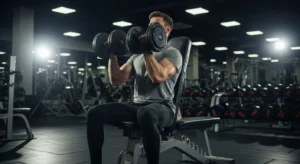
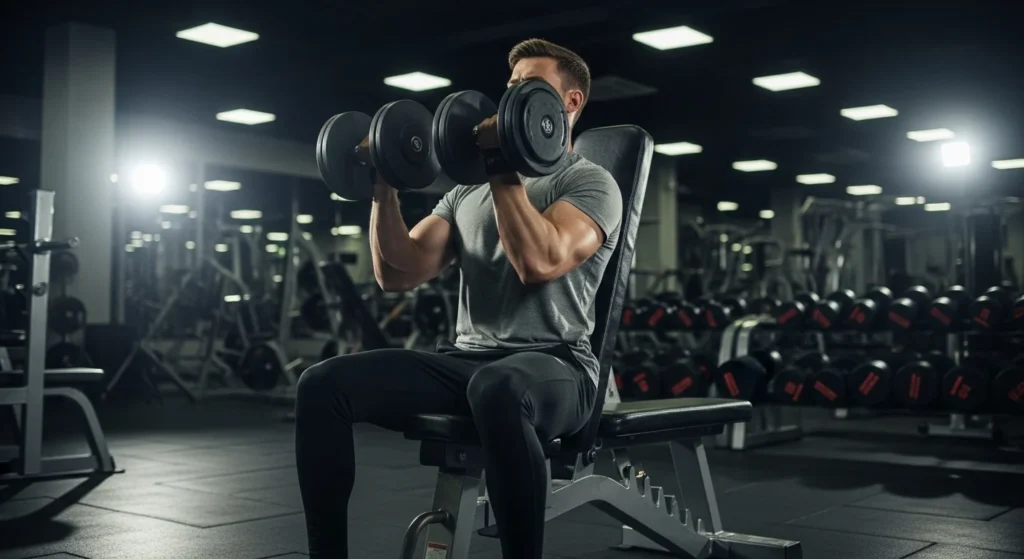
- Sit on a bench with back support or stand upright
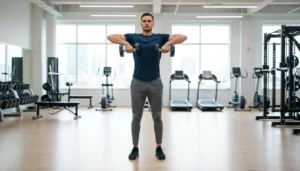
- Hold dumbbells at shoulder height
- Palms should face your chest
- Elbows should be slightly in front of your body
Step 2: Engage Core
- Tighten your abdominal muscles
- Keep your spine neutral
- Avoid leaning backward
Step 3: Press and Rotate
- Press dumbbells upward
- Begin rotating palms outward during ascent
- Continue pressing until arms are fully extended
Step 4: Top Position
- Dumbbells should be directly above shoulders
- Palms face forward
- Avoid locking elbows completely
Step 5: Controlled Descent
- Lower weights slowly
- Rotate palms back inward
- Return to starting position
This controlled motion improves time under tension, which supports muscle hypertrophy.
Proper Form Tips for Dumbbell Arnold Press
To maximize results and avoid injury:
- Keep movement slow and controlled
- Do not use excessive weight
- Maintain a stable core throughout
- Avoid excessive back arching
- Rotate smoothly rather than abruptly
- Keep wrists aligned (avoid bending backward)
Experts emphasize that poor form, especially rushing the rotation, reduces effectiveness and increases shoulder stress.
Benefits of Dumbbell Arnold Press
1. Full Deltoid Activation
Unlike traditional presses, it activates all three heads of the shoulder muscle in one movement.
2. Greater Range of Motion
The rotational component increases movement depth and muscle stretch.
3. Improved Shoulder Mobility
Supports better joint function and flexibility over time.
4. Increased Muscle Growth
More time under tension leads to better hypertrophy results.
5. Better Muscle Control
Enhances coordination between pressing and rotational stability.
6. Functional Strength Development
Improves real-world lifting and overhead movement patterns.
Common Mistakes to Avoid
Avoid these errors to prevent injury and maximize gains:
Using Too Much Weight
Leads to momentum-based lifting instead of muscle activation.
Incomplete Rotation
Reduces deltoid engagement and limits benefits.
Overarching the Lower Back
Increases spinal stress and reduces shoulder isolation.
Fast, Uncontrolled Reps
Decreases time under tension and muscle stimulation.
Locked Elbows at the Top
Can strain elbow joints unnecessarily.
Dumbbell Arnold Press vs Traditional Shoulder Press
| Feature | Arnold Press | Standard Shoulder Press |
|---|---|---|
| Muscle Activation | High (all deltoids) | Moderate |
| Range of Motion | Extended | Standard |
| Shoulder Mobility | Improved | Basic |
| Difficulty Level | Intermediate | Beginner |
| Stability Requirement | High | Medium |
The Arnold Press provides a more dynamic stimulus, while traditional presses allow heavier loading.
Who Should Do Dumbbell Arnold Press?
This exercise is ideal for:
- Intermediate and advanced lifters
- Bodybuilders focusing on shoulder growth
- Athletes needing overhead strength
- Fitness enthusiasts improving posture
- People with moderate shoulder mobility
Beginners can also perform it using light weights and strict control.
How to Include Arnold Press in Your Workout
Hypertrophy (Muscle Growth)
- 3–4 sets
- 8–12 reps
- 60–90 seconds rest
Strength Focus
- 4–5 sets
- 4–6 reps
- Heavy dumbbells
Endurance Training
- 2–3 sets
- 12–15 reps
- Light weight, slow tempo
It works best on shoulder or upper-body training days.
Variations of Dumbbell Arnold Press
Seated Arnold Press
Reduces body sway and isolates shoulders more.
Standing Arnold Press
Engages core muscles for balance and stability.
Single-Arm Arnold Press
Improves unilateral strength and balance.
Resistance Band Arnold Press
Provides constant tension throughout the movement.
Safety Tips for Dumbbell Arnold Press
- Always warm up shoulders before lifting
- Start with lighter weights
- Avoid deep painful rotation
- Stop if you feel sharp shoulder discomfort
- Maintain neutral spine alignment
Proper warm-up reduces injury risk in rotator cuff muscles and improves performance.
Why Arnold Press Works So Well
The rotational movement increases mechanical tension across multiple deltoid regions, forcing the shoulder to stabilize under dynamic load.
This makes it more effective for muscle fiber recruitment and hypertrophy compared to fixed-path pressing movements.
Dumbbell Arnold Press in Real Fitness Programs
Most professional trainers include it as part of:
- Shoulder hypertrophy routines
- Upper-body push workouts
- Body recomposition programs
- Functional strength training splits
It is often paired with lateral raises, front raises, and rear delt flys for complete shoulder development.
Frequently Asked Questions (FAQs)
Is Dumbbell Arnold Press good for beginners?
Yes, but beginners should start with light weights and focus on form before increasing resistance.
What muscles does Arnold Press target the most?
It primarily targets all three heads of the deltoid muscle.
Is Arnold Press better than shoulder press?
It offers better range of motion and muscle activation, but traditional presses allow heavier loads.
How heavy should I go on Arnold Press?
Use a moderate weight that allows controlled rotation without momentum.
Can Arnold Press cause shoulder pain?
Improper form or excessive weight may stress the rotator cuff, so technique is essential.
How often should I do Arnold Press?
1–2 times per week is ideal for most training programs.
Should I do it seated or standing?
Seated version isolates shoulders, while standing version improves core engagement.
Does Arnold Press build big shoulders?
Yes, it is highly effective for shoulder hypertrophy when combined with proper training volume.
Looking for a detailed breakdown of premium adjustable dumbbells? Check out this NÜOBELL Adjustable Dumbbells Review to see which option is best for your home gym setup.