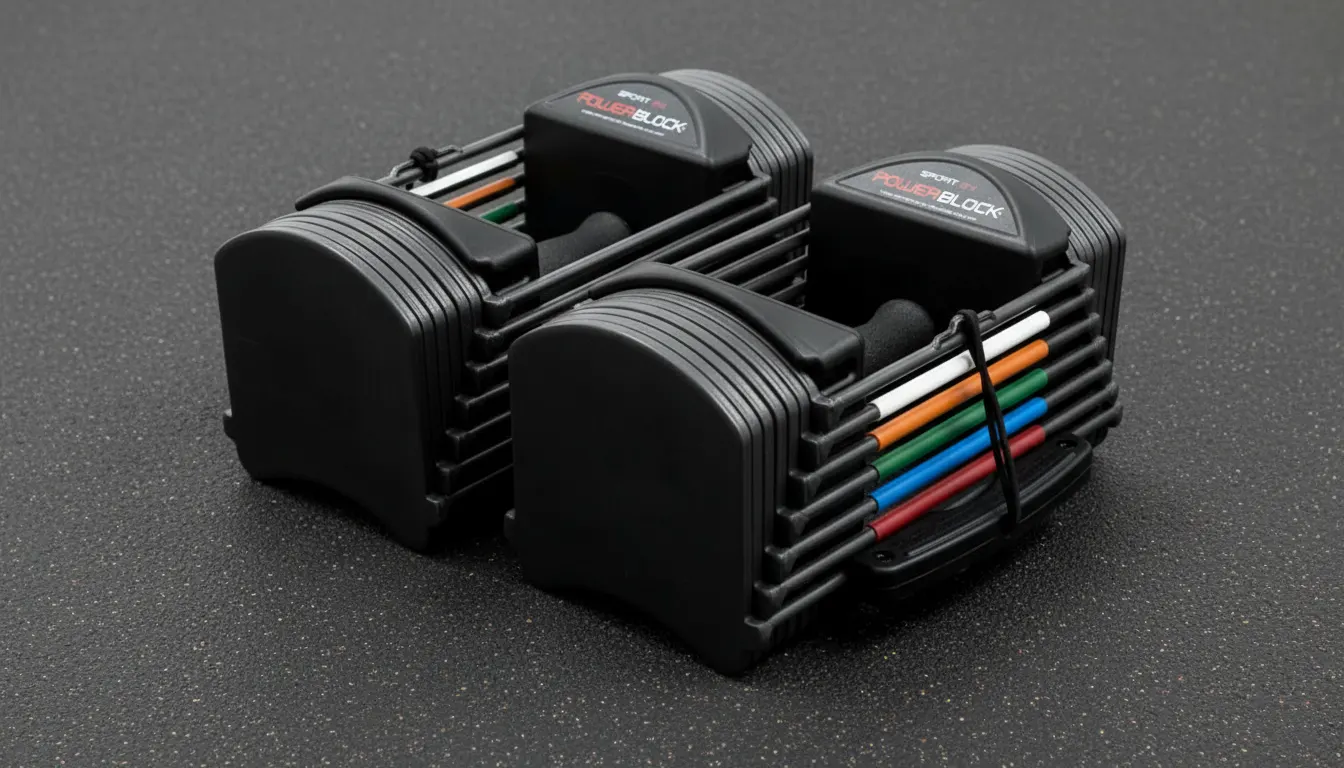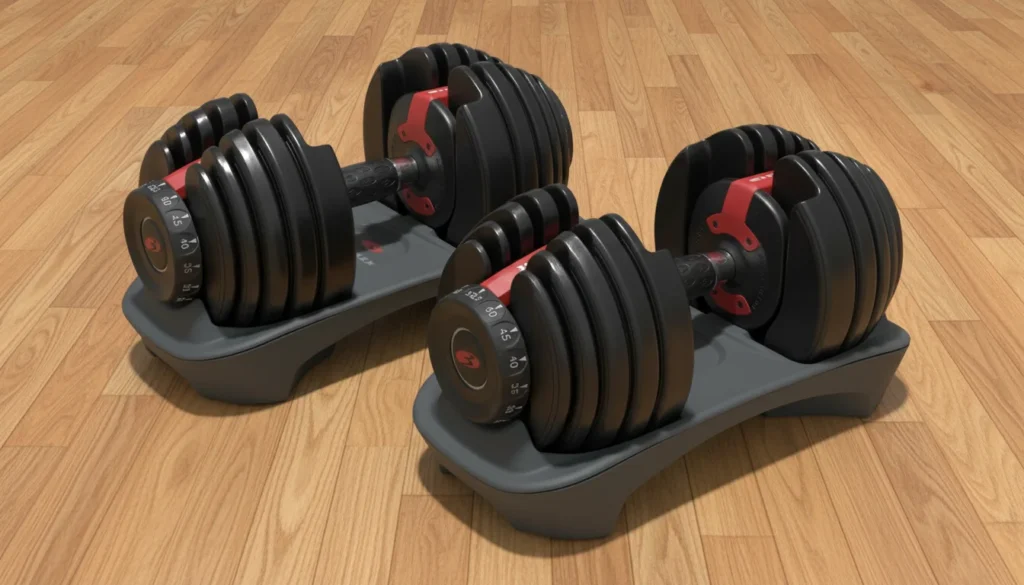
If you’ve ever picked up a modern adjustable dumbbell and instantly changed its weight with a dial or twist, you’ve likely wondered: how do adjustable dumbbells work?
At first glance, they seem simple, yet inside each unit is a precise mechanical system designed to control weight selection, ensure safety, and transfer force efficiently.
Understanding how they function is more than curiosity—it helps you train smarter, avoid mistakes, and choose the right equipment for your goals.
The Core Principle Behind Adjustable Dumbbells
At the heart of every adjustable dumbbell is a single concept:
Only the weight plates connected to the handle will move when you lift.
This means:
- Plates can sit next to each other without being active
- Physical contact does not equal mechanical connection
- Force only travels through locked components
This principle allows adjustable dumbbells to simulate multiple weights using a single structure.
The Basic Structure of Adjustable Dumbbells
To understand how they work, you need to know their main parts.
1. Handle (Control Center)
The handle is not just for gripping—it contains the internal selection system.
Inside the handle, you’ll find:
- Locking rods or pins
- Sliding connectors
- Mechanical selectors
These components determine which plates are attached.
2. Weight Plates (Resistance Units)
Each dumbbell includes multiple plates, typically arranged in a tray.
These plates:
- Are separate from one another
- Have grooves or slots for connection
- Come in incremental weights
They remain inactive until selected.
3. Locking Mechanism (Selection System)
This is the most important part of how adjustable dumbbells work.
The locking system:
- Connects chosen plates to the handle
- Keeps them secure during movement
- Prevents accidental disengagement
Depending on the model, this system may use:
- Pins
- Dials
- Twist-lock mechanisms
4. Tray or Base (Support System)
The base holds all unused plates.
It ensures:
- Safe weight changes
- Proper alignment
- Easy storage
Without the base, most adjustable dumbbells cannot be adjusted.
How Do Adjustable Dumbbells Work (Step-by-Step)
Step 1: Selecting the Weight
You begin by choosing your desired weight using a mechanism such as:
- Rotating a dial
- Inserting a selector pin
- Twisting the handle
This action tells the dumbbell which plates to engage.
Step 2: Internal Alignment
Inside the handle, the mechanism moves into position.
It aligns connectors with specific plates based on your selection.
Only the targeted plates are now ready to attach.
Step 3: Plate Engagement
Once aligned:
- Locking rods slide into selected plates
- A secure connection is formed
- Unselected plates remain untouched
This step creates a continuous mechanical link.
Step 4: Lifting the Dumbbell
When you lift the handle:
- Only connected plates rise with it
- Unselected plates stay in the tray
- The dumbbell behaves like a fixed weight
The weight you feel equals the sum of engaged plates.
Step 5: Returning to the Base
After your set:
- Place the dumbbell back in the tray
- The system resets for the next adjustment
This ensures safe and accurate re-selection.
Different Mechanisms Explained
While the core principle stays the same, different designs use different systems to connect plates.
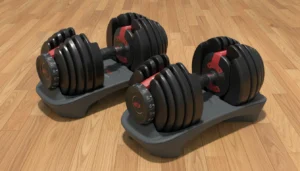
Dial-Based Systems
These use a rotating dial to select weight.
How they work:
- Turning the dial adjusts internal rods
- Rods slide into specific plates
- Only those plates lock into the handle
This system is fast and convenient for changing weights quickly.
Selector Pin Systems
These use a removable pin, similar to gym machines.
How they work:
- You insert a pin into a weight slot
- The pin locks corresponding plates
- The handle connects only to those plates
This design is simple and highly reliable.
Twist-Lock Systems
These rely on rotating the handle itself.
How they work:
- Twisting activates internal connectors
- Plates align and lock automatically
- The selected weight is engaged instantly
This system offers smooth and efficient operation.
Plate-Loaded (Manual) Systems
These are the most traditional type.
How they work:
- You manually add or remove plates
- Collars secure them in place
- The weight is determined by what you load
This method is slower but extremely durable.
How Force Travels Through the Dumbbell
Understanding force transfer explains why adjustable dumbbells are effective.
When you lift:
- Your hand applies force to the handle
- The handle transfers force to the locking mechanism
- The mechanism transfers force to connected plates
Unconnected plates receive no force, so they remain stationary.
This controlled force pathway ensures:
- Stability
- Accuracy
- Safety
Why Unused Plates Stay in Place
A common question is why the other plates don’t move.
The answer is simple:
They are not connected to the force chain.
Even if plates are touching:
- No connection means no load transfer
- Gravity keeps them in the tray
- Only engaged plates respond to movement
Safety Mechanisms in Adjustable Dumbbells
Modern adjustable dumbbells include built-in safety features.
Positive Locking
Plates are physically locked, not just held by pressure.
This reduces the risk of slipping.
Full Engagement Requirement
Most systems prevent lifting unless:
- Plates are fully aligned
- The mechanism is correctly engaged
Secure Design
High-quality models:
- Minimize wobbling
- Maintain balance
- Keep weight evenly distributed
Why Adjustable Dumbbells Feel Like Fixed Weights
Once engaged, adjustable dumbbells function like traditional ones.
This happens because:
- The connection becomes rigid
- Plates move as a single unit
- There is no independent movement
This creates a stable lifting experience.
Common Misunderstandings
“All plates move together”
False. Only selected plates are connected.
“They rely on friction”
Incorrect. Most use mechanical locking, not friction.
“They are less effective”
Not true. They provide the same resistance when properly used.
Practical Example
Imagine selecting 20 kg on a dial-based dumbbell:
- The dial aligns internal rods with plates totaling 20 kg
- Only those plates lock into the handle
- When lifted, only those plates move
Everything else stays behind.
Why This System Is Efficient
Adjustable dumbbells are efficient because they:
- Eliminate the need for multiple dumbbells
- Allow quick transitions between weights
- Maintain consistent resistance
This makes them ideal for:
- Home workouts
- Progressive overload
- Space-saving setups
Limitations of the Mechanism
While effective, the system has some constraints.
Mechanical Complexity
More parts mean potential wear over time.
Not Designed for Dropping
Impact can damage internal components.
Adjustment Requires Base
Most systems only work in their tray.