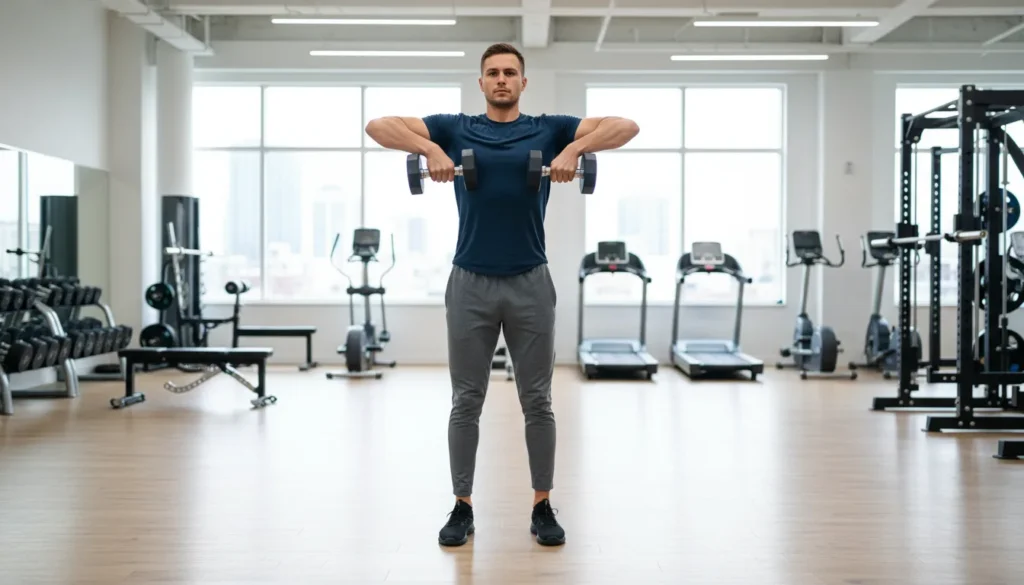
If you want broader shoulders, stronger traps, and a more powerful upper body aesthetic, the dumbbell upright row is a movement worth mastering. Unlike machine-based shoulder exercises, this compound lift engages multiple stabilizing muscles while allowing a natural range of motion for each arm.
Recent fitness discussions and coaching insights highlight that dumbbell variations are often preferred over barbells because they reduce joint restriction and allow more natural arm movement patterns .
What Is a Dumbbell Upright Row?
The dumbbell upright row is a compound pulling exercise where weights are lifted vertically along the torso toward the upper chest or chin.
It primarily targets:
- Shoulder muscles (deltoids)
- Upper trapezius
- Supporting muscles like biceps and forearms
The movement resembles a controlled upward pull, making it a hybrid between a shoulder raise and a vertical row.
Muscles Worked in Dumbbell Upright Rows
Understanding muscle activation helps you perform the exercise with intention.
Primary Muscles
- Lateral deltoids (side shoulders)
- Upper trapezius (upper back and neck region)
Secondary Muscles
- Anterior deltoids (front shoulders)
- Biceps brachii
- Forearms and grip stabilizers
- Rhomboids and upper back stabilizers
Research-based breakdown confirms strong deltoid and trapezius activation during upright pulling movements .
This combination makes it a powerful upper-body builder when used correctly in a routine.
Benefits of Dumbbell Upright Rows
1. Builds Wider, Stronger Shoulders
The lateral deltoids are heavily engaged, improving shoulder width and aesthetics.
2. Improves Upper Back Strength
Trapezius engagement enhances posture and pulling strength.
3. Corrects Muscle Imbalances
Each arm works independently, reducing dominance from one side.
4. Natural Range of Motion
Dumbbells allow freer wrist and elbow positioning, improving joint comfort .
5. Functional Upper Body Power
It translates well into sports and real-life pulling movements.
How To Do Dumbbell Upright Rows (Step-by-Step Guide)
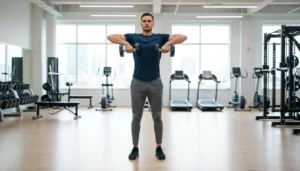
Step 1: Starting Position
- Stand upright with feet shoulder-width apart
- Hold a dumbbell in each hand
- Let arms hang naturally in front of thighs
- Keep palms facing toward your body (neutral grip or slightly overhand)
Step 2: Engage Your Core
- Tighten your abdominal muscles
- Maintain a neutral spine
- Avoid leaning backward or forward
Step 3: Initiate the Lift
- Pull the dumbbells upward along your torso
- Keep them close to your body throughout the movement
- Lead the motion with your elbows, not your hands
Step 4: Elbow Position Control
- Raise elbows outward and upward
- Keep elbows higher than wrists
- Stop when elbows reach shoulder level
Step 5: Top Position Pause
- Briefly hold at the top
- Squeeze your shoulders and traps
- Avoid shrugging excessively
Step 6: Controlled Descent
- Slowly lower the weights back down
- Maintain tension throughout
- Do not drop or swing the dumbbells
Proper Form Tips for Maximum Results
Keep the Weights Close
The closer the dumbbells stay to your body, the safer and more effective the movement becomes.
Avoid Excessive Height
Lifting above shoulder level increases joint stress and reduces control.
Do Not Use Momentum
Controlled reps outperform heavy, swinging repetitions.
Maintain Upright Posture
Keep your chest lifted and spine neutral throughout.
Choose Moderate Weight
A controlled weight allows proper muscle engagement without compromising form.
Common Mistakes to Avoid
1. Lifting Too Heavy
This leads to shoulder strain and poor technique.
2. Shrugging Too Early
Over-recruiting traps reduces deltoid activation.
3. Raising Dumbbells Too High
Going above shoulder height increases injury risk.
4. Leaning Backward
This shifts load away from target muscles.
5. Fast, Jerky Reps
Momentum reduces muscle tension and effectiveness.
Safety Considerations and Injury Prevention
The upright row is often debated due to shoulder impingement concerns. However, modern training guidance suggests that the risk largely depends on form, load, and range of motion, not the exercise itself.
Recent coaching recommendations emphasize:
- Using moderate weight
- Keeping elbows below excessive height
- Avoiding forced internal rotation of the shoulder joint
Dumbbells are generally considered safer than barbells because they allow natural joint rotation and movement freedom.
Best Variations of Dumbbell Upright Rows
1. Narrow Grip Upright Row
- Focuses more on traps
- Increased vertical pull intensity
2. Wide Grip Upright Row
- Targets lateral deltoids more
- Reduces shoulder strain
3. Single-Arm Upright Row
- Corrects muscle imbalances
- Improves stability and control
4. Incline Upright Row
- Performed on a bench incline
- Reduces lower back involvement
Dumbbell Upright Row vs Barbell Upright Row
| Feature | Dumbbell Version | Barbell Version |
|---|---|---|
| Range of motion | Natural & flexible | Fixed path |
| Shoulder comfort | Higher | Lower |
| Muscle balance | Independent arms | Symmetrical load |
| Injury risk | Lower when done properly | Higher if form breaks |
How to Include It in Your Workout Routine
Beginner Level
- 3 sets × 10–12 reps
- Light to moderate weight
Intermediate Level
- 4 sets × 8–10 reps
- Focus on controlled tempo
Advanced Level
- 4–5 sets × 6–8 reps
- Add pause at the top for intensity
Training Placement
- Shoulder day
- Upper body split
- Push-pull hybrid routines
Who Should Do Dumbbell Upright Rows?
This exercise is ideal for:
- Beginners building shoulder strength
- Bodybuilders aiming for shoulder width
- Athletes needing upper-body pulling power
- Fitness enthusiasts improving posture
Avoid or modify if you have:
- Existing shoulder injuries
- Limited shoulder mobility
- Pain during overhead movements
Expert Coaching Tips
- Prioritize form over weight progression
- Train with full control rather than speed
- Warm up shoulder joints before performing
- Combine with lateral raises for balanced development
- Use upright rows as accessory work, not a primary lift
Frequently Asked Questions (FAQs)
Are dumbbell upright rows safe?
Yes, when performed with proper form, moderate weight, and controlled movement.
What muscles do dumbbell upright rows target?
They mainly target the shoulders and traps while also engaging biceps and forearms.
Should I go heavy on upright rows?
No, moderate weight is recommended to maintain proper technique and reduce injury risk.
How high should I lift the dumbbells?
Stop when elbows reach shoulder level to maintain joint safety.
Are dumbbells better than barbells for upright rows?
Yes, because they allow a more natural range of motion and reduce joint restriction.
Can beginners do dumbbell upright rows?
Yes, but they should start with light weights and focus heavily on form.
Do upright rows build big shoulders?
Yes, especially the lateral deltoids which contribute to shoulder width.
How many reps should I do?
8–12 reps for muscle growth is typically effective.
Should I include upright rows in every workout?
No, 1–2 times per week is enough depending on your program.
What is the biggest mistake in upright rows?
Using too much weight and lifting too high with poor control.
Want to build a stronger chest and improve pressing power at home? Learn the proper technique in this guide on How to Do Dumbbell Floor Press to maximize strength and control safely.